
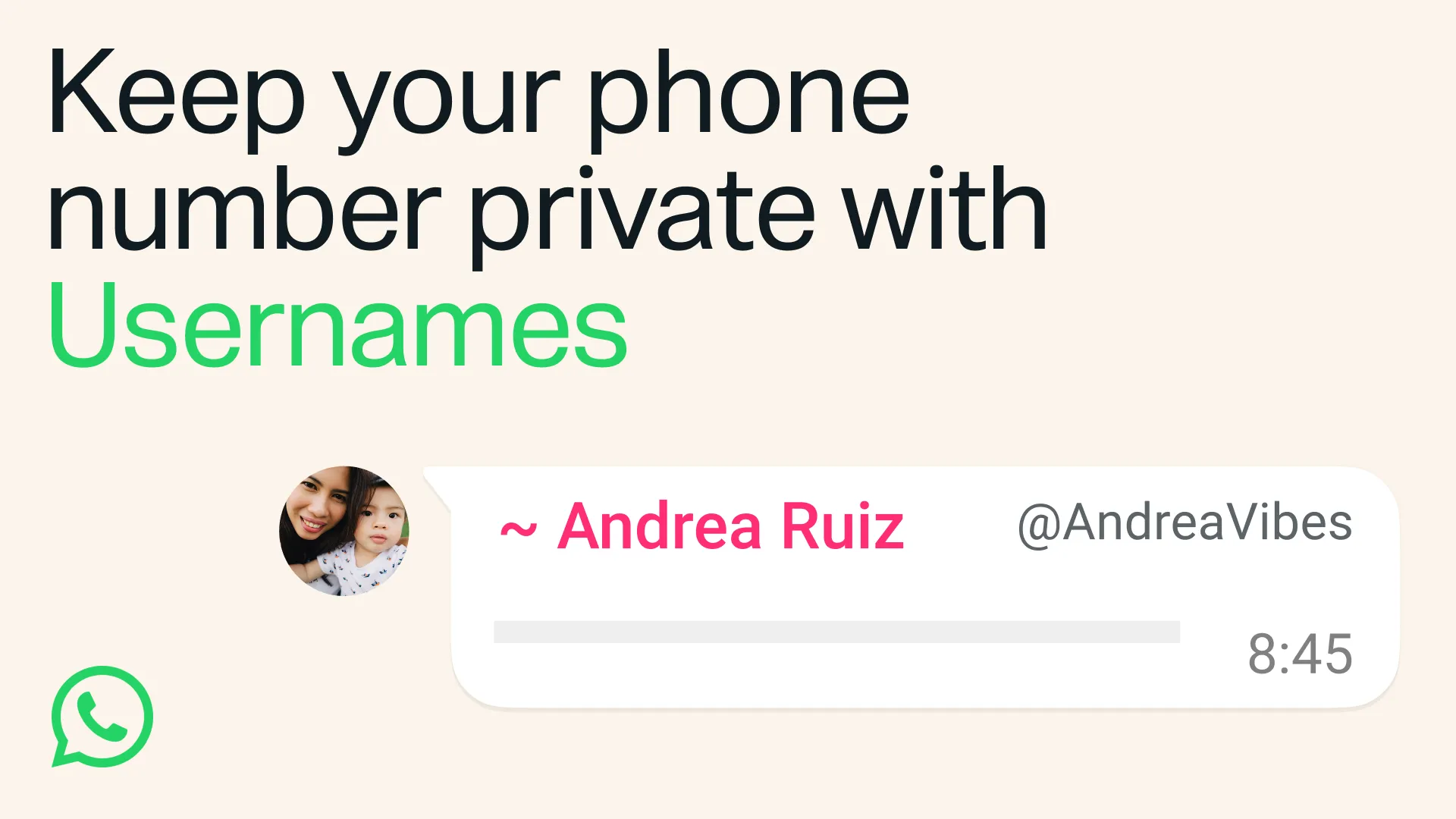


WhatsApp has opened reservations for usernames, a new feature that will let users message each other without exchanging phone numbers once it fully launches later this year. The reservation window opened this week, and the feature is already accessible to Nigerian users running the latest version of the app.
The Meta-owned platform explained that the move addresses a familiar discomfort: sharing a phone number with someone new, whether a classmate, a neighbour, or someone met at an event, can feel like an unnecessarily personal step, since a phone number is tied to many other parts of a person’s life.
How reservations work
Users can reserve a username now, ahead of the feature’s full rollout later in the year. WhatsApp cited its scale as the reason for the early opening, with over three billion people on the platform, name overlaps are inevitable, and the company wants users to have a fair shot at the username they actually want.
For users unsure what to pick, WhatsApp has built a username generator to help create one. Creators, small businesses, and organisations also have an added option: claiming a username that matches their existing Instagram or Facebook handle, to maintain a consistent identity across platforms. To guard against impersonation, WhatsApp said it will withhold usernames tied to high-profile people or groups, such as celebrities, public figures, and government entities.
On the ground, the Nigerian rollout mirrors what WhatsApp described globally. The in-app prompt greets users with the message “Usernames are coming soon. Reserve yours today,” alongside an explanation that a username keeps a phone number private from people who don’t already have it, and an option to add a privacy key controlling who can reach them by username. Users can either create a fresh username or import one directly from a linked Instagram or Facebook account.
A privacy-first design
WhatsApp is positioning usernames as part of a broader push toward stronger privacy. Notably, there will be no searchable directory and no username suggestions — meaning a person will need to know someone’s exact username to contact them for the first time.
An additional layer of control comes through an optional username key, which others will need in order to message a user via their username. Once the feature fully launches, anyone messaging a user for the first time will no longer see that user’s phone number, provided the username has been enabled.
Anthony Joshua fronts the campaign
WhatsApp paired the announcement with a celebrity-led promotional campaign, a notable PR move for a feature this technical in nature.
The platform released a 90-second film featuring British professional boxer Anthony Joshua sitting in a barbershop chair, deciding what his WhatsApp username should be. The film opens with a simple message: “You don’t need to give out your number now if you don’t want to.” From there, Joshua goes about his daily routine, asking the people around him what his username should be.
Suggested usernames floated in the campaign include playful options like @Champthony, @TheRealAnthonyJoshua, @TheLandlord, @Mamasboy, @AJManLikeAJ, and @MC_Nitro — with Joshua’s own mother weighing in on a suggestion for her son’s new handle. The campaign carries the tagline “Same number, New name, More privacy.”
The timing of Joshua’s involvement is notable. The campaign landed shortly after Joshua’s high-profile bout against Jake Paul, giving WhatsApp a moment of fresh cultural relevance to attach the feature to.
Joshua isn’t WhatsApp’s only celebrity face for this rollout. A separate ad campaign featuring Bollywood actor Aamir Khan followed a day after the Joshua spot, also built around the new username feature, signalling a multi-market, multi-territory promotional strategy rather than a single global film.
How the internet is reacting
Beyond the official campaign, the feature has sparked its own organic conversation on social media, some of it playful, some genuinely concerned.
On X (formerly Twitter), one user’s reaction captured a strain of anxiety running through Nigerian timelines specifically: a viral post joking that loan apps, notorious in Nigeria for aggressive, often invasive debt-shaming tactics, could exploit usernames to track borrowers down. The post, accompanied by a crying child meme, has amassed thousands of likes and retweets, reflecting a genuine undercurrent of distrust shaped by Nigeria’s experience with predatory digital lending platforms.
WhatsApp has been directly engaging sceptics. Responding to a user who asked how the platform would prevent scammers from exploiting usernames without phone number verification, the official WhatsApp account replied that the platform has “multiple layers of defense in place,” citing username keys that limit who can reach a user, caps on how many new people any account can contact, and detection systems that flag and block abuse patterns, with an in-app reporting option for anything that feels off.
The company also clarified rollout details for business users. Asked directly whether the feature extends to WhatsApp Business, WhatsApp confirmed that reservations are available there too, advising business users to update to the latest version of the app to access it.
Meanwhile, some creators and brand-conscious users are treating the rollout as a personal branding opportunity. One content creator publicly announced reserving their username before anyone else could claim it, urging other creators and business owners to do the same and walking followers through the reservation steps, including how to set up the privacy key. A separate post from the same account went further, advising brands to check whether their name had already been claimed by someone else, and outlining how to reclaim a matching username by first aligning their Instagram handle, then connecting accounts through WhatsApp’s Meta Accounts Centre.
Part of a larger privacy narrative
This isn’t WhatsApp’s first major privacy-led campaign push. In May last year, the platform launched its largest global campaign to date, titled “Not Even WhatsApp,” spotlighting the platform’s end-to-end encryption with the message that no one, not even WhatsApp itself, can access users’ personal messages. That campaign included a TV spot directed by Australian filmmaker Mark Molloy and produced by Smuggler.
The usernames campaign appears to extend that same brand narrative, privacy as WhatsApp’s core differentiator, into a more tactical, feature-specific rollout.
Availability
Reserving a username takes a few seconds on the latest version of WhatsApp, accessible via Settings, then Account, then Username. WhatsApp says the feature itself will roll out gradually over the coming months, with in-app notifications alerting users once usernames become available in their specific country.
Nigerian users can confirm this for themselves: the reservation prompt is already live for those running updated versions of the app.



Comment
No comments found.