
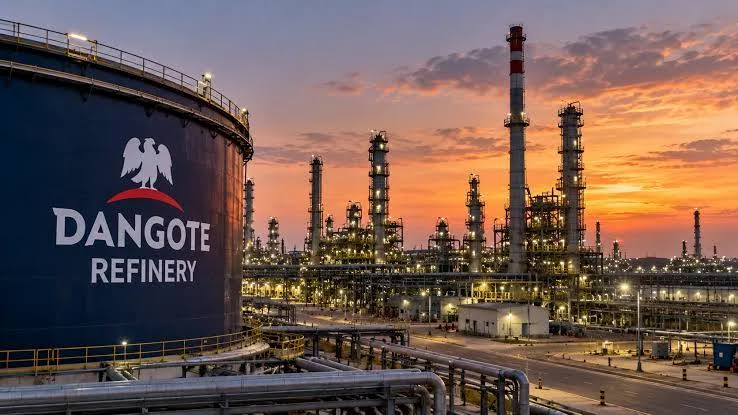


The planned public listing of Dangote Petroleum Refinery and Petrochemicals is drawing attention to the role of Nigeria’s capital market in financing major industrial projects, as the company seeks to widen public ownership and raise funds for expansion.
The refinery has extended its initial public offering (IPO) deadline to October 27, 206, following approval from the Securities and Exchange Commission, giving prospective investors additional time to complete their applications. The offer, which opened on September 14, is targeting approximately ₦2.1 5 trillion through the sale of 4.1 billion new ordinary shares at ₦525 each.
The offering is expected to become Africa’s largest IPO, with the refinery seeking to attract investors in Nigeria and across the continent. Beyond the size of the transaction, the listing represents an opportunity to examine how public participation in major private-sector businesses could support industrial growth and deepen Nigeria’s investment market.
The company plans to use the proceeds to support its expansion programme, which aims to increase refining capacity from 700,000 barrels per day to 1.4 million barrels per day by 2029. The expansion is intended to strengthen its position in domestic and regional petroleum markets.
The IPO comes amid a significant improvement in the refinery’s reported financial performance. According to unaudited results reported by Reuters, the company recorded a net profit of $4.73 billion between January and September 2026, compared with a $117.2 million loss during the same period a year earlier. Revenue rose to $22.48 billion from $9.19 billion. The company attributed the improved performance to stronger refining margins, higher processing rates and improved operations, alongside favourable market conditions.
However, the scale of the offering also brings questions about valuation, transparency and the risks investors face when buying shares. Analysts have questioned whether the refinery’s valuation fully reflects its future growth prospects, highlighting the importance of informed participation rather than decisions driven solely by public enthusiasm.
For Nigeria’s capital market, the transaction could serve as a significant test of retail investor participation and the ability of local markets to mobilise domestic savings for large-scale infrastructure and industrial development. It also highlights the challenges of extending investment access across African countries with different regulatory requirements and market structures.
Ultimately, the significance of the Dangote Refinery IPO will extend beyond the amount raised. Its longer-term impact will depend on the refinery’s financial performance, the execution of its expansion plans and whether the offering helps build sustained investor confidence in Nigeria’s capital market.
ALSO WATCH: MARKETING EDGE ONTV




Comment
No comments found.