
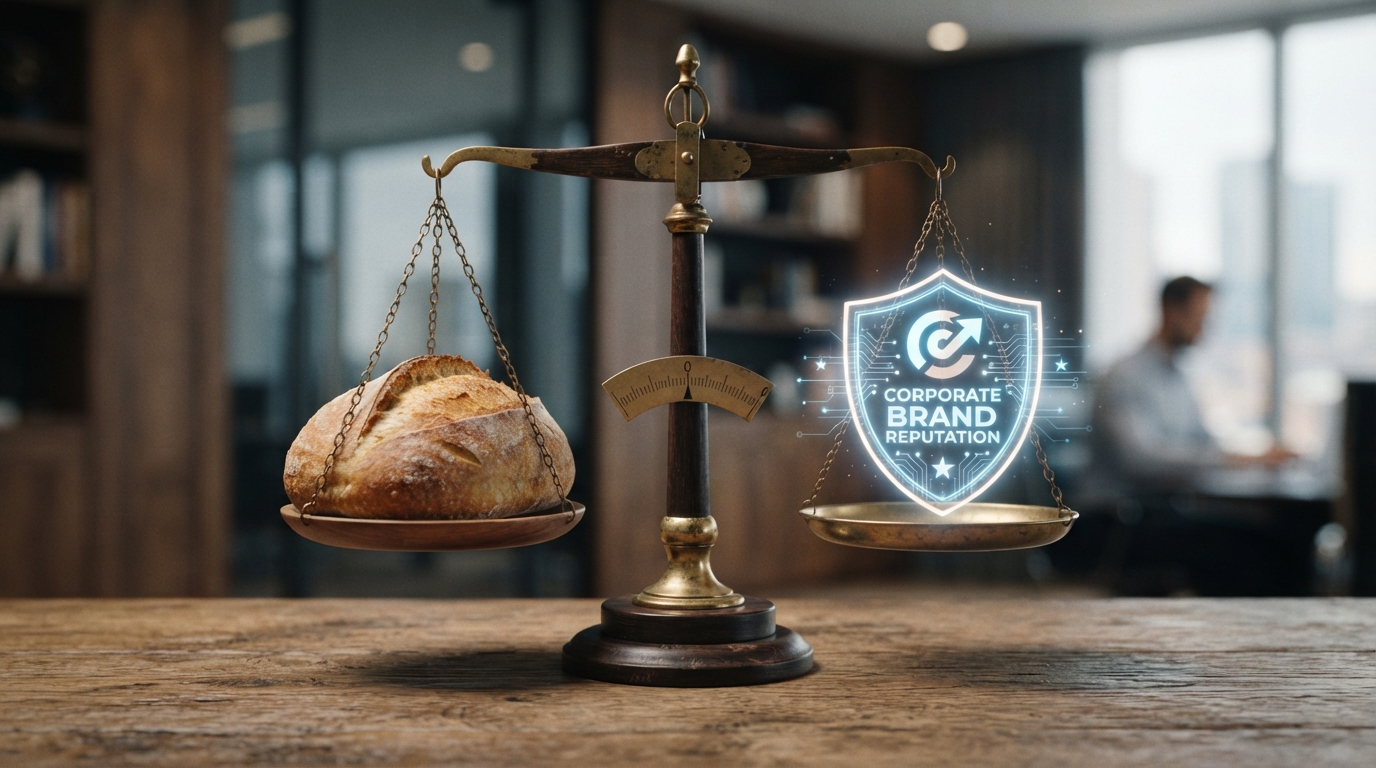


A brand’s reputation is built over years, but the way it responds to one difficult customer interaction can change the public perception. In today’s digital marketplace, where consumers can share their experience with thousands of people in minutes, the response to criticism can become as consequential as the complaint itself.
The controversy surrounding BON Bread and a viral video questioning the unusually long shelf life of a loaf of bread has brought this challenge into sharp focus. Beyond the debate over food preservation, the episode raises a broader question for Nigerian businesses: when consumers question a product, should a brand prioritise defending its reputation or demonstrating that it takes consumer concerns seriously?
For marketers, the distinction matters. Ethical branding is not simply about making promises of quality and safety. It also involves transparency, accountability and respect for the people whose confidence sustains a business.
In April 2026, Nigerian trader Love Dooshima shared a video expressing concern about a loaf of bread that she said had remained on her shelf for more than two months without developing mould. Although the initial video did not identify a brand, BON Bread’s manufacturer subsequently identified the product as its own and defended its quality. The dispute escalated into legal action seeking ₦50 million in damages, while Dooshima was detained by police before being released following intervention by the Inspector-General of Police.
The episode attracted national attention, shifting the conversation from the original concern to the company’s response and the treatment of a consumer who had publicly questioned a product.
In May, the National Agency for Food and Drug Administration and Control (NAFDAC) announced the findings of its investigation. The agency said the calcium propionate found in the samples tested was within the limits specified by the Codex Alimentarius, and that the samples contained no objectionable substances, including bromate and non-nutritive sweeteners. It concluded that the manufacturer had not violated its regulations.
That regulatory finding is important: the controversy should not be presented as proof that BON Bread was unsafe. But it does not erase the separate question of how a brand should handle public concern before the conclusion to the investigation.
The industry perspective
Dr. Abayomi Awe, managing director of Rehoboth Bakeries and deputy president of the Premium Breadmakers Association of Nigeria, offered an industry perspective on the debate. In comments reported by Church Times Nigeria, Awe said bread that remained on a shelf for two months raised questions about preservation, adding that bread ideally should last between five and seven days.
His comments provide a useful perspective from within the baking industry, although expected shelf life varies according to formulation, packaging, storage conditions and approved preservation methods. NAFDAC’s subsequent findings on the samples tested must therefore remain part of the account.
More broadly, the episode demonstrates why credible communication matters when technical questions become public controversies. Consumers need clear explanations they can understand, while brands need to respond with evidence rather than allowing suspicion, defensiveness or online speculation to dominate the conversation.
Ethics must extend beyond the product
Ethical marketing is often discussed in terms of truthful advertising, accurate labelling and compliance with regulations. These remain essential, particularly in the food industry, where consumers depend on manufacturers to provide safe products and reliable information.
However, ethical responsibility also extends to customer relations. A consumer who raises a concern is not automatically an adversary. Where a complaint is mistaken, a brand can correct it with evidence. Where an experience warrants investigation, it can acknowledge the concern and explain the steps being taken.
This does not mean businesses must accept every allegation as fact or surrender their right to protect themselves against demonstrably false claims. It means that the response should be proportionate, transparent and mindful of the relationship between the company and its customers.
Brands that approach complaints as opportunities to listen and provide clarity can demonstrate their standards in practice. Those that appear more concerned with silencing criticism than addressing the underlying question risk turning a manageable customer relations issue into a wider reputational challenge.
Trust is a business asset
For marketing and communications professionals, the BON Bread episode reinforces a fundamental principle: brand reputation is shaped not only by what a company says about itself, but also by how it behaves when challenged.
A strong response to consumer criticism begins with listening, establishing the facts, communicating clearly and allowing credible evidence to guide the conversation. Where a regulator is involved, brands should explain the process and communicate the findings accurately. Where a customer has been treated unfairly, accountability and corrective action may also be necessary.
Ultimately, ethical branding cannot exist only in campaign messages or corporate statements. It must be visible in a company’s decisions, its customer service and its willingness to engage with legitimate concerns.
For Nigerian brands competing for consumer confidence, the lesson is not that every online complaint is correct. It is that every complaint presents a choice: respond in a way that builds understanding, or risk allowing the response itself to become the bigger story.
In the long run, protecting a brand means more than defending its name. It means giving consumers sound reasons to trust it.
ALSO WATCH: MARKETING EDGE ONTV




Comment
No comments found.