
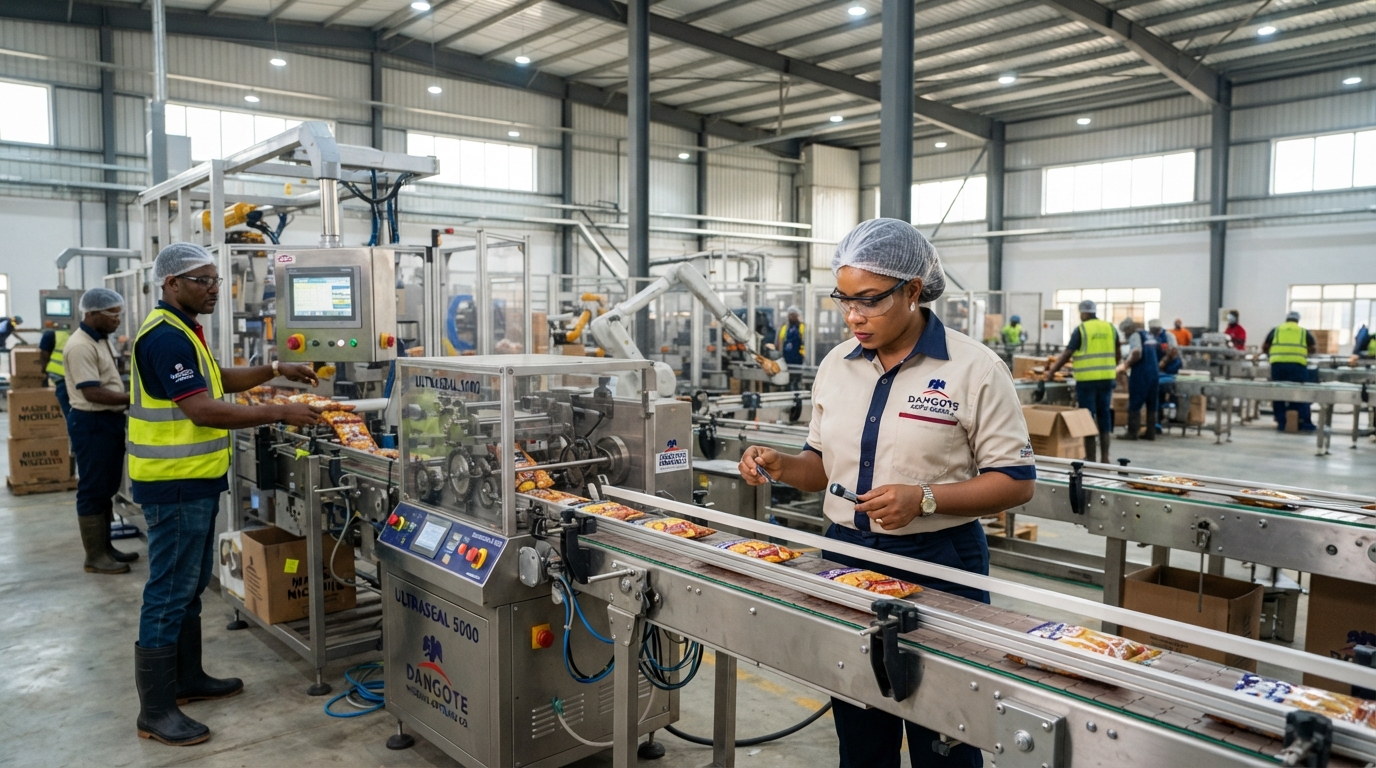


Nigeria’s manufacturing sector recorded a 102.16 per cent increase in investment in assets in 2025, as businesses stepped up efforts to reduce dependence on imported raw materials, strengthen local supply chains and manage rising operating costs.
Data from the Manufacturers Association of Nigeria (MAN) showed that investment rose to ₦1.33 trillion in 2025, from ₦658.81 billion in 2024. The figures were disclosed in the association’s 2025 annual report presented by its Director-General, Segun Ajayi-Kadir, at MAN’s 54th Annual General Meeting in Lagos.
The increase reflects a growing emphasis on backward integration, a strategy through which manufacturers develop local sources of raw materials and intermediate goods previously obtained from overseas suppliers.
According to Ajayi-Kadir, manufacturers have been expanding domestic production capacity to reduce their exposure to foreign exchange shortages and improve operational efficiency. Some businesses have invested in local agro-inputs, packaging materials, industrial raw materials and processing facilities.
Investment also gathered momentum in the second half of the year, rising to ₦764.07 billion from ₦567.82 billion in the first half, an increase of 34.56 per cent. Manufacturers also invested in their own distribution fleets to gain greater control over transportation costs and delivery schedules.
The shift towards backward integration reflects the risks associated with relying heavily on imported inputs in an economy exposed to exchange-rate volatility and global supply chain disruptions.
By sourcing more material locally, manufacturers can potentially reduce foreign exchange exposure, improve supply reliability and retain a greater share of value within the domestic economy. Increased local production could also create opportunities for agricultural suppliers, small industrial businesses and other firms serving manufacturing value chains.
However, the transition is not without challenges. Domestic suppliers must be able to provide raw materials at competitive prices, in sufficient quantities and at the required quality. Where local inputs are more expensive or inconsistent, manufacturers may struggle to achieve the anticipated cost savings. Despite the investment increase, high energy costs, expensive credit and logistics constraints continue to weigh on manufacturers.
MAN reported that manufacturers spent approximately ₦1.35 trillion on alternative power in 2025, up from ₦1.1 trillion in 2024, highlighting the scale of expenditure required to keep production running amid unreliable electricity supply.
Weak consumer purchasing power also presents a challenge. Increased investment can expand productive capacity, but manufacturers still need sufficient demand to sell their output and recover the cost of new equipment and facilities.
Ajayi-Kadir has called for measures including more affordable industrial financing, lower energy costs, improved logistics infrastructure and incentives for businesses that source raw material locally. MAN has also proposed stronger local procurement policies to support domestic manufacturers.
The 102 per cent increase signals a substantial commitment of capital to Nigerian manufacturing. Whether that investment produces more competitive products, stronger domestic supply chains and sustainable industrial growth will depend on the ability of businesses to overcome structural constraints and convert expanded capacity into commercially viable output.
ALSO WATCH: MARKETING EDGE ONTV




Comment
No comments found.