
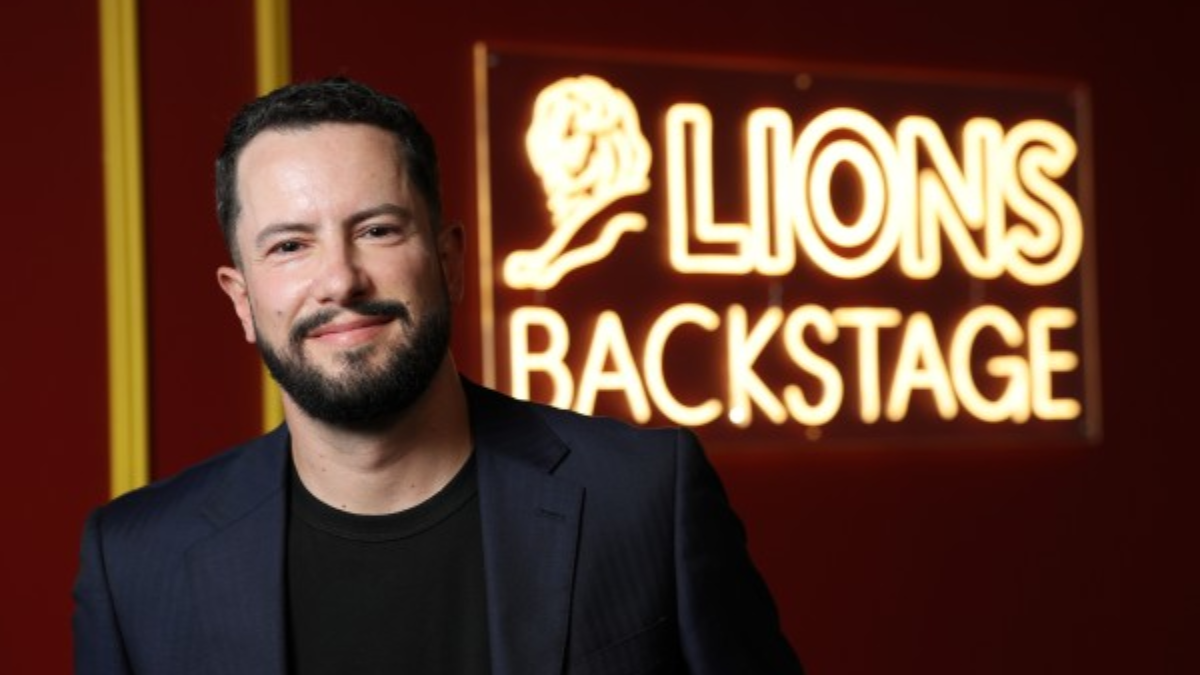


The most important thing said about influencer marketing at Cannes Lions 2026 did not come from a platform. It came from the man responsible for marketing one of the largest portfolios of consumer brands on earth, and it should make every marketer who has ever briefed a creator stop and think.
“Somewhere along the way, value has been replaced by volume,” said Leandro Barreto, Unilever’s Global Chief Marketing Officer, when he took to the stage at the Cannes Palais this week, warning that marketers have become “incredibly efficient in creating things that people ignore.”
It was a precise, uncomfortable diagnosis of an industry that has spent the last decade scaling content production without asking whether any of it was worth producing. And it came from a man who oversees 400 household brands; from Dove to Vaseline to Hellmann’s to Knorr, used by billions of people across more than 190 countries.
Barreto’s argument, delivered at Cannes Lions 2026 as part of Unilever’s articulation of its “Desire at Scale” marketing strategy, centres on a single reframe: “At Unilever, we have decided to stop asking what our brands want to say and start asking what others want to talk about our brands.”
That shift, from broadcast to conversation, from message to movement, is the philosophical foundation on which Unilever is now rebuilding its entire approach to creator marketing, community engagement, and demand generation.
The problem with influencer marketing as it has been practised
To understand what Barreto is arguing for, you first need to understand what he is arguing against.
For most of the past decade, influencer marketing operated on a simple and seductive logic: find someone with an audience, pay them to talk about your product, and extend your reach into communities you cannot access through traditional media. The creator is a distribution channel. The brand controls the message. The transaction is clean.
Barreto rejected that model explicitly at Cannes Lions 2026, saying Unilever increasingly views creators as partners in shaping brands rather than simply distribution channels. The distinction matters enormously. A distribution channel carries your message where you tell it to go. A creative partner helps you figure out what your message should be in the first place, and whether anyone will care enough to pass it on.
“If nobody’s carrying your fire anymore, you don’t have a media or a creator problem. It means people don’t want to share it.” And no media plan will fix that. Marketing today is about building something worth repeating,” Barreto said.
That last line is the one that should sit most heavily with marketing and brand leaders. A failing campaign is not a distribution problem. It is a desirability problem. And throwing more creator spend at undesirable content does not make it worth sharing; it just makes the failure more expensive.
Desire at scale: Poetry and Plumbing
Unilever’s strategic responses to this problem are what Barreto calls “Desire at Scale”; a framework built on two interdependent elements that he describes, memorably, as poetry and plumbing.
“Poetry creates meaning. Plumbing is the systems, tools and technology that make a story scale. Without poetry, nothing matters. Without plumbing, nothing spreads,” he said.
The poetry is the brand idea; the emotional resonance, the cultural truth, the human insight that makes a piece of marketing worth caring about. The plumbing is the infrastructure of creators, platforms, data systems, and distribution mechanisms that allows the idea to travel at speed and scale once it exists.
Most brands, Barreto argues, have spent the last several years investing heavily in plumbing while neglecting poetry. The result is a marketing ecosystem with extraordinary distribution capability and very little worth distributing.
Unilever’s approach is grounded in going where consumers are, growing brands by embedding them authentically in the spaces where trust, influence, and real conversations happen. Critically, Barreto described culture not as a single channel but as an ecosystem, where micro-moments rooted in niche communities and mass moments like the FIFA World Cup fuel and strengthen each other. A creator in Lagos amplifying a global campaign moment is not a footnote to the strategy. They are the strategy.
The campaigns that prove the model
Barreto did not arrive at Cannes Lions with theory alone. He brought receipts.
The Vaseline Verified campaign invited consumers to share unconventional uses for Vaseline products across social channels. Unilever scientists then tested and verified, or disproved, each hack, with the brand later working with creators behind the most popular ideas to develop actual products based on those community insights. The campaign delivered a 43 per cent uplift in sales and earned recognition at Cannes Lions, including the prestigious Titanium Lion award. According to Unilever, Vaseline has recorded double-digit growth for three consecutive years.
The model here is radical in its simplicity. Unilever did not brief Vaseline’s story to creators and ask them to tell 2it. It gave the community a platform, let them generate the ideas, verified the ones that worked, and then turned the best community insights into actual products. The creator is not the distribution channel. The creator is the co-author.
The Hellmann’s collaboration with NFL quarterback Will Levis offers a different but equally instructive example. After Levi’s social media posts featuring mayonnaise in coffee attracted widespread attention, entirely organically, with no brand involvement, Hellmann’s moved quickly to formalise the partnership. The result was a mayonnaise-inspired fragrance that sold out in less than a minute and generated more than 10 billion online impressions.
That is the reactive version of the model. Unilever did not create the cultural moment. It identified one that was already happening, moved fast enough to be part of it, and let the existing energy carry the campaign further than any planned activation could have.
The Dirt Is Good partnership with Arsenal Women demonstrates a third dimension: brand as cultural participant rather than sponsor. The collaboration expanded beyond a commercial arrangement into campaigns addressing period stigma and the participation gap in women’s sport, co-created with Arsenal Women players and a group of girls aged 13 to 18. Persil recorded a 13 per cent year-on-year increase in usage among consumers aware of the partnership, alongside 6 per cent growth among supporters of rival football clubs.
Three campaigns. Three different models. One consistent principle: the brand is not the author. The community is.
What this means for Nigerian brands and agencies
Barreto’s Cannes Lions address arrives at a particularly useful moment for Nigerian marketing professionals navigating a creator economy that is growing faster than most brands have frameworks to manage.
Nigeria’s cultural landscape is one of the most culturally generative on the continent. Nigerian creators, across fashion, food, comedy, lifestyle, beauty, and music, do not just reach large audiences. They shape culture. They originate trends that travel globally. They carry the kind of authentic community trust that Barreto described as the foundation of modern brand growth.
But the dominant model of creator engagement among Nigerian brands still reflects what Barreto identified as the old approach, the transaction dressed as a relationship. A famous face. A product is placed in the hand. A caption written by someone who has never met the person. A cheque was exchanged.
Unilever’s Cannes Lions framework asks a different question. Not: which creator has the biggest following in our target demographic? But what are communities already talking about that our brand has the credibility and authenticity to participate in? Not: how do we use this creator to distribute our message? But: how do we co-create something with this person that their community will actually want to share?
Barreto was explicit that this approach is already delivering commercial results. Unilever’s Power Brands reported underlying sales growth of 5 per cent and volume growth of 4 per cent in the first quarter of 2026, with creator and community-led marketing cited as a contributing factor.
For Nigerian brand managers and agency strategists, the Unilever model offers both a challenge and a blueprint. The challenge is to stop measuring creator marketing by reach and impressions and start measuring it by the quality and velocity of sharing, by whether the content people are producing with or about your brand is something communities actually choose to pass on. The blueprint is the co-creation framework: brands that give communities something worth talking about, and then get out of the way long enough to let the conversation develop.
Barreto’s closing challenge at Cannes Lions 2026 was direct: “Are we building something worth passing on?”
It is a question that reframes the entire creator marketing brief. Not: how many people will see this? But: how many people will share it? Not: did we reach the audience? But: did we give them something worth telling someone else about?
For the Nigerian marketing industry, which has both the creator talent and the cultural richness to answer that question with a resounding yes, the work is in building the brand ideas worthy of the ecosystem that already exists.
ALSO WATCH: MARKETING EDGE ONTV




Comment
No comments found.