


Less than two weeks after Spain lifted the World Cup trophy, football is in crisis.
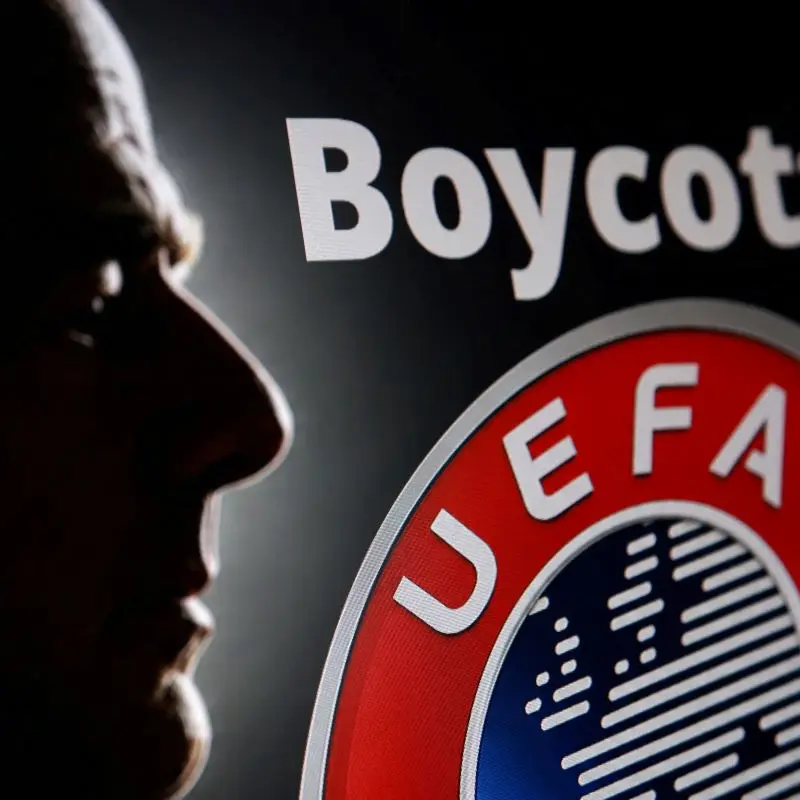
On July 30, 2026, UEFA’s 55 member nations voted unanimously to boycott all FIFA competitions, including the World Cup, unless FIFA abandoned its proposal to sell stakes in a new commercial subsidiary to private investors. The vote followed an emergency virtual meeting convened at short notice, and the statement that emerged was among the strongest in football’s history.
“No UEFA national teams will participate in any FIFA competition for so long as these proposals remain alive, unless this proposal has been abandoned in its entirety and binding assurances have been given that FIFA will never again open its governance or competitions to private ownership,” UEFA said.
“The World Cup cannot be treated as an investment product. It is one of football’s greatest sporting legacies. It has been built over generations by players, national teams and supporters across every continent. No part of it should ever be surrendered to private investors. The World Cup is not for sale.”
Europe was not alone. Concacaf, whose members include 2026 World Cup hosts the United States, Canada and Mexico, also rejected the proposal. The Asian Football Confederation called for an urgent review of FIFA’s governance, while the U.S. Soccer Federation publicly declared its support for Concacaf. Within 24 hours of UEFA’s vote, governing bodies representing many of the world’s most commercially valuable football nations had lined up against FIFA President Gianni Infantino’s plan.
At the centre of the dispute is a proposed commercial subsidiary known as FIFA Forward for Excellence (FFE), through which FIFA intends to raise up to $4.2 billion from private investors later this year, based on an estimated equity valuation of $20 billion. FIFA said the funds would strengthen football development programmes, with each of its 211 member associations expected to receive significantly more funding through 2038 than is currently projected.
However, the identity of the proposed lead investor has intensified the controversy. Thrive Eternal, a fund linked to Joshua Kushner, brother of Jared Kushner, the son-in-law of U.S. President Donald Trump, is expected to lead the investor group. As a result, the proposal has attracted scrutiny not only on governance grounds but also on political ones, coming just weeks after Infantino appeared alongside Trump during the World Cup final trophy presentation.
FIFA has remained defiant. “Nobody is selling football. This is not something FIFA would ever entertain,” the organisation said in response to UEFA’s boycott threat. Infantino has described the proposal as a way to democratise football globally and insists participation would be optional for member associations rather than compulsory.
Nevertheless, the most immediate and commercially significant consequence of the standoff is receiving far less attention than it deserves, and it directly affects the brands, sponsors and media partners that have built billion-dollar strategies around the FIFA World Cup.
Coca-Cola, Adidas, Visa, Hyundai and dozens of other global brands have signed long-term FIFA sponsorship deals on the assumption that the World Cup would remain the world’s biggest and most commercially valuable sporting event. European national teams occupied six of the eight quarter-final places and three of the four semi-final spots at the 2026 tournament, with Spain ultimately lifting the trophy. A World Cup without European nations would not simply be a diminished sporting spectacle. It would be a fundamentally different commercial product, one many sponsors never agreed to buy.
The Trump-Kushner connection also introduces a layer of brand risk that few sponsor communications teams budgeted for. For multinational companies that have carefully protected their political neutrality, particularly in markets where any perceived association with the Trump administration carries reputational sensitivity, the proposed investor structure presents an unwelcome complication.
The timing further compounds the uncertainty. The first real test of UEFA’s boycott stance comes in September, when Poland is scheduled to host the FIFA U-20 Women’s World Cup. Beyond that, the 2027 FIFA Women’s World Cup in Brazil looms, with reports suggesting that women’s football could become an early casualty of the growing power struggle between FIFA and UEFA.
FIFA’s Congress, which holds final authority over the FFE proposal, is scheduled to meet in September 2026. The coming weeks will determine whether Infantino can secure enough backing from FIFA’s remaining 156 non-UEFA member associations to proceed, or whether the scale of the opposition forces a retreat.
For the marketing and brand industry, the lesson is already becoming clear. The commercial value of the FIFA World Cup is inseparable from its sporting credibility. Sell part of the governance, and you risk diminishing the very product sponsors invested in.
“Some things are simply too important to sell,” UEFA said. “Football’s future cannot be dictated by stakeholders seeking financial gain.”
FIFA disagrees. The brands caught in the middle are watching very carefully.
ALSO WATCH: MARKETING EDGE ONTV



Comment
No comments found.