
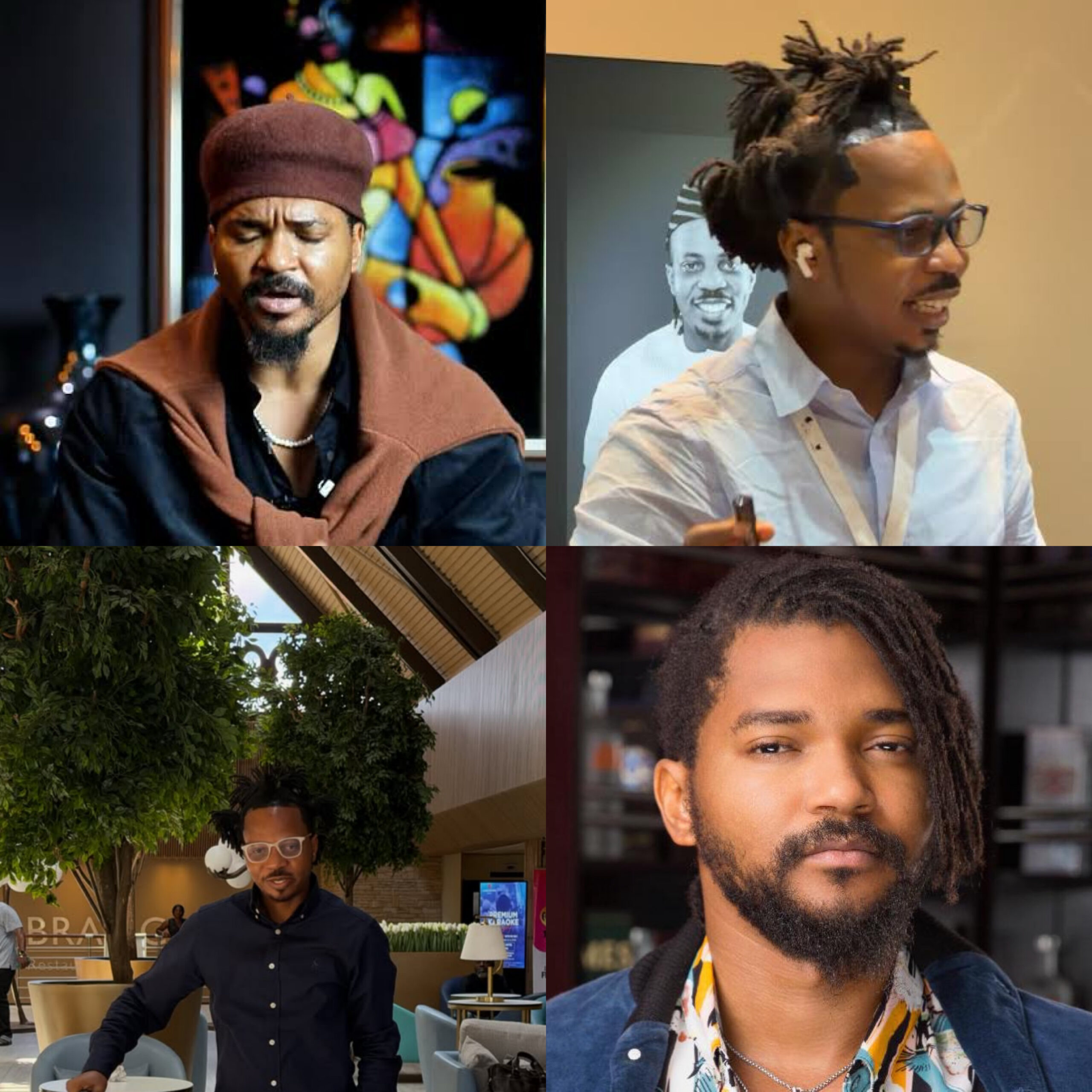


A conversation that started on Instagram has grown into one of the most honest and necessary debates the Nigerian creative industry has had in a long time. When Anthony Eigbe, Chief Creative Officer at Tecno West Africa, posted his view on who Nigerian agencies should be sending to the Cannes Lions International Festival of Creativity, the response was swift and substantive.
Sherrif Akinpelu, Founder of Strategy Trybe, responded with his own video taking the conversation deeper. Together, the two perspectives paint a picture of an industry that knows what it needs to do but has not yet found the structural will to do it.
Eigbe’s position is clear and carries the weight of someone who has watched the pattern repeat itself year after year. Nigerian agencies, he argues, are sending the wrong people to Cannes.
“Agencies need to send their clients more than they send their creatives or their executive teams if we really want our marketing industry to compete globally,” he said.
His reasoning is not a dismissal of Nigerian creative talent. It is a strategic argument about where the real leverage lies. Cannes Lions, Eigbe points out, is not simply a festival for advertising creatives. It is a global marketing gathering attended by the most senior marketing minds from the world’s most powerful companies.
“The list of speakers and attendees often includes the biggest marketers in the world, C-suite marketers from Canva, OpenAI, Microsoft, Spotify etc. These are the biggest clients in marketing who approve creativity,” he said.
His argument is that the best person to convince a Nigerian client of the value of bold, award-winning creativity is not a Nigerian creative director. It is another client who is already doing it at global scale.
“There’s no better person to sell the significance of creativity than another client who does it on a bigger and more impactful scale,” Eigbe said. He goes further, making a point that many Nigerian creatives will find uncomfortable but hard to argue with.
“Creatives from Nigeria do not need to attend the festival as much as we think we do. We barely enter any works. We barely win any awards. We barely even get any clients from the festival. Most of what we go there to do is get inspired. And any true creative knows how to get inspiration without physical participation in a festival.”
He cites Love to Work, Ads of the World, the Little Black Book on YouTube and the countless podcasts featuring creative directors worldwide as evidence that inspiration is accessible without a flight to the French Riviera.
But the most powerful part of Eigbe’s argument is about ambition and self-interest. He believes that if Nigerian clients attended Cannes, something would shift in them.
“If clients go to Cannes, there’s a mindset shift that I suspect will happen and it will come from a place of selfishness,” he said. He points to a gap that is rarely named plainly in industry conversations.
“As it is in Nigeria, there’s never been a case where a marketing director, a marketing manager, a CMO is sought out globally for doing work that is outstanding in Nigeria. Microsoft Global is not looking at Nigeria to pick a brand director. But if our clients go to Cannes, they’ll see Fernando Machado, they’ll see Bozoma Saint John, people who came from small places but became global heads of marketing for the biggest brands in the world. They’ll also see that breaking out of the Nigerian context and operating globally is just about three or four campaigns away and they too can do it,” he said.
It is a compelling case built not on altruism but on the most reliable motivator in business: personal career ambition.
Akinpelu engaged with Eigbe’s point thoughtfully, agreeing with its spirit while adding a structural.
He described Eigbe’s perspective as a vulnerable and valid point of view, but argued that to act on it, agencies need to first understand why attendance at Cannes is as limited as it is.
“If you look at the profitability of the advertising industry over the past decade, you see that there has been a decline in revenue over time. Agencies have been struggling to survive, not just in Nigeria. It is a global problem. It is only when an agency is able to not just break even but make profits that you can think about sending people to Cannes, which is why what we see in Nigeria for the agencies that go for the festival are is usually the leadership of the agency, CEO, COO etc,” he said.
Akinpelu offered a solution that is practical and immediately actionable.
“To resolve this money problem, it’s not difficult at all. It is just to get agencies to actually make a business case for why it is important for some of their key clients to be at Cannes. Clients are open to some of these ideas, but they need a business case that they can take to management to actually get the approval for the funds,” he said.
He challenges Nigerian agencies to stop treating Cannes as a creative pilgrimage and start treating it as a commercial investment that requires the same rigour they would apply to any other client proposal.
“Put together your business case for the next Cannes. Why should your top three clients be there? What value does it add to their business? How does it help them achieve their commercial ambition in the short, medium and long term? How does it build their brand? Those are the key questions,” he said.
Akinpelu adds a second discipline that he says is equally important: preparation. Attending Cannes without a submission strategy is, in his view, as wasteful as not attending at all.
“By the time you are done with your business case, you have to start your pre-participation process early enough. What are those campaigns you are submitting? Those who have attended before, what are the key lessons they shared, what did not work and how do you change your creative process? Everything has to be data-led. Get your data,” he said.
Taken together, the two perspectives offer the Nigerian creative and marketing industry a roadmap it has been circling for years without quite landing on. Eigbe identifies the strategic lever: getting Nigerian clients into rooms with global marketing leaders who can shift their thinking about what ambition looks like.
Akinpelu identifies the practical pathway: building the business case that makes that attendance financially defensible and pairing it with the creative preparation that gives Nigerian agencies a genuine shot at winning. Neither conversation is about whether Nigerian creativity is good enough. Both are about whether the structures, relationships and ambitions surrounding that creativity are being managed with the seriousness that global competition demands. That is the real conversation the industry needs to be having out loud.




Comment
No comments found.