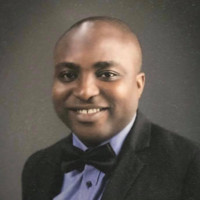



As businesses navigate the second half of 2026 amid economic reforms, persistent inflation and changing global realities, Business Growth Strategist, Efosa Aigbe, has challenged professionals and business leaders to stop waiting for better conditions and instead position themselves to win in the current environment.
Speaking during Winning Edge Global Services’ weekly executive webinar themed “Sustaining My Growth Momentum,” Aigbe said the first half of the year has provided enough economic signals for individuals and organisations to rethink their strategies, insisting that success in the months ahead will depend more on execution than on economic conditions.
“We know what is happening. We know what the numbers are saying. We know what the projections are looking like now more realistically. So how do we play to win?” he asked.
His presentation, titled “Playing to Win: How to Turn Economic Realities into Personal and Business Growth,” built on earlier sessions that examined Nigeria’s economic outlook, shifting the conversation from understanding the economy to identifying practical opportunities within it.
Aigbe argued that while businesses often focus on economic challenges, the global economy is simultaneously creating new opportunities for those prepared to recognise them.
One of those opportunities, he said, is the global transition away from traditional energy sources.
“Oil dependence is being challenged,” he said, pointing to the rapid rise of renewable energy and electric vehicles. “Many people felt electric cars would not come to Nigeria till 2030, but we have a lot of them all of a sudden locally. We are beginning to have charging stations along the roads in Lagos and Abuja.”
He noted that geopolitical tensions, including conflicts in the Middle East and Eastern Europe, continue to reshape global trade and commodity markets, creating unexpected advantages for countries and businesses that have invested ahead of the curve.
Using the Dangote Refinery as an example, Aigbe said preparation often creates opportunity long before the market recognises it.
“The Dangotes of the world, that prior to now were not waiting for a war between Iran and the US or Israel, built a refinery. Suddenly it has become a net exporter,” he said. “Dangote prepared. Today he is a net exporter of crude. It is expanding its refinery.”
Closer home, Aigbe said Nigeria’s economic landscape presents what he described as a “dual reality.” While inflation remains high and households continue to feel the pressure of rising living costs, he argued that important macroeconomic indicators have improved.
“The projection at the beginning of the year was around three percent growth, but that has now been revised upward to about 4.1 or 4.2 percent depending on where you are reading from,” he said.
He acknowledged that inflation remains a concern despite official figures suggesting moderation.
“We are told that it is easing, but when you go to the market it seems like today is easier, then tomorrow is another story. Our pockets feel it.”
Despite these pressures, he pointed to greater exchange rate stability, infrastructure development, increased foreign investor confidence and the expansion of Nigeria’s digital economy as positive signals for businesses willing to adapt.
According to him, artificial intelligence is no longer a future conversation but a present business necessity.
“There is the problem of personally not adapting to how AI is growing and changing,” he warned. “If you don’t adapt to that changing world as an individual, it is a problem. As a business, you are keeping costs that you could defer.”
Rather than seeing AI as a threat to employment, Aigbe described it as a tool for improving productivity, reducing costs and opening new markets.
He also highlighted the growing availability of financing for small and medium enterprises, saying many entrepreneurs are overlooking opportunities already available.
“There is a lot of SME financing coming now, whether from the banks or government. The huge amount of financing suddenly available is interesting, and those who are jumping at them are building strategic partnerships because most of these funding programmes are coming with ecosystems.”
For businesses, Aigbe identified what he called five winning plays that could determine success in the second half of the year.
The first, he said, is protecting cash.
“With the high interest rate, strong cash management is important. Focus on cash flow and liquidity.”
The second is creating greater value.
“Cost to value. Squeeze value. What value becomes added? Whether as an individual or as a business, value will keep you in business.”
He also encouraged organisations to build multiple value streams rather than relying on a single source of income, execute ideas faster and deliberately increase their market visibility.
“The world is rewarding execution, not ideas. You have an idea, you keep it in your head, you keep massaging it and doing all of that. Over time, you would have lost opportunities.”
Visibility, he argued, has become a competitive advantage.
“Nobody will buy, promote, recommend or partner with someone they cannot see. How visible are you? Are you engaging on LinkedIn? Are you participating in professional communities? Are you attending industry conferences?”
Drawing from his organisation’s experience, Aigbe recalled how a casual conversation at a conference eventually led to one of its biggest strategic partnerships.
“We went into one of the sheds and just spoke to somebody. Today, they are one of our biggest supporters.”
For professionals seeking personal growth, Aigbe challenged participants to answer five practical questions:
He also encouraged businesses to ask equally difficult questions about digital adoption, strategic partnerships and emerging opportunities before the end of the year.
Perhaps his strongest message was that economic growth means little unless individuals outperform inflation.
“We say we have over four percent GDP growth, but we have at least 15 percent inflation. For you to grow, you need to outperform that inflation. If you don’t outperform it, GDP growth is useless to you.”
To achieve that, he recommended three strategic levers: digital leverage, revenue velocity and cost efficiency.
“Growth is no longer passive,” he said. “It requires deliberate strategic intent.”
As the year enters its final months, Aigbe urged participants to use August to review performance and eliminate distractions, September to rebuild capabilities and relationships, October and November to scale execution and close deals, and December to measure progress while preparing for 2027.
He compared sustained growth to the function of a flywheel, explaining that professionals must continually generate, store and release momentum.
“You must be a flywheel. You cannot just store capacity. You must release it and keep restarting your system because growth keeps moving, and momentum will keep you moving when motivation disappears.”
He concluded by reminding participants that while the economy presents both opportunities and obstacles, the final outcome depends largely on personal choices rather than external conditions.
“This economy will not determine your finish. Who will determine it is your decision. The market will reward you because you prepared before opportunities became obvious. Start today so that you can finish strong, because winning is intentional.”

Comment
No comments found.