

For years, blocking Google was unthinkable, now it is no longer.
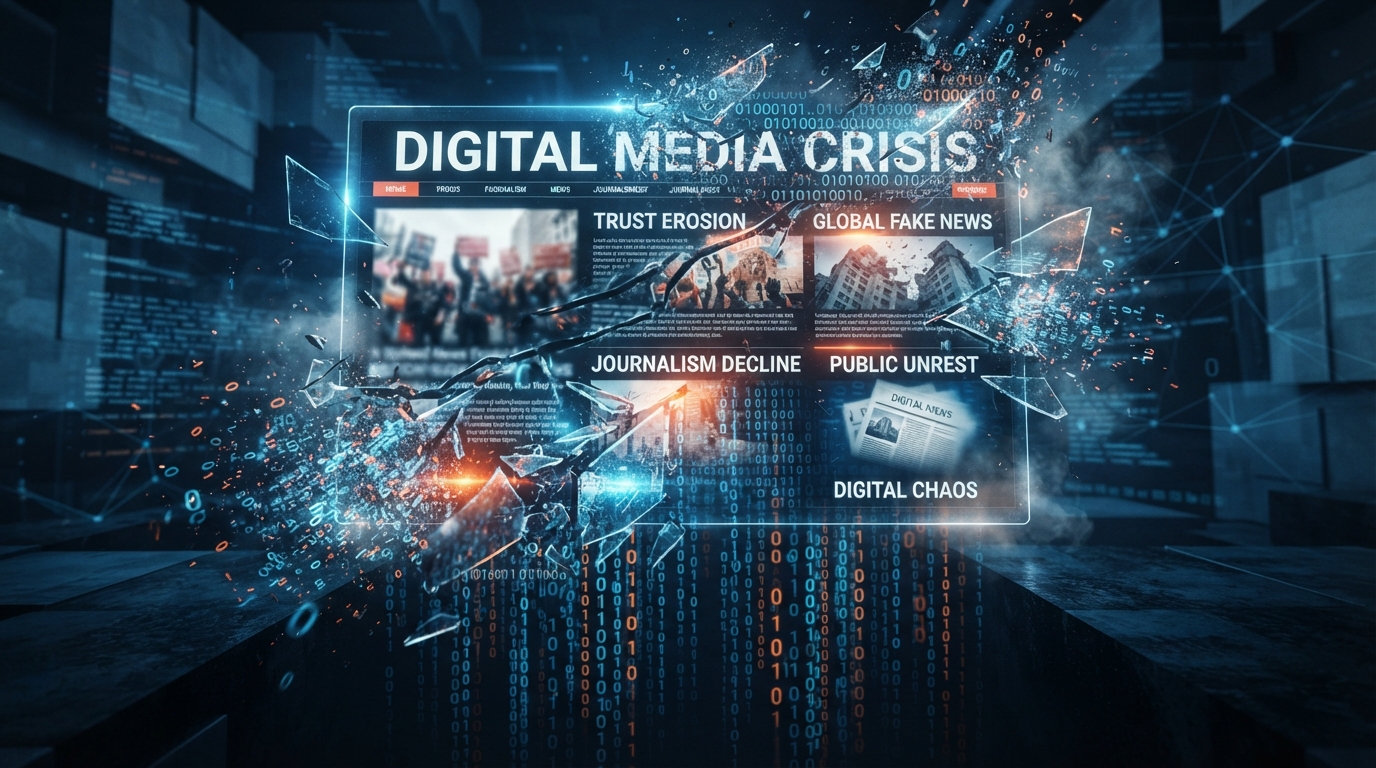
In 2024, Nilay Patel, editor-in-chief of the Verge, coined a term that has since become one of the most debated phrases in digital media; Google Zero. He defined it as the moment when Google Search stops sending traffic outside its own search engine to third-party websites entirely. According to Neel Dhanesha writing for Nieman Lab, that moment has increasingly arrived.
The numbers confirm it. Search traffic declined by more than 40 per cent for some publications between June 2025 and June 2026, according to Semrush data reported by The Wall Street Journal. Furthermore, as Marketing Edge previously reported, AI Overviews now result in 58 per cent of Google searches ending with zero click; meaning users get their answers directly from Google without ever visiting the websites that produced them.
However, what makes the current moment different from previous years of declining search traffic is not the scale of the losses. It is what publishers are now willing to do about it.
USA Today Co. has stated it may turn off Google’s access completely if search traffic continues to decline. Reddit is reevaluating its $60 million per year licensing deal with Google. Politico and Reuters are considering limits on Google bot access and registration walls. People Inc. has said blocking Google entirely is “100% on the table.”
These are not fringe publications experimenting at the margins. They are some of the most visited and most commercially significant digital media properties in the world. Consequently, the fact that they are openly discussing the nuclear option, cutting Google off entirely, signals that the publisher-search engine relationship has reached a breaking point that no amount of incremental algorithmic adjustment will fix.
The core issue is one that Marketing Edge has been tracking closely. Google uses the same web crawlers both to index websites for traditional search and to train its AI models. Publishers can block those bots, but doing to risks their sites disappearing from Google Search entirely. That tradeoff once seemed impossible to contemplate. Nevertheless, as search traffic collapses and AI-generated answers replace clicks, the calculation is changing.
READ ALSO: How Google became the biggest threat to the publishers it once saved
Moreover, a British regulatory court has now ruled that Google must allow publishers to opt out of AI features without affecting their traditional search results; effectively forcing Google to decouple the two functions that publishers have been complaining about for months. Google is currently testing that option in the United Kingdom. Therefore, if the British model spreads to other jurisdictions, it would fundamentally alter the terms on which publishers engage with Google globally.
Additionally, publishers are experimenting with entirely new monetisation models to replace lost search revenue. Time magazine is testing text-based ads embedded in its content that human readers never see, but that AI crawlers might find and read. It is an extraordinary inversion of the traditional advertising model and a sign of how desperate the search for alternative has become.
For Nigerian digital publishers and content creators, Google Zero is not a distant threat. As Marketing Edge reported in its analysis of Google’s impact on publishers, Nigerian digital media properties derive between 20 and 40 per cent of their external referral traffic from Google Search. Furthermore, the structural changes driving Google Zero in American and British markets; AI Overviews, zero-click search, bot-driven content extraction, are platform-level changes that apply globally regardless of geography.
The British court ruling offers the most immediate reason for hope. If regulators can force Google to separate AI training from search indexing, publishers regain the ability to protect their content from AI extraction without sacrificing their search visibility. However, that regulatory protection does not yet exist in Nigeria or across most of Africa.
Consequently, the most urgent action for Nigerian publishers is one we identified previously; building direct audience relationships through email, WhatsApp, and owned channels that Google cannot disrupt. The publishers who survive Google Zero will not be the ones who waited for a regulatory solution. They will be the ones who stopped depending on Google before Google stopped depending on them.
ALSO WATCH: MARKETING EDGE ONTV



Comment
No comments found.