
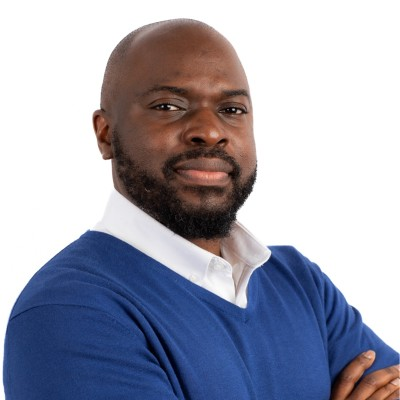


A new piece by Oti Ukubeyinje, Consumer Data and CRM leader at Diageo, and one of Nigeria’s most respected digital marketing strategists, carries an argument worth paying attention to.
The thesis is deceptively simple: the brands that win cultural partnerships are not the ones with the biggest cheques. They’re the ones with the best timing.
Ukubeyinje opens with Ojude Oba. A few years ago, most marketers would have struggled to justify significant investment in the Ijebu festival. Then 2024 happened, Farooq Ore-Ogba rode in, the internet crowned him the “King of Steeze,” and suddenly every brand wanted association with the platform. His point is sharp: the culture hadn’t changed overnight. The market had simply caught up to what the community already knew.
From there, he lays out four principles he argues underpin every successful cultural partnership: enter early, fit authentically, integrate beyond sponsorship, and play the long game. A logo on a backdrop, he notes, is easily forgotten. Shared experiences aren’t.
The Nigerian examples he cites will be familiar to industry readers, though the framing is fresh. Guinness and Felabration works, he argues, not because Guinness sponsors the festival but because the brand already stood for boldness, creativity and self-expression, values Fela’s estate embodies. MTN’s sustained investment in Nollywood positioned the brand not as a telecoms company but as an enabler of Nigeria’s creative economy. Gulder Ultimate Search, meanwhile, remains one of the country’s strongest examples of a brand building a cultural property from scratch rather than buying into one that already exists.
The global comparisons, Red Bull, Patagonia, and Nike’s Colin Kaepernick partnership, all point to the same conclusion: the brands that become culturally relevant do so by adding something meaningful to the culture, not extracting attention from it.
Ukubeyinje ends with a concrete call to action for Nigerian brands. He points to the Itsekiri Global Homecoming, a week-long cultural, development and entertainment programme running from August 16–22, 2026, tied to the 5th Coronation Anniversary of Ogiame Atuwatse III, the Olu of Warri, as a platform that currently sits where Ojude Oba once did: respected within its community, not yet on every brand manager’s radar. He argues that this is precisely the moment to move.
“If the Homecoming evolves into one of Nigeria’s defining cultural platforms,” he writes, “today’s partners won’t simply be remembered as sponsors. They’ll be recognised as the brands that helped build the institution itself.”
It is a well-made point, and one that the Nigerian marketing industry, still heavily skewed toward reactive sponsorship, needs to hear more often.


Comment
No comments found.