
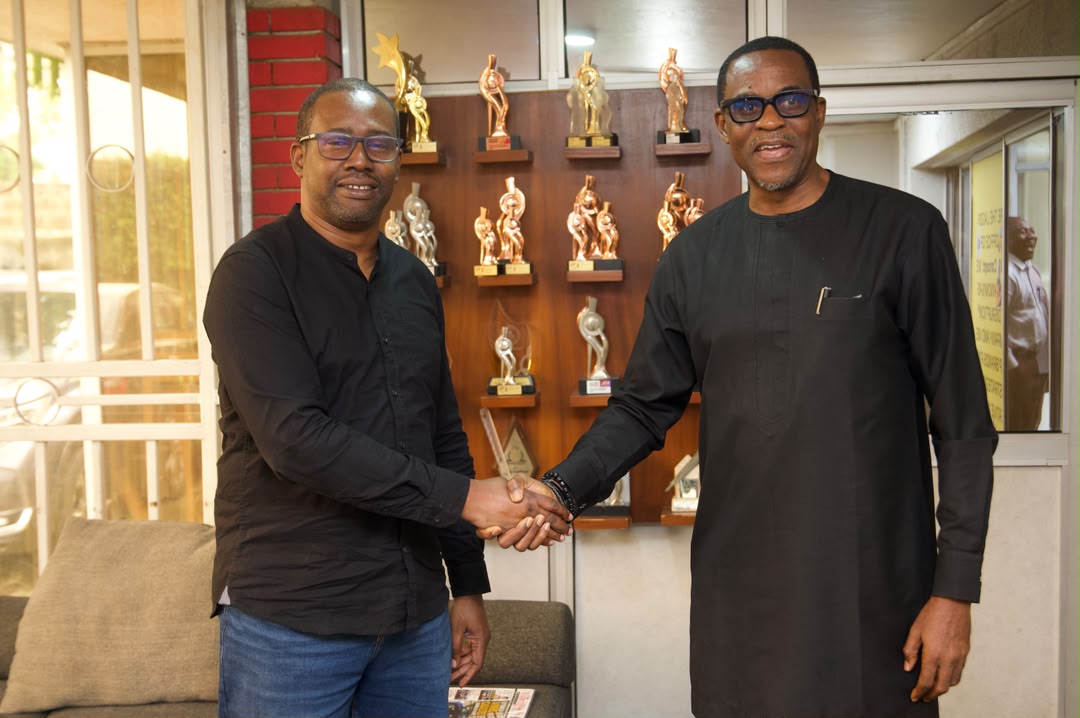


TBWA\Concept Unit Nigeria, one of Nigeria’s oldest and most influential creative agencies, is undergoing a leadership transition designed to reshape the country’s advertising industry. George Isitua-Onukwu will assume the role of Chief Executive Officer effective July 1, 2026, succeeding Kelechi Nwosu, who moves to the Board as Non-Executive Director and shareholder.
The change, announced recently in Lagos, positions the 42-year-old agency to move from a campaign-led service model to what it calls a “disciplined, future-thinking creative company” focused on product development, intellectual property ownership, and measurable marketing performance.
Founded in 1984 by Lere Awokoya and Kayode Idowu, TBWA\Concept Unit has consistently set the tone for Nigerian advertising. Under Nwosu’s leadership from 2005, the agency delivered landmark work that fused culture and commerce, including Spirit of Lagos and Proudly Made-in-Aba.
“TBWA\Concept Unit was founded on unconventional thinking. We have always been a strong creative organisation, moving products and ideas for ourselves and for clients,” Kelechi Nwosu, Outgoing CEO, said. “From July 1, the mantle passes to George. We will continue to evolve despite the current business headwinds.”
Proudly Made-in-Aba, delivered with support from the Ford Foundation and the Abia State Government, spotlighted Nigeria’s manufacturing capacity. Spirit of Lagos sought to align civic infrastructure with the citizen mindset. Nwosu said the assets remain with the agency and that conversations are ongoing with the Lagos State Government to revive the initiative.
Beyond campaigns, Nwosu has shaped the wider industry through leadership roles in AAAN, ASP, and ARCON, and through initiatives such as ‘Write Mothers’, which supports women entering copywriting, and the AAAN Women in Advertising programme.
Isitua-Onukwu, who previously served as Executive Business Director and COO, said the agency must move “beyond the brief” to remain relevant in a market disrupted by technology, shrinking budgets, and competition from MarTech and AdTech platforms.
“Clients now want to work faster and at lower cost. Speed and craft are being commoditised. Clients ask: why pay for a studio when ChatGPT can write the script, and AI can produce music and voiceover for under N50,000?” he said.
His response is a new business model centred on ‘brand economics’. “What if creativity were treated as an economic asset, not a service? Companies that own things outperform companies that sell services. Creativity without ownership is philanthropy,” Isitua-Onukwu stated.
The agency is already building that architecture. It has launched an SME capacity platform, Oririndu, a platform celebrating Nigerian food, and EkoCypher for Nigerian rap culture. In film, it produced Detour and will release Cursed Desire in cinemas later in the year.
“Africa is a creative powerhouse. Nollywood is third globally, with over a billion streams monthly. Yet the infrastructure to monetise it often lies elsewhere. The gap between making and owning is not talent; it is architecture,” he said. “We are building platforms to monetise our ideas so clients can engage culture, not just audiences.”
The strategy involves backward integration into tech, music, and film, joint IP ownership with clients, and new internal roles in product management, creative technology, and digital transformation.
“Challenging the status quo is in TBWA’s DNA. We are in conversations with partners on platforms and IP. Some clients are now interested in platforms and IP, not just retainers,” Isitua-Onukwu said.
He cited global formats like Big Brother and Love Island as examples. “Those are IPs. Why should agencies not own such platforms? We must stop focusing only on execution and start compounding value.”
As part of TBWA Worldwide, the Nigerian office is contributing Nigerian and African cultural insights to the network’s ‘Backslash’ intelligence platform and has delivered multi-country collaborations, including work for Apple and an eight-year MTN account.
The transition also addresses a critical industry challenge: talent drain. Experienced middle managers have migrated to client-side roles or abroad, while graduates often require a year of training to become productive.
“Advertising must be attractive again. Young people now prefer tech because of flexibility. We must create new talent and culturise it,” Isitua-Onukwu noted.
The agency plans to expand university partnerships, including with Covenant University, to close the curriculum gap. It is also restructuring to offer clearer career paths in emerging disciplines. “We need graduates who can add value immediately, like accountants,” he added.
Nwosu linked innovation to industry economics. “Jimi Awosika said it: you cannot innovate without margins. Our industry’s profit after tax is not comparable to banking. If we had taken equity in MTN when we helped grow it from zero to five million subscribers between 2001 and 2005, the story would be different. That is the problem we are fixing.”
Isitua-Onukwu said his mandate over the next three to five years is to build an agency that exports IP, retains top talent, and creates value beyond campaigns.
“This is the future we are building: a company measured by economic impact, not just output,” he said. “My role as CEO is to take this further.”
Nwosu affirmed his continued involvement. “I am rewiring, not retiring. I will teach, consult and remain engaged. Advertising is a jealous business.”
Photo Caption: L-R: Incoming Managing Director /CEO, TBWA/Concept Unit, George Isitua-Onukwu and Outgoing MD/CEO, TBWA/Concept Unit, Kelechi Nwosu at the company’s head office in Ikeja GRA, Ikeja.



Comment
No comments found.