
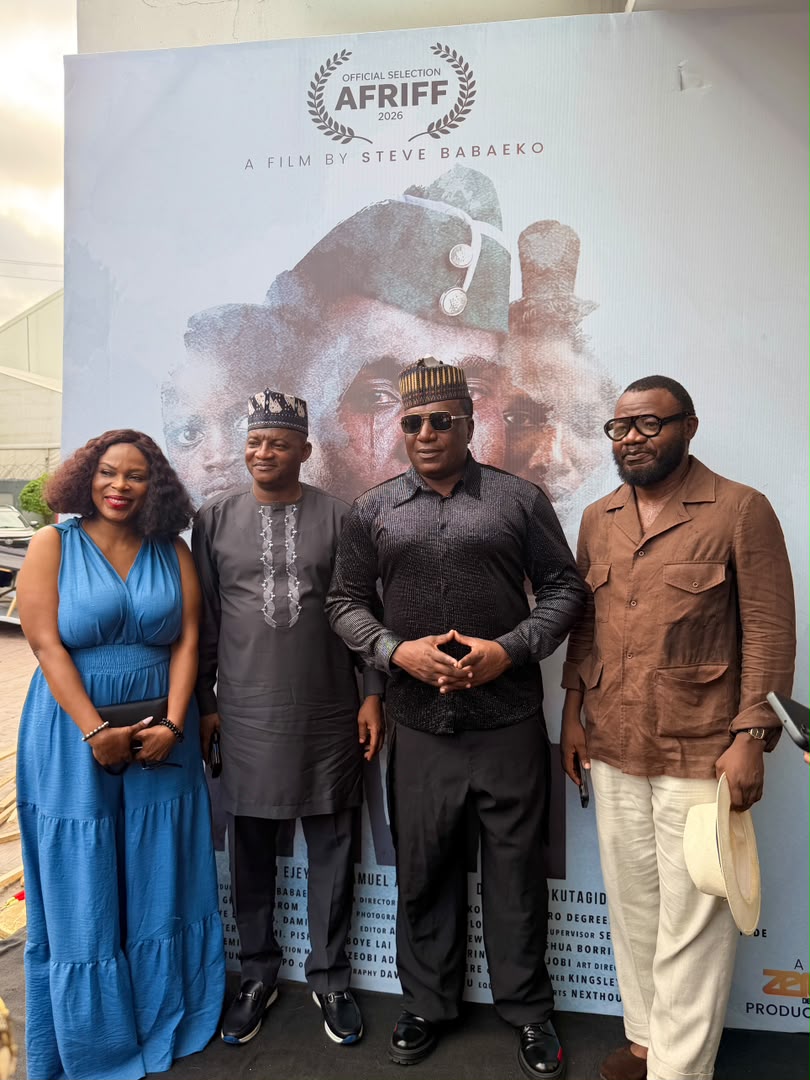


What does it mean for a five-year-old child to watch the strongest man in his world break down in tears? And what happens when that childhood memory, carried silently for five decades, eventually finds expression on the big screen?

Steve Babaeko’s ‘Ramat’ turns personal childhood trauma into powerful cinematic tribute
For Steve Babaeko, Chief Executive Officer of X3M Ideas, the answer is Ramat, an eight-minute historical short film that transformed a deeply personal childhood experience into an emotionally compelling reflection on Nigeria’s history, military leadership and the enduring bonds between fathers and their children.
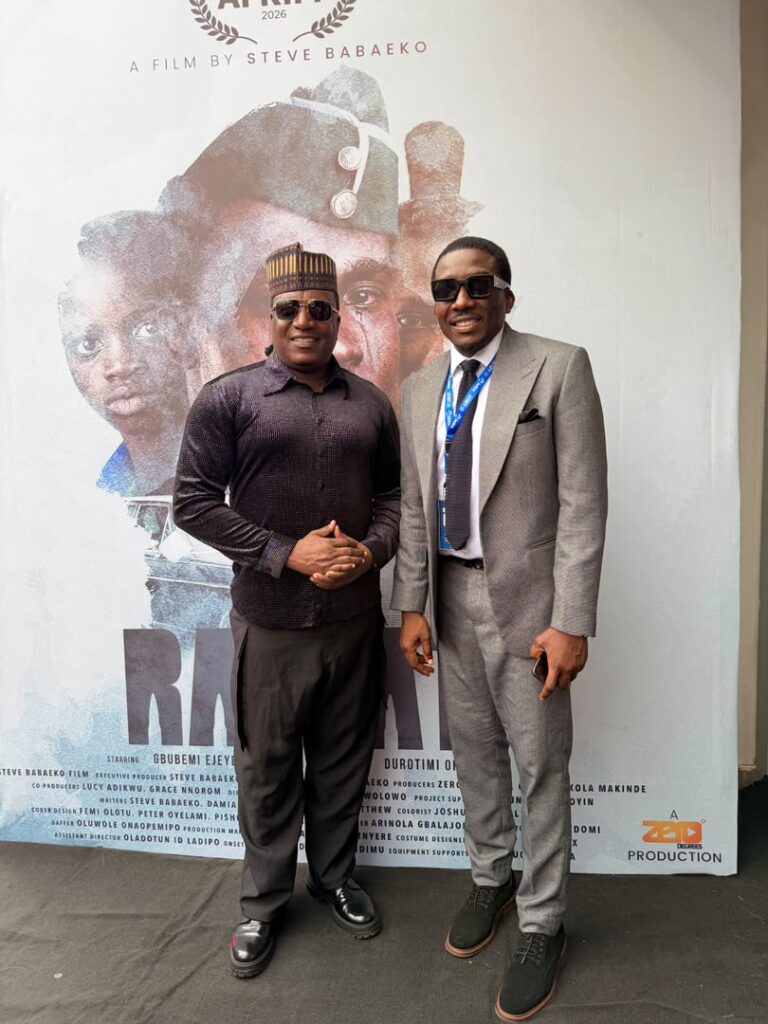
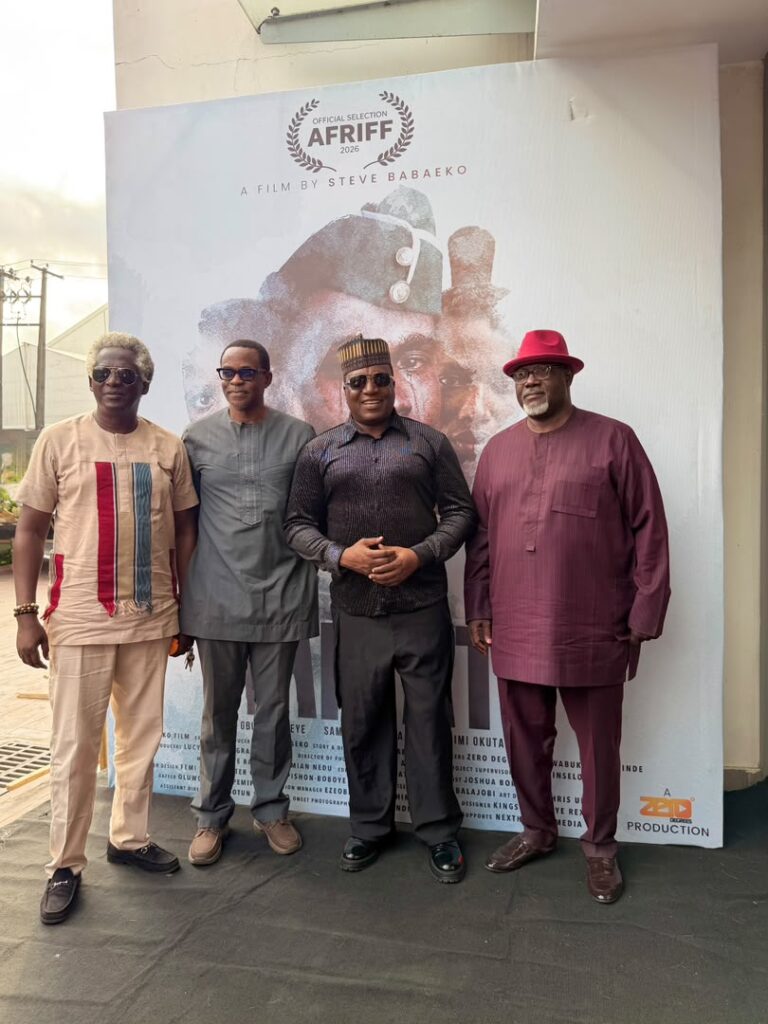
The emotional weight of that memory came alive at Filmhouse, Landmark, Victoria Island, Lagos, where the film premiered to an enthusiastic audience of advertising professionals, filmmakers, business executives, family members and other industry stakeholders who put aside their busy schedules to witness another creative expression from one of Nigeria’s most accomplished advertising executives.
Beyond the glamour of the premiere, the occasion carried the unmistakable feeling of a story whose time had finally come. Although Ramat was making its public debut, the film resonated with the familiarity of a memory that had lived through generations, inviting audiences to revisit a defining moment in the country’s political history through the eyes of a little boy who could not fully understand the events unfolding around him.
Steve Babaeko’s ‘Ramat’ turns personal childhood trauma into powerful cinematic tribute
Indeed, the overwhelming turnout and warm reception reflected the regard Babaeko has earned across the creative and marketing industries through years of professional excellence, creative experimentation and an ability to turn seemingly ordinary ideas into remarkable productions. From established industry figures to younger professionals, the audience demonstrated a collective interest in experiencing what the advertising executive had created outside his familiar territory of brand building and advertising.
For Babaeko, however, Ramat represents something far more intimate than another creative production. It is a personal recollection of February 13, 1976, the day his childhood understanding of strength, fatherhood and national leadership changed forever.
Speaking with MARKETING EDGE immediately after the premiere, Babaeko explained that the film originated from an experience he had carried in his heart since childhood. At five years old, he was preparing to leave for school when the radio announced the assassination of Nigeria’s Head of State, General Murtala Ramat Mohammed.
Steve Babaeko’s ‘Ramat’ turns personal childhood trauma into powerful cinematic tribute
His father, an officer in the Nigerian Army, had always represented strength and security in his young eyes. Consequently, seeing the man he considered the strongest person in the world shed tears for the first time left an impression that would remain with him throughout his life.
“That was the day, and definitely the only time throughout his lifetime, that I saw him shed tears. So, that day, I saw my father cry. As a five-year-old, you can imagine the kind of impact that scene had on me,” he recalled.
Although the experience remained vivid, Babaeko admitted that he had been reluctant to share it publicly for many years. However, earlier in 2026, he finally found the courage to recount the incident in a LinkedIn post, unaware of the emotional response it would generate.
Surprisingly, the post attracted an extraordinary reaction, as people from different backgrounds began sharing where they were on February 13, 1976, what they remembered about the assassination and how the announcement affected them.
That overwhelming response convinced him that the experience extended beyond his personal history and deserved a wider creative expression. Rather than allowing the memory to remain another social media conversation, he recognised an opportunity to translate it into a film.
Consequently, Babaeko returned to an aspect of his creative identity that had existed long before his rise in advertising. Having studied Theatre Arts at Ahmadu Bello University, Zaria, and participated in more than 500 productions through his professional engagement with brands, he decided to explore filmmaking from the director’s perspective.
Nevertheless, the decision came with considerable apprehension. Despite his extensive experience in the creative industry, he admitted that directing Ramat made him nervous and frightened throughout the production process.
He explained that he had to take responsibility for the entire creative journey, including casting, location scouting, script readings, pre-production and the actual filming. Yet, rather than allow his fears to discourage him, he drew motivation from the knowledge that the most significant experiences in his life had often required him to confront uncertainty.
“I kept telling myself that there is nothing so significant in my life that I was not afraid of. So, this is one of them,” he said.
Beyond the personal satisfaction of finally bringing the story to the screen, the audience’s response gave him another reason to celebrate the project. He expressed excitement and gratitude that so many people had abandoned their demanding schedules to share the moment with him, adding that hearing their reactions after the screening made the experience particularly rewarding.
He also acknowledged the family of the late General Murtala Ramat Mohammed and the foundation established in his memory for their efforts in preserving the legacy of the former Head of State. For Babaeko, the film also contributes to an important national conversation about history, leadership and the responsibility to preserve the memories of those who shaped the country.
He maintained that Nigeria’s past leaders remain an important part of the nation’s collective identity and that their contributions deserve recognition and continued remembrance. As he put it, the labours of the country’s past heroes must not be allowed to go in vain.
Meanwhile, the film’s emotional storytelling also finds expression through its young lead actor, Samuel Adebola, whose portrayal of the five-year-old boy at the centre of the narrative captured an important dimension of the childhood experience.
Babaeko disclosed that Adebola’s performance reminded him of his own childhood self, particularly the little boy who watched his father cry for the first time.
In recognition of the young actor’s performance and as a gesture that reflects the film’s central message about what one generation passes on to another, Babaeko announced that the Steve Babaeko Foundation would fund Samuel’s university education in full.
The commitment added another layer of significance to a film rooted in childhood memories, fatherhood and the responsibility of one generation to create better opportunities for the next.
Although Ramat runs for just eight minutes, its story reaches across five decades, connecting a defining episode in Nigeria’s political history with the intimate emotions of a child who witnessed its impact within his own family.
More importantly, the premiere demonstrated how personal experiences can become powerful creative material when storytellers find the courage to share them. For Babaeko, the journey from a childhood memory to a LinkedIn post, and eventually to the big screen, has given a long-held experience a new life and a much wider audience.
With its first public screening behind it and an enthusiastic audience embracing its message, Ramat has begun a journey that extends beyond its eight-minute runtime, reminding viewers that national history is not preserved only through dates, official records and political accounts, but also through the personal memories of ordinary people who lived through extraordinary moments.



Comment
No comments found.