
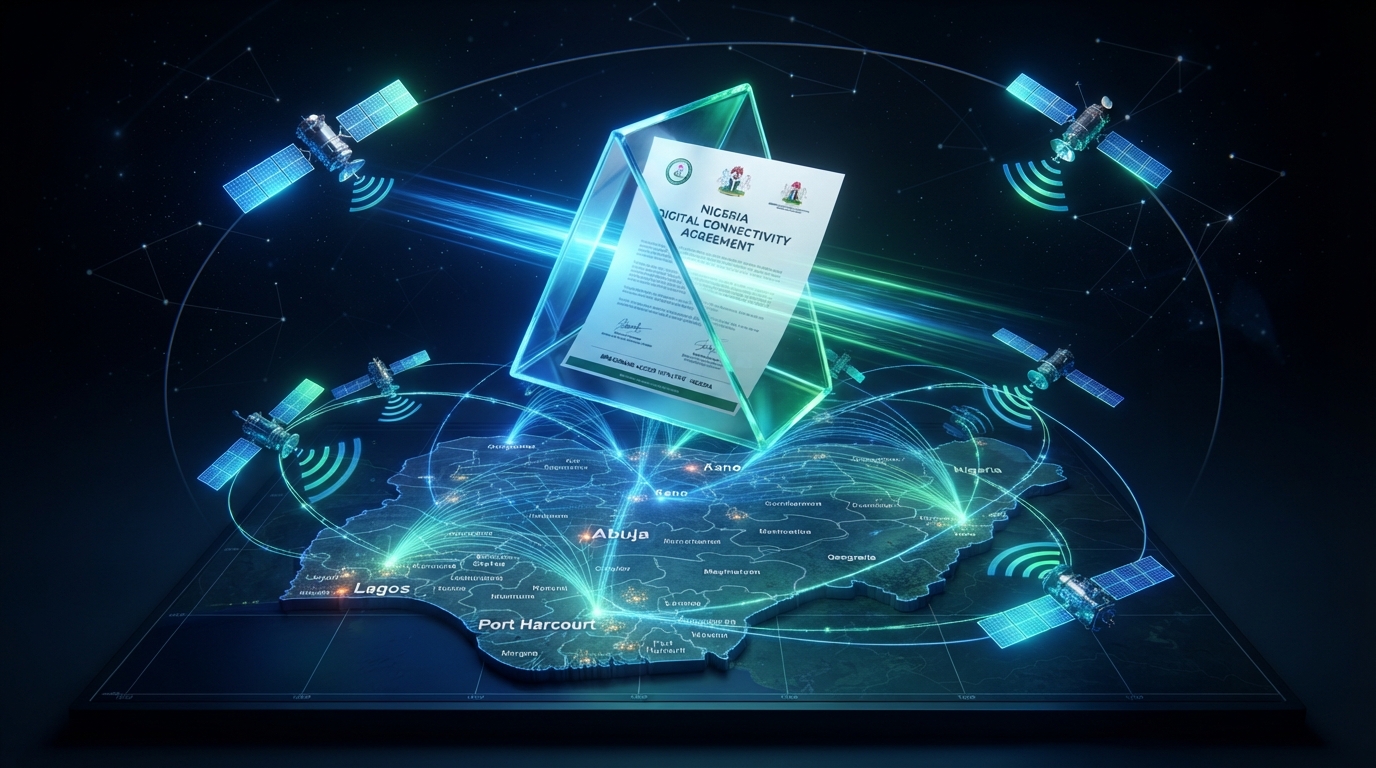


Nigeria has selected French aerospace company Thales Alenia Space and Israel Aerospace Industries (IAI) to build its next-generation communications satellites as the government moves to expand broadband capacity and replace its ageing primary satellite.
The Federal Executive Council approved the selection of the two companies on August 22, 2026, following a competitive procurement process that began more than two years ago. Major international players, including Airbus, China Great Wall Industry Corporation and Turkish Aerospace Industries, also participated in the process.
The companies will build NIGCOMSAT-2A and NIGCOMSAT-2B, which are expected to expand Nigeria’s satellite capacity and support broadband connectivity, broadcasting, enterprise services and government communications.
The timing of the project is significant as Nigeria’s current communications satellite, NIGCOMSAT-1R, approaches the end of its original operational lifespan.
Launched on December 19, 2011, NIGCOMSAT-1R was designed to operate for 15 years and is therefore reaching the end of its design life in 2026. However, careful fuel management by NIGCOMSAT has extended its expected operational life to 2028, giving the government a limited window to finance, construct and launch its replacement.
The contract extends beyond the construction of the two spacecraft. It includes their launch and in-orbit testing, satellite control centres, tracking and telemetry stations, operational software, documentation, insurance and technology transfer.
NIGCOMSAT-2A is planned for deployment at the 42.5°E orbital slot, with backup ground infrastructure included to improve the resilience of the system.
Financing for the project has not yet been finalised, and the government has not disclosed the final cost. Jane Nkechi Egerton-Idehen, Managing Director and Chief Executive Officer of NIGCOMSAT, confirmed the financing structure to TechCabal.
“The amount will be official once the financing is closed,” she said. “The funding is vendor-financed and backed by the Export-Import Banks.”
The new satellites are expected to provide additional capacity for broadband, broadcasting, enterprise connectivity and government services, particularly in communities where deploying fibre and other terrestrial infrastructure is commercially challenging.
Nigeria’s broadband penetration stood at 56.7 per cent in June 2026, increasing the importance of satellite infrastructure in extending connectivity to underserved communities.
The project also includes provisions for technology transfer and training in space and ground-segment operations. The arrangement is designed to strengthen local expertise in satellite engineering and network operations alongside the development of the infrastructure.
Egerton-Idehen said the project would strengthen Nigeria’s satellite capabilities while expanding connectivity and supporting critical communications across the country.
“NIGCOMSAT-2A and NIGCOMSAT-2B will strengthen our national satellite capacity, expand connectivity and support critical communications across the country,” she said. “Our priority is to translate this investment into measurable value for Nigerians and position NIGCOMSAT for stronger impact within the global satellite and digital economy.”
The project marks a significant step in Nigeria’s efforts to strengthen its space and digital infrastructure while reducing connectivity gaps in areas underserved by conventional terrestrial networks.
ALSO WATCH: MARKETING EDGE ONTV




Comment
No comments found.