
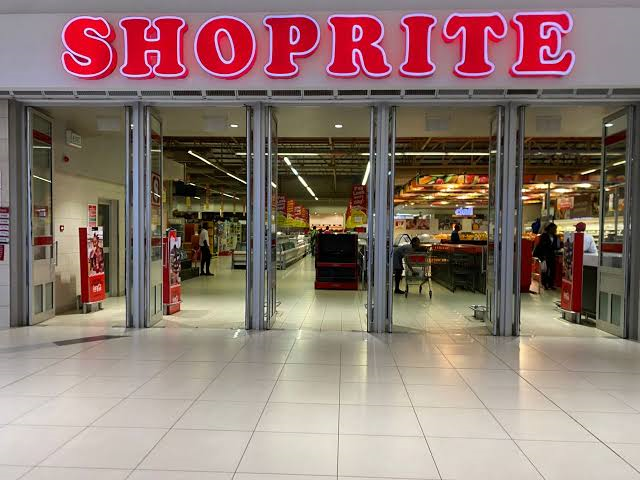


Shoprite Nigeria has revealed plans to open standalone neighbourhood stores as part of a renewed effort to revive its operations, as opposed to its traditional dependence on large supermarkets located in shopping malls.
The plan, which was disclosed by Adekunle Adebiyi, Executive Director of Investments at MBO Capital Management Limited, during an interview on Nairametrics’ Drinks and Mics, said that Shoprite outlets had reopened following a temporary shutdown that allowed the business to negotiate with suppliers and address outstanding financial obligations.
“We’re going to be opening standalone neighbourhood stores, which was always the plan,” Adebiyi said.
The proposed expansion reflects a broader attempt to reshape Shoprite’s operating model around Nigeria’s challenging business environment. Smaller outlets could reduce the costs associated with large retail spaces while bringing the brand closer to residential communities and everyday shoppers.
The company, however, has yet to disclose the number of neighbourhood stores it intends to open, their locations or the timeline for the rollout.
Shoprite’s difficulties have been linked to foreign exchange volatility, high occupancy costs, working capital constraints and operational disruptions.
Adebiyi revealed that approximately 17 of the retailer’s 28 stores had dollar-denominated rental agreements when the acquisition of its Nigerian operations took place. The depreciation of the naira subsequently increased the local-currency cost of those leases, putting additional pressure on profitability.
He said rent would ordinarily account for between eight and 10 per cent of a supermarket’s revenue, although some Shoprite locations faced substantially higher rental burdens.
The retailer also encountered challenges replacing the enterprise resource planning system previously provided by its former parent company, Shoprite Holdings. According to Adebiyi, the replacement required billions of naira in additional investment. Inventory-management weaknesses further complicated operations.
These pressures highlight the vulnerability of a large-format retail model in which substantial fixed costs must be covered by sales generated in a market affected by inflation, currency fluctuations and constrained consumer spending.
The neighbourhood-store plan builds on a turnaround strategy previously outlined by Retail Supermarkets Nigeria Limited, the operator of the Shoprite franchise in Nigeria.
In September 2025, the company announced a business model reset that included smaller and more efficient store formats, greater reliance on local suppliers, affordability initiatives and tighter cost management. It also stated that more than 80 per cent of products would be sourced locally under the strategy.
The shift could help Shoprite reduce its exposure to import-related costs while adapting its product offering and store formats to local purchasing patterns. Smaller outlets may also allow the retailer to serve customers who want convenient access to groceries without travelling to major shopping centres
However, a smaller footprint alone will not guarantee a successful recovery. The business must also maintain reliable product availability, rebuild supplier confidence, manage inventory effectively and offer prices that remain competitive in a market where consumers are increasingly sensitive to value.
Shoprite’s Nigerian operations changed ownership in 2021 after South Africa-based Shoprite Holdings decided to exit direct ownership of the business. A consortium led by Persians Investment Limited acquired the local operations through Ketron Investment Limited, with the business continuing under a franchise arrangement.
The planned neighbourhood expansion therefore represents another stage in the retailer’s effort to establish a sustainable model under its current ownership.
For Shoprite, the test will be whether a leaner format can deliver stronger operational efficiency and consistent customer demand. Its return to growth will depend not simply on opening more stores, but on ensuring that each outlet can operate sustainably within Nigeria’s economic realities.
ALSO WATCH: MARKETING EDGE ONTV




Comment
No comments found.