


A new consumption ranking from SagaProduct; Sagaci Research’s proprietary shopper panel tracking the most frequently scanned products by Nigerian consumers over the 12 months to May 2026, has placed Coca-Cola’s 50cl soft drink at the summit of the country’s most-consumed fast-moving consumer goods. Behind it, however, the picture shifts sharply in favour of local manufacturers.
Mr V bottled water from Viju Industries claims second position, with Viva! Laundry detergent, produced by Aspira, a Nigerian manufacturer, is taking third. The rest of the top 10 includes Aquafina, CWAY bottled water, Fanta, Hypo bleach, Peak milk sachets, Eva bottled water, and Beloxxi biscuits.
The ranking, which measures purchase frequency rather than revenue, offers one of the clearest data-driven windows into how Nigerian consumers actually spend, and what the findings reveal is a market where local producers are steadily closing ground on the multinationals that have historically dominated shelf space and advertising budgets.
The sachet economy is not a footnote. It is the main story.
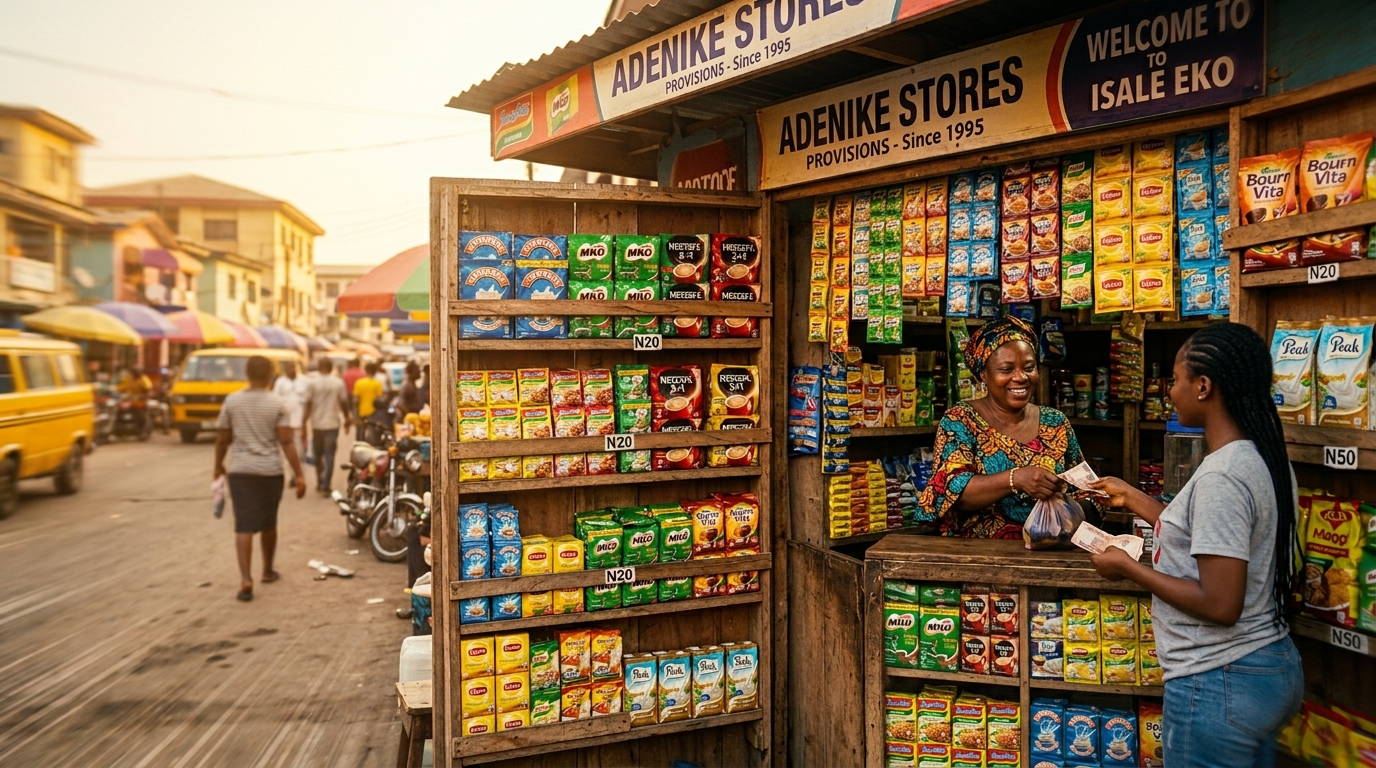
Running through the ranking is a pattern that any brand manager or agency strategist operating in Nigeria will recognise immediately: the dominance of small-pack and sachet formats as the primary unit of consumption.
Peak’s 14-gram milk sachet, Gino’s 3-gram curry sachet, Beloxxi’s 30-gram biscuit pack, and Action Bitters’ 5cl format all appear among the country’s most consumed FMCG products. These are not economic substitutes for larger formats. For millions of Nigerian households, they are the format, the default purchase unit shaped by income patterns, storage constraints, and the structure of informal retail.
That structure matters enormously. The SagaProduct data reflects a retail environment where neighbourhood kiosks, open markets, and roadside vendors remain the dominant point of purchase. Modern trade, the supermarkets and organised retail chains that multinationals typically optimise their distribution and packaging strategies around, remains a relatively narrow slice of actual Nigerian consumer behaviour.
The implication for brands is direct: winning in Nigeria requires winning in informal trade, and winning in informal trade means getting the format, the price point, and the distribution right at the neighbourhood level, not just the national level.
What the ranking means for brand strategy
For global brands, the Coca-Cola top spot will read as reassurance. But the deeper read is more complicated. Three of the top five positions are held by products from local or Nigeria-rooted manufacturers. Viju Industries, Aspira, and CWAY are not legacy multinationals with century-old distribution networks. They are brands that have built consumer loyalty through price accessibility, format relevance, and proximity to where Nigerians actually shop.
For Nigerian brand custodians and the agencies that serve them, the SagaProduct ranking is a reminder that consumer data, granular, behaviour-led, and grounded in actual purchase frequency rather than stated preference, is the sharpest tool available for cutting through assumptions about who is really winning the Nigerian market.
The global giants are still at the table. But local manufacturers are increasingly setting the menu.
ALSO WATCH: MARKETING EDGE ONTV




Comment
No comments found.