
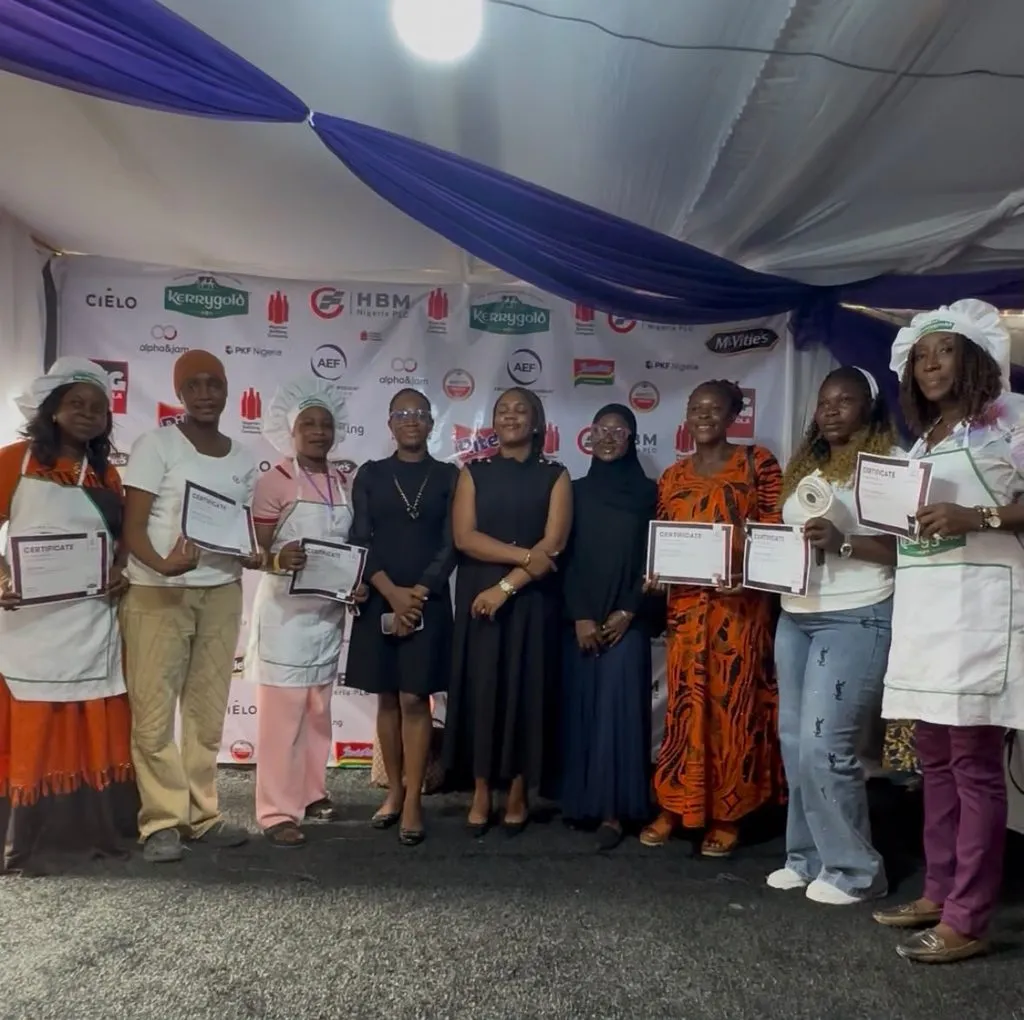


Giving people fish may feed them for a day, but teaching them how to catch fish gives them the opportunity to provide for themselves and their families for years to come. This philosophy lies at the heart of the Awesome Empowerment Foundation’s (AEF) intervention, as it seeks to move vulnerable and underserved individuals beyond dependence on handouts towards sustainable economic independence.

Through its Fortitude Empowerment Scheme, the Awesome Empowerment Foundation is championing a sustainable approach to empowerment by equipping beneficiaries with practical skills, start-up tools and business knowledge to build independent livelihoods.
For Dr. Omotola Bamigbaiye, Founder of the foundation, meaningful empowerment must go beyond providing temporary relief. Rather, it should give people the practical abilities, resources and confidence to create their own opportunities, establish businesses and secure their livelihoods into the future.
It is this conviction that has informed the foundation’s Fortitude Empowerment Scheme, through which 80 beneficiaries recently graduated from its maiden vocational training programme in Lagos, having acquired skills in fashion design and tailoring, as well as culinary arts and baking.
Organised in partnership with HBM Nigeria and Kerrygold Milk, the graduation marked an important milestone in AEF’s efforts to promote entrepreneurship, expand access to vocational education and equip underserved individuals with the means to become economically self-reliant.
Unlike conventional skills acquisition programmes that end with classroom instruction and certificate presentations, the Fortitude Scheme combines practical training with business development, start-up equipment and post-training support. Its objective is to ensure that beneficiaries can translate what they have learnt into viable income-generating ventures.
Although the foundation initially enrolled 120 participants, 80 completed the first phase, while the remaining 40 are continuing their training ahead of a subsequent graduation.
Explaining the thinking behind the programme, Bamigbaiye stressed that vocational competence alone does not guarantee business success. Participants must also understand how to manage their finances, market their products, attract customers and sustain their operations.
Consequently, AEF incorporated business management, accounting, digital marketing and social media training into the scheme, preparing graduates for the commercial realities of entrepreneurship.
To further bridge the gap between training and business establishment, the foundation provided fashion graduates with tables, stands and electric sewing machines, including accompanying motors. Culinary graduates, meanwhile, received raw materials supplied through corporate partnerships to support their initial business activities.
Additionally, outstanding participants across both categories received gifts, including electric air fryers, handy ovens, all-purpose blenders and cash prizes.
Recognising that starting a business also comes with challenges, AEF has committed to maintaining contact with the graduates over the next three months, providing follow-up support as they establish their ventures and navigate the early stages of business ownership.
Equally important is the foundation’s commitment to inclusive empowerment. Its programme accommodates underserved individuals, including persons with disabilities, and adapts training methods to suit participants’ individual abilities and learning needs. The foundation believes that physical limitations or other personal challenges should not prevent anyone from acquiring useful skills and pursuing economic independence.
The maiden graduation also attracted corporate organisations and stakeholders whose contributions supported the training and provision of equipment. Representatives of HBM, Kerrygold, the Lagos State Office for Disability Affairs (LASODA), Leadway and Dotts Media attended the ceremony. Bamigbaiye acknowledged the partners and sponsors for supporting the initiative, noting the importance of collaboration in expanding access to practical empowerment opportunities.
For the 80 graduates, the ceremony represents the beginning of a new journey: one in which their newly acquired skills, start-up resources and business knowledge can become the foundation for independent livelihoods. With another 40 participants still undergoing training, the Fortitude Empowerment Scheme is extending its reach beyond vocational instruction to enterprise development.


Comment
No comments found.