






By Godfrey Adejumoh
Every organisation encounters challenges. Sometimes the challenges are so fundamental that they prompt difficult questions: How did we get here? What went wrong? Who did what, when, why and how? What happens next?
In the midst of these questions, leadership becomes the defining factor between decline and recovery. Strategic leadership provides the direction, confidence and discipline needed to transform poor performance into sustainable success.
The crucial question then is: How can leadership shape the future of a business and create high performance that is both sustainable and repeatable? From my experience, 10 principles define leadership that is both strategic and impactful in the quest to build great businesses. They are outlined below:
Leadership Must Seek Understanding: Effective leadership is not shirking problems or forcing quick solutions. Sustainable transformation begins with a genuine commitment to understanding the root causes of challenges. It is important that leaders approach problems with curiosity, objectivity and an open mind. The goal is not to assign blame but to redesign systems, rethink processes and rebuild the organisation for better outcomes.
This requires patience. True turnarounds are rarely achieved through knee-jerk reactions. They have to be methodical, systematic and holistic to be sustainable.
Leadership Must Challenge Conventional Thinking: When a business struggles, everyone has opinions, ideas or proposed solutions. It is leadership’s responsibility to test every assumption rigorously. Leaders must be willing to question long-held beliefs, challenge existing practices and evaluate every proposal dispassionately.
Bold decisions, including discontinuing initiatives that no longer create value, are often necessary to reposition the business for stronger performance.
Leadership Must Inspire Confidence: Confidence is not having all the answers. It is giving people reasons to believe that success is possible despite uncertainty. Confidence is making your team see opportunities, possibilities and going for it without waiting for perfect conditions.
A winning team has a reason to believe – confidence. Leadership should strengthen team spirit, inspiring, equipping and empowering people to perform at their best and win.
Leadership is Daring: Leadership demands courage. Leaders must dare to experiment, dare to fail fast, dare to make mistakes, make difficult decisions, and sometimes accept being unpopular in the pursuit of long-term success. Leadership that dares goes further.
Leadership is Progress, Not Perfection: Leadership must never be confused with perfection. Business transformation is built on consistent daily improvement rather than flawless execution. Challenges do not disappear overnight, nor can every problem be solved all at once. Leadership then should focus on building momentum through discipline, consistency and continuous improvement. Leadership is progress, not perfection.
Leadership Involves Measurement: Business transformation requires clearly defined success metrics. The leaders must establish measurable objectives that suitably define where the business is today and where it intends to be. These metrics provide direction, align teams and create accountability. The journey is one of experimentation. So, while there would be successes and setbacks, effective leaders recognise progress, celebrate improvements and refine strategies based on measurable outcomes.
Now, nothing should be overlooked! Measurement provides clarity about what is working, what requires adjustment and what deserves sustained investment.
Leadership is Can-Do, Not Knowing Everything: One of the most exciting things about leadership is recognising that a leader does not know it all. This bears repeating twice. So, rather than seeing uncertainty as a weakness, leaders embrace it as an opportunity to learn, adapt and innovate.
Leadership is identifying opportunities within complexity, making strategic shifts and unlocking the potential of both people and organisations. Leadership is getting things done.
Leadership as Intervention: One of the surest ways to inject life into a struggling business is through leadership interventions. Intervention goes beyond identifying problems. It involves deploying the right resources, attracting the right talent, building organisational capability, strengthening partnerships and removing barriers to performance.
Successful interventions are deliberate, clinical and consistently reviewed to ensure that they continue delivering results. Leadership should never stop improving the systems it has put in place.
Leadership Embraces Constructive Conflict: Leadership is speaking up without fear. Effective leaders confront behaviours, practices and decisions that threaten organisational success. They must be able to hold people accountable while maintaining transparency, integrity and fairness.
Conflicts, constructive ones, strengthen organisations by encouraging better decisions, reinforcing compliance and protecting long-term value.
In essence, leadership must be willing to hold constructive tension in pursuit of better outcomes.
Leadership is Moving From One Reality To Another: Leadership is movement. The leadership journey is about moving from point A To Point B. It is about moving from uncertainty to clarity, from weakness to strength, and from poor performance to sustained excellence.
Leadership is never static. It evolves. It grows. It constantly seeks higher levels of performance.
Ultimately, leadership is judged not by where an organisation begins, but how far it progresses under purposeful direction.
The core of this conversation is that strategic leaders create movement. It is this movement that transforms challenges into opportunities, uncertainty into confidence and ambition into measurable results.
This, in a nutshell, is the enduring impact of leadership on business performance.
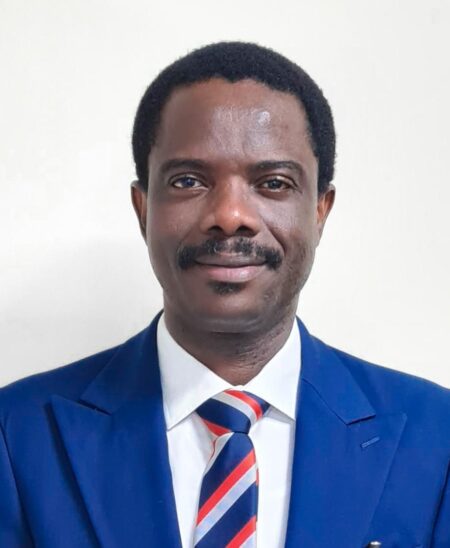
Godfrey Adejumoh; Author, Global Business Communications Strategist and Thought Leader
Email: [email protected]
IG/LinkedIn: Godfrey Adejumoh


Comment
No comments found.