





Long before the first bottle opens with that familiar sound, long before the drink touches the lips, something quieter already happens, a choice is made, a hand reaches out, a shape attracts, a colour calls and a memory responds. Moreso, in that silent moment between shelf and selection, packaging begins to speak.
Across decades and across continents, brands have not simply designed bottles. Instead, they have carefully shaped identities, encoded emotions and preserved history inside glass, colour, curves and texture.
Therefore, what many consumers admire as “beautiful packaging” is often something deeper. It is storytelling. It is strategy and is equally a legacy.
Today, as audiences increasingly demand authenticity from brands they trust, a growing question returns with renewed urgency. Do consumers truly notice the stories behind the bottles they love, or do they only admire the shine?
Through its historic packaging heritage journey, MARKETING EDGE continues to reopen those stories, reminding audiences that every iconic bottle once began as an idea shaped by culture, purpose and ambition.
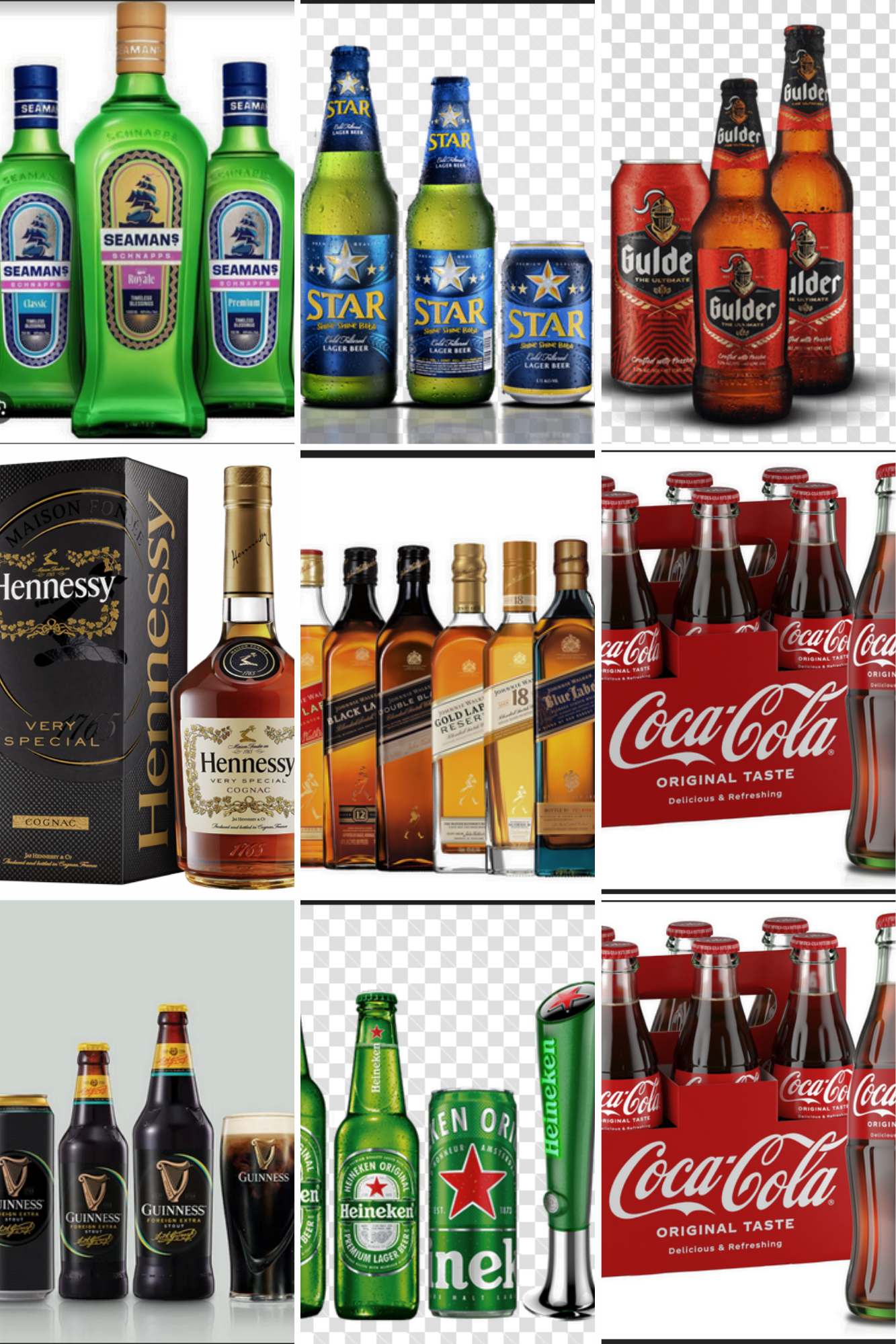
Gulder: Strength Molded Into Glass
Consider the evolution of Gulder, long positioned as “The Ultimate Beer.” For several decades, its brown bottle remained unchanged. Yet in 2014, the brand deliberately stepped forward and reshaped its physical identity for the first time in forty four years.
However, that decision did not happen by accident. Instead, Nigerian Breweries redesigned the bottle to reflect strength, confidence and modern masculinity. Consequently, the new structure introduced stronger shoulders, a tapered waist and a premium gold neck seal.
At the same time, double sided embossing improved grip when the bottle turned cold. In other words, the bottle did not merely change shape. It changed attitude.
Star Lager Beer: A Heritage That Still Shines Forward
Similarly, Star Lager Beer did not refresh its packaging simply to look modern. Rather, the redesign carefully honoured a legacy that began in 1949.
Through bold colours, refined typography and the enduring star emblem, the bottle now speaks across generations at once. It celebrates yesterday. It stands confidently today. And importantly, it invites tomorrow.
Coca-Cola: The Bottle That Became Culture
Yet perhaps no bottle tells a more cinematic story than the contour silhouette of Coca-Cola. Recognised instantly around the world, the curved glass form did not begin as decoration.
Instead, it began as protection. When copycat competitors flooded the market in the early twentieth century, The Coca Cola Company challenged designers to create a bottle so distinctive it could be recognised even in darkness or when shattered.
Inspired by the curves of a cocoa bean, the result became one of the most recognisable shapes in global culture. Over time, artists celebrated it. Filmmakers referenced it. Consumers trusted it. Eventually, the bottle itself became emotion made visible.
Johnnie Walker: A Square Bottle That Traveled the World
Elsewhere, the unmistakable square shoulders of Johnnie Walker followed a different path altogether. While many assumed the shape reflected luxury styling, history reveals something far more practical and equally brilliant.
In the nineteenth century, Alexander Walker redesigned the bottle to reduce breakage during shipping voyages. As a result, more bottles travelled safely across oceans.
More products reached markets intact. And at the same time, the brand quietly created one of the most recognisable packaging signatures in whisky history. Strategy, therefore, became identity.
Heineken: When Packaging Met Social Imagination
Innovation also shaped the thinking behind Heineken packaging decades later. In the 1960s, Alfred Heineken confronted a troubling sight while visiting island communities overwhelmed by discarded bottles and limited housing materials.
Instead of ignoring the problem, he imagined bottles that could double as building bricks. That vision produced the experimental WOBO bottle, proving that packaging could move beyond commerce and enter social imagination.
Years later, the brand continued refining its global bottle design with transparent labels, longer neck contours and tactile embossments that communicate authenticity through touch as much as sight.
Seaman’s Schnapps: Packaging Rooted in Culture and Ceremony
Back home in Nigeria, packaging has often carried cultural meaning beyond branding alone. When Seaman’s Schnapps first emerged in the 1980s under the vision of Chief Akin Odunsi, the bottle quickly became more than a product container. It became a ceremonial presence.
It entered celebrations, entered traditions, entered spiritual gatherings. Therefore, when the brand recently refreshed its packaging with tamper evident security caps and contemporary label styling, the intention remained clear. Protect authenticity. Preserve trust while still speaking to younger consumers, helping them in discovering heritage in modern ways.
Guinness Foreign Extra Stout: Style That Preserves Substance
Likewise, the visual strength of Guinness Foreign Extra Stout packaging continues to reflect history in motion. When Guinness Nigeria introduced its refreshed label featuring the signature of Arthur Guinness, the redesign reinforced continuity rather than disruption.
The golden neck wrap, the enlarged typography and the confident label presence together signalled a simple message that, style may evolve and substance remains.
Hennessy: Where Tradition Meets Contemporary Elegance
Even within the premium spirits category, Hennessy demonstrates how packaging speaks differently to different audiences at once. While its VS bottle embraces modern minimal elegance to attract younger drinkers, its XO presentation preserves tradition for collectors and connoisseurs. In this way, the bottle itself becomes conversation between generations.
So, the question returns again, quietly but powerfully. When consumers reach for a bottle, do they only see colour and shape? Or do they feel history moving through their fingertips?
Because the truth remains simple and profound, and that is, that, Packaging does not merely contain beverages, it carries memory, carries identity as well as carries ambition.
Therefore, the next time a familiar bottle catches the eye on a shelf, it may be worth pausing just a moment longer. Somewhere inside its curves, its label and its silence lives a story waiting to be remembered.


Comment
No comments found.