
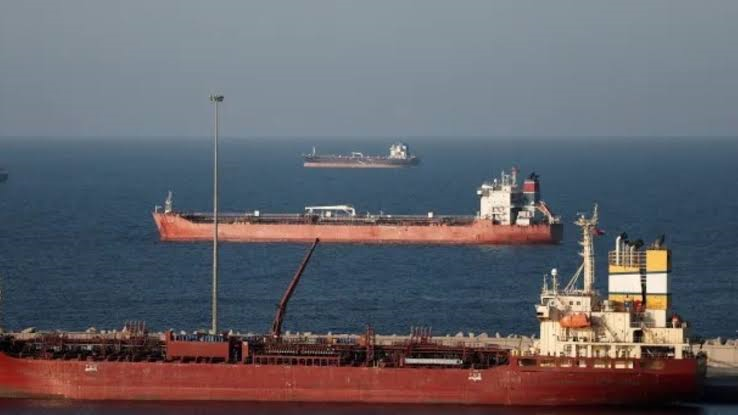


The world’s most important oil shipping route is under fire. And Nigeria, sitting at the double-edged sword of being both Africa’s largest oil producer and a heavily import-dependent economy, is watching the consequences unfold from both sides of the ledger simultaneously.
Brent crude prices surged to as high as $119 per barrel in March 2026 following a sustained campaign of Iranian missile and drone strikes on Gulf energy infrastructure; targeting Qatar’s Ras Laffan LNG complex, Saudi Aramco’s Yanbu refinery, Kuwait’s Mina Al-Ahmadi and Mina Abdullah refineries, and UAE offshore facilities. The attacks, which began in the early days of the US-Israel military campaign against Iran, effectively closed the Strait of Hormuz, the narrow waterway through which approximately 20 per cent of the world’s oil supply passes daily.
Before the outbreak of hostilities, energy consultancy GlobalData had forecast Brent crude at approximately $60 per barrel for the remainder of 2026, supported by an estimated 2.6 million barrels per day supply surplus. That scenario has now largely disappeared from market expectations. Rystad Energy warned that prices could climb back above $110 per barrel if the conflict persists for two months, and approach $135 per barrel should it extend beyond four months.
As of late July 2026, Brent crude has settled around $72 per barrel following a partial easing of Strait of Hormuz traffic, but analysis cautions that renewed attacks could reverse those gains rapidly. QatarEnergy has halted production of LNG and associated products due to damage to its facilities, with repairs estimated to take between three and five years. The structural damage to Gulf energy infrastructure is not temporary.
What this means for Nigeria
For Nigeria’s federal government and the Dangote Petroleum Refinery, elevated oil prices represent a revenue opportunity. Nigeria’s crude export earnings increase materially when Brent trades above $70 per barrel, the benchmark embedded in Nigeria’s 2026 budget. Every dollar above that benchmark translates directly into additional federation revenue.
But the other side of the equation is equally consequential. Nigeria remains heavily dependent on imported refined petroleum products, industrial inputs, and raw materials, supply chains that run through or price off the same Gulf routes now under attack. Higher global oil prices feed directly into domestic fuel costs, transportation costs, and the cost of manufacturing inputs across every sector of the Nigerian economy.
For Nigerian brands already navigating 22 per cent food inflation and a middle class under sustained financial pressure, a prolonged Gulf energy shock is not an abstract geopolitical risk. It is a direct cost if doing business passes through logistics, production, and ultimately to the consumer whose spending power is already being tracked week by week on food delivery platforms.
The Trump administration has unveiled a $20 billion reinsurance plan to revive tanker traffic through the Strait of Hormuz. The Lloyd’s Market Association confirmed that the majority of vessels it covers in the region remain insured. But the market’s confidence in a swift resolution is limited.
Nigeria does not control what happens in the Gulf. But what happens in the Gulf will shape Nigerian consumer markets, brand budgets, and economic conditions for as long as the conflict persists.
ALSO WATCH: MARKETING EDGE ONTV




Comment
No comments found.