



As conversations around artificial intelligence continue to dominate the global advertising industry, X3M Ideas CEO, Steve Babaeko, has urged agencies to shift their focus away from technology itself and toward the human skills that truly create competitive advantage.
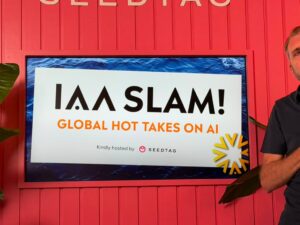
Speaking at the inaugural IAA Slam during the 2026 Cannes Lions International Festival of Creativity, Babaeko delivered a thought-provoking perspective on AI’s impact on the creative industry, arguing that the widespread availability of AI tools has not diminished the value of creativity but has instead exposed the difference between average execution and genuine mastery.

Using a motorsport analogy, Babaeko compared AI tools to cars, noting that while almost anyone can learn to drive, very few can perform at the level of seven-time Formula One world champion Lewis Hamilton.
“Everyone can learn to drive a car,” he said. “But everyone who can drive a car cannot drive like Lewis Hamilton. That is the AI conversation our industry is not having properly.”
According to Babaeko, the rapid democratization of AI means that creative agencies no longer enjoy exclusive access to the technologies that generate campaign ideas, presentations, scripts, and strategic frameworks. With clients, marketers, and even junior professionals now able to access the same tools, the cost and speed of content production have changed dramatically.
However, he argued that this should not be a source of anxiety for agencies.
“Access to a car has never been the same thing as mastery of a car,” he noted, adding that the growing availability of AI only makes the distinction between ordinary and exceptional talent more visible.
For Babaeko, the real value lies not in the technology itself but in the judgment, experience, and cultural intelligence required to use it effectively. Drawing parallels with elite racing, he explained that exceptional performance comes from knowing when to accelerate, when to brake, and how to navigate conditions that others fail to recognize.
Applying this to the creative industry, he said the difference between average output and breakthrough work lies in human judgment rather than machine capability.
“The AI is the car. Fast, powerful, and capable of going wherever you point it,” he said. “But knowing where to point it, understanding culture, emotion, and human nuance, that remains the responsibility of the creative professional.”
Babaeko also challenged agencies to rethink how they position themselves in an AI-driven era. Rather than marketing their access to emerging technologies, he argued that agencies should invest more heavily in developing talent, creative judgment, and strategic thinking.
“If your pitch deck still says ‘we use AI,’ that’s like a driving school advertising that it owns a car,” he remarked.
“Everyone owns the car now.”
He urged agency leaders to prioritize the development of skills that machines cannot easily replicate, including taste, intuition, cultural sensitivity, and contextual understanding.
Referencing everyday realities and cultural experiences, Babaeko argued that AI remains limited in its ability to fully understand the subtleties that shape human connection and effective communication.
“It cannot read a room in Lagos traffic. It cannot feel the impact of an Afrobeats chorus landing at exactly the right moment. It cannot fully grasp history, irony, or the weight of a proverb,” he said.
These uniquely human capabilities, he argued, represent a significant competitive advantage for African creatives and agencies operating in culturally diverse markets.
As AI continues to transform the advertising landscape, Babaeko’s message offered a reassuring counterpoint to fears of technological disruption. Rather than replacing creativity, he suggested, AI is forcing the industry to confront a more fundamental question: who truly possesses the craft required to create exceptional work?
“AI did not lower the value of creative work,” he concluded. “It exposed who actually had craft in the first place.”
His remarks resonated strongly with industry professionals attending Cannes Lions, reinforcing the view that while technology may continue to evolve, human judgment, cultural insight, and creative excellence remain the defining factors of success in modern advertising.



Comment
No comments found.