
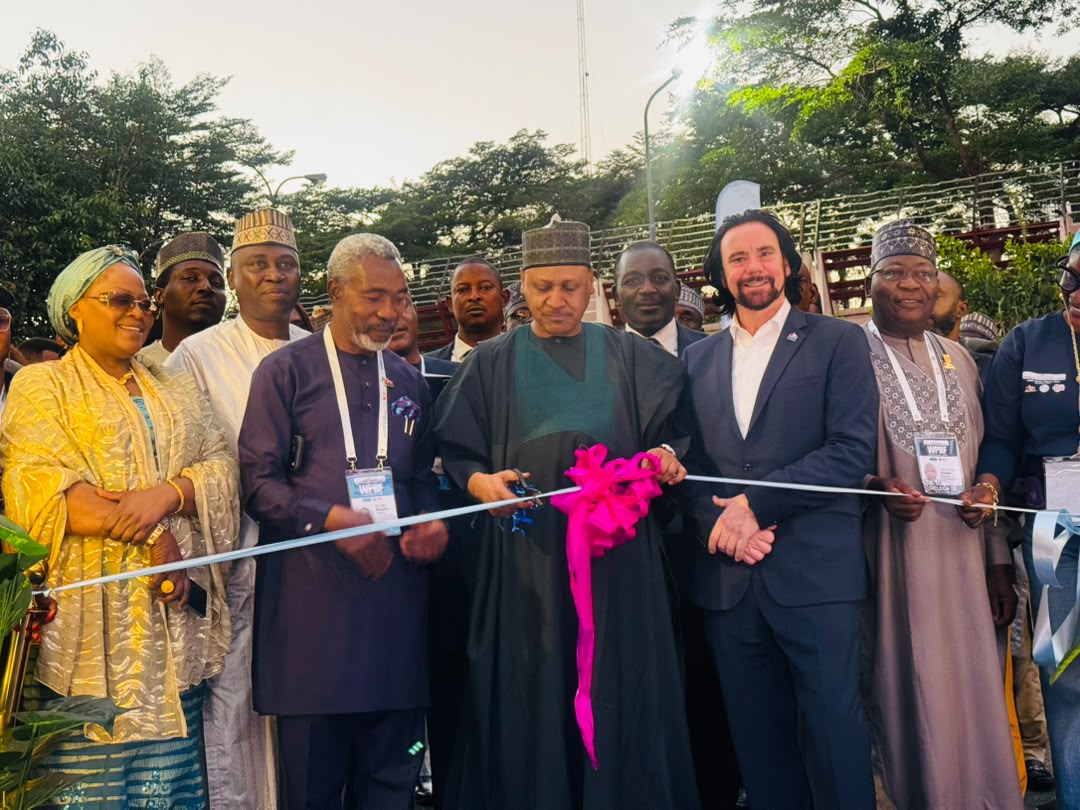



Abuja became the meeting point for the global communication profession on Monday, as the 2026 World Public Relations Forum (WPRF) got under way. Welcoming delegates, the Minister of Information and National Orientation, Mohammed Idris, said the choice of Nigeria as host reflects how far the country’s reputation, expertise and influence in communication have grown.
The Minister told the gathering that Nigeria takes pride in being the first West African nation to host the event, and only the second on the continent.
“By choosing Nigeria to host the 2026 World Public Relations Forum, the global public relations community has recognised our growing international profile, professional capacity and contribution to global communication. We are proud to welcome delegates from across the world and to showcase what Nigeria has to offer,” Idris said.
Speaking for President Bola Ahmed Tinubu, GCFR, he expressed appreciation to Professor Justin Green, President and CEO of the Global Alliance for Public Relations and Communication Management, and the Alliance’s team for trusting Nigeria with the Forum.
He also praised Dr Ike Neliaku, FNIPR, President of the Nigerian Institute of Public Relations (NIPR), and his team for winning the right to host and for delivering the programme.
The Minister described the Forum’s theme, “Responsible Communication: The Voice of the World,” as well chosen for the moment. The profession, he said, is contending with pressures from AI, digital manipulation, disinformation and misinformation.
Idris tied responsible communication to democratic life. “Democracy thrives when citizens can express their views, question authority, access information and participate in national conversations. We believe the media must be free to perform its constitutional responsibilities while upholding accuracy, fairness and professional ethics. Responsible communication must protect the truth without suppressing legitimate differences of opinion,” he said.
He reminded delegates that the Nigerian Constitution protects freedom of expression and acknowledges the media’s duty to hold government to account.
On media literacy, the Minister highlighted federal backing for the planned UNESCO Category 2 International Media and Information Literacy Institute (IMILI) in Abuja, which he linked to the push for a better-informed public.
Turning to the host nation, Idris portrayed Nigeria as a country whose strengths lie in its creative industries, enterprise, resources and people, and singled out its music, film, writing, food and business drive as calling cards abroad.
He encouraged delegates to use the week to forge lasting partnerships, trade ideas and help the profession grow worldwide, while discovering Nigeria’s diversity and opportunities first-hand.
The Forum convenes practitioners from every region to examine how responsible communication can help address worldwide challenges and raise standards in the profession.



Comment
No comments found.