
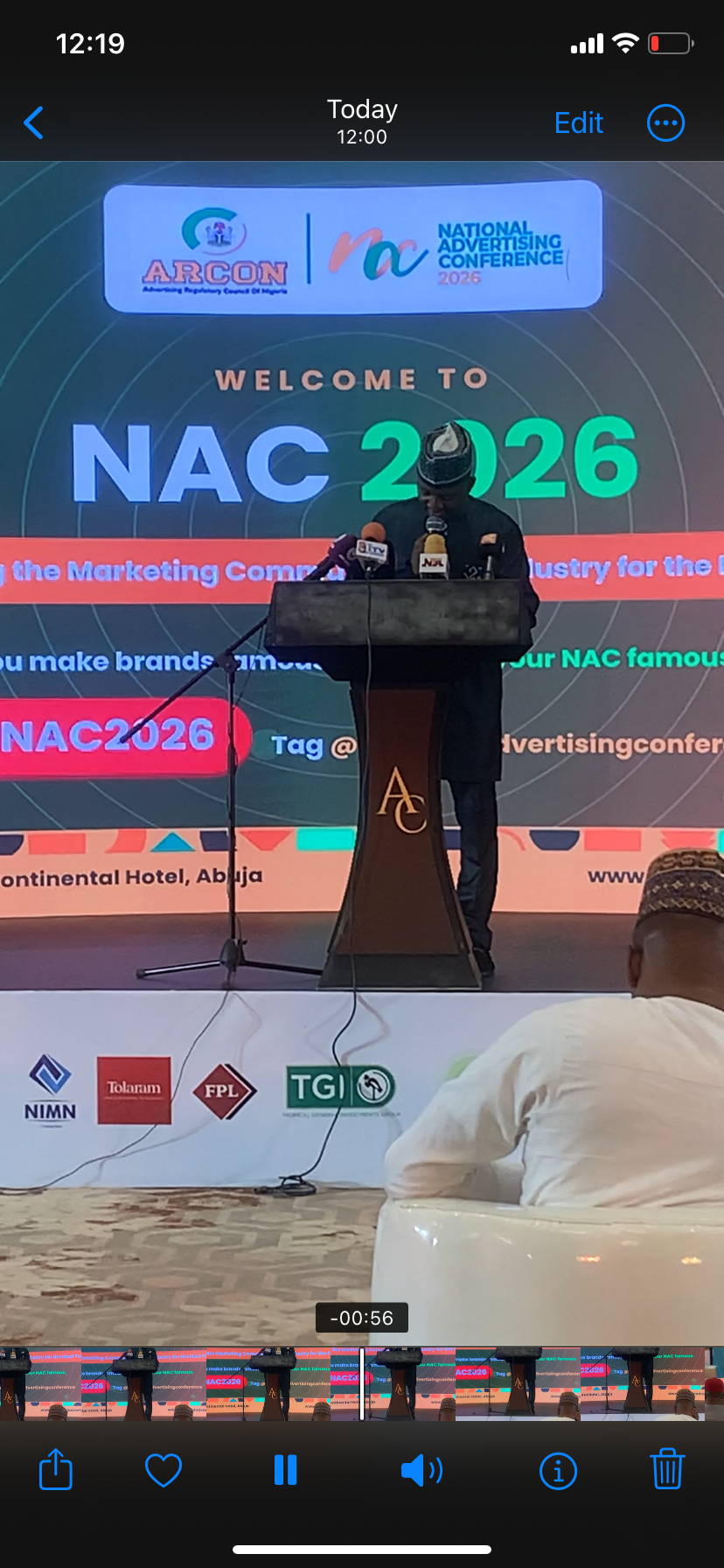



Dr. Olalekan Fadolapo, Director General of the Advertising Regulatory Council of Nigeria (ARCON), has said that every Naira spent on marketing communications in Nigeria returns a far larger sum to the national economy, citing a recent study by PwC.
Fadolapo made the disclosure in his welcome address at the 2026 National Advertising Conference, themed “Reposition the Marketing Communications Industry for the Next Frontier.”
The gathering brought together doyens of the advertising profession, fellows, practitioners, industry leaders, regulators, academics and members of the media.
“A recent study by PWC estimates that for every N1 spent on marketing communications in Nigeria, the nation’s GDP increases by a staggering N16.5,” he said, adding that the finding confirms that the industry has emerged as a formidable economic powerhouse.
Dr. Olalekan Fadolapo,
The Director General of the Advertising Regulatory Council of Nigeria (ARCON)
According to him, the industry stimulates business activity, supports entrepreneurship, creates employment, promotes investment and strengthens local brands. It also contributes to the growth of interconnected sectors including media, entertainment, technology, printing, production and the wider creative economy.
He urged stakeholders to expand that contribution as the industry repositions itself, noting that “we must be deliberate about expanding this contribution and ensuring that the industry remains a strong driver of economic growth and national development.”
On the theme of the conference, Dr. Fadolapo described an operating environment being reshaped by technology, changing consumer behaviour, artificial intelligence, digital platforms and new forms of media. “The next frontier therefore demands that we do more than adapt; we must anticipate, innovate and lead,” he said.
He said the industry must embrace emerging technologies while preserving the creativity, ethics and professional standards at the heart of effective marketing communications. Data analytics and digital platforms, he noted, are creating new opportunities for more personalised, measurable and impactful communication. He was, however, clear on where the human factor stands.
“Technology must remain a tool in the hands of skilled professionals. Our greatest strength will continue to be our ability to understand people, tell compelling stories and create ideas that move society and drive meaningful business outcomes,” he said.
The ARCON DG also linked the industry’s role to the Federal Government’s Nigeria First Policy, which prioritises locally produced goods and services, promotes Nigerian enterprises and seeks to strengthen the Naira. He said the industry has a part to play in advancing the objective by creating opportunities for Nigerian talent, agencies, media organisations and businesses, and by building the capacity to compete within and beyond the country’s borders.
“Nigeria First should not only be a policy aspiration; it should also inspire the way we create, produce, promote and deliver value as an industry,” he stated.
Turning to regulation, Fadolapo pointed to ongoing reforms aimed at building a more structured, transparent, accountable and competitive environment. He listed the 45-day payment threshold and due diligence, the local content and talent mandate, and the increasing functionality of the Advertising Offences Tribunal as notable examples. The reforms, he explained, are intended to strengthen professional standards, improve industry practices, protect consumers and support sustainable growth.
He stressed that their success rests on more than the regulator.
“Their success, however, depends not on the regulator alone, but on the willingness of all stakeholders to embrace the changes and contribute to their effective implementation,” he said.
Fadolapo also called for investment in people and trust. He said practitioners must be equipped with the skills needed for a rapidly changing marketplace, with continuous learning encouraged and an environment where innovation can thrive. On trust, he said responsible advertising, truthful communication, consumer protection and respect for cultural values must remain central to practice. “Growth without responsibility cannot be considered true progress,” he said.
The DG appealed to regulators, practitioners, advertisers, media owners, technology companies, academics and other stakeholders to work with a shared sense of purpose. “No single stakeholder can reposition the industry in isolation; meaningful progress will require sustained dialogue, mutual understanding and coordinated action,” he said.
He encouraged participants to use the conference to exchange ideas, challenge existing practices and identify opportunities, urging them to “engage openly, think boldly and contribute meaningfully to the conversations that will take place.”
Dr. Fadolapo closed on a note of collective aspiration. “Together, we can build a marketing communications industry that is innovative, competitive, ethical and prepared for the future,” he said.




Comment
No comments found.