
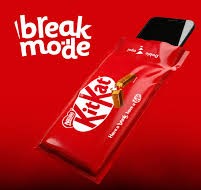


For 88 years, KitKat told people to take a break. Millions ignored the advice whilst scrolling through notifications they didn’t need to see. So, KitKat Panama and Ogilvy Colombia built a wrapper that doesn’t ask, it enforces. Break Mode looks like oversized KitKat packaging. It functions like a Faraday cage blocking every electromagnetic signal your phone depends on. Slide device inside iconic red wrapper, seal it shut, and watch connectivity vanish. No calls. No internet. No GPS. No Bluetooth. Just silence that modern life forgot how to create voluntarily.
The engineering is delightfully excessive. Copper layers redistribute electromagnetic signals across conductive surfaces whilst polyester provides structural integrity. Polypropylene coating ensures durability. Precision sealing mechanism guarantees complete isolation. The technology protecting medical labs and data centres now protects you from yourself, wrapped in chocolate branding that makes digital detox feel less like punishment and more like permission.
The campaign video asks the question brands usually avoid: “In world that never disconnects, how can a brand’s promise of ‘break’ become reality?” Most companies would answer with mindfulness app or wellness partnerships. KitKat answered with applied physics. The honesty is refreshing. Airplane mode is a suggestion people ignore. Faraday cage is a physical law people cannot negotiate with. When you seal the phone inside the Break Mode wrapper, the universe stops caring about your willpower. Signals cannot penetrate. Notifications cannot reach you. The doom-scroll ends not because you found discipline but because copper and polyester made the decision for you.
The cultural timing matters. IKEA launched flat-packed phone beds in October encouraging digital bedtime routines. Journaling, knitting, board games resurged as people deliberately chose analogue hobbies. Break Mode captures 2026’s strangest contradiction: we require technology to escape technology. The wrapper that blocks signals is itself a technological achievement requiring materials engineering, electromagnetic testing, and rigorous validation confirming 100 per cent effectiveness. The irony is the point. We became so addicted to connectivity that disconnection requires innovation.
KitKat tested Break Mode at Panama’s Expo Tech conference, major concert, and university campus, environments where phones typically dominate attention. Marketing director Kim Waigel noted: “What’s most thrilling is how we’ve resonated with young people.” The generation that grew up with smartphones in their pockets chose to put devices inside chocolate wrappers that make them useless. The adoption signals a cultural shift where disconnection becomes a status symbol rather than deprivation.
The commercial viability remains “under evaluation” according to Ogilvy. The phrase suggests Break Mode might stay campaign concept rather than mass-market product. But whether it reaches shelves misses the larger accomplishment. KitKat transformed an 88-year-old slogan from a marketing copy into a tangible tool solving problems the slogan identified. The wrapper that blocks signals proves that most creative solutions don’t ask people to change their behaviour. They change the environment making desired behaviour inevitable. Sometimes the most powerful thing a brand can do is stop talking about the break and start engineering one that actually works.




Comment
No comments found.