
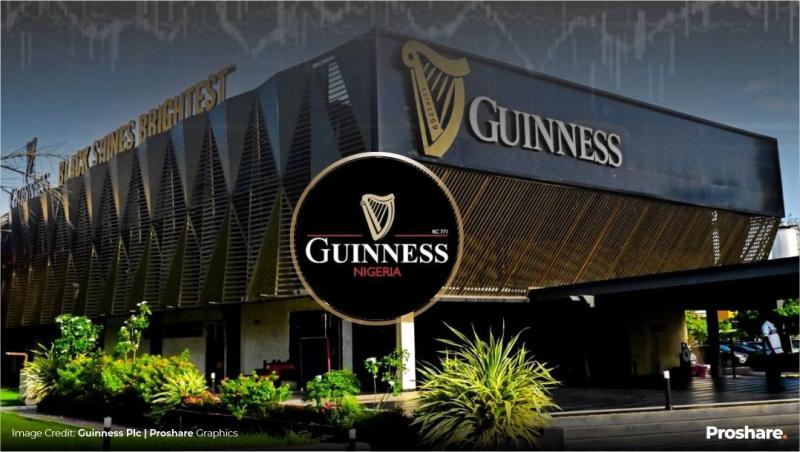


There is something quietly remarkable about the fact that a brand born in Dublin, Ireland in 1759 is today more deeply embedded in Nigerian consumer culture than in almost any other country on earth.
Guinness Nigeria Plc has revealed that Nigeria has emerged as the third largest market for the Guinness brand globally, sitting behind only Ireland and the United Kingdom. It is a distinction that speaks not just to the scale of Nigerian consumption but to the depth of a cultural relationship between a people and a product that has been building for nearly eight decades.
The disclosure was made by Mayank Kabra, finance and strategy director, Guinness Nigeria, during a media parley held in Lagos on Wednesday.
He described the milestone with visible pride and framed it within the broader story of a brand that has spent 76 years becoming so thoroughly Nigerian that many consumers no longer think of it as foreign at all.
“Guinness has been part of this country for 76 years, and today many consumers see it as a Nigerian brand rather than an Irish one,” Kabra said.
That shift in perception from imported product to cultural institution is not accidental. It is the outcome of decades of deliberate brand building, community connection and consumer intimacy that few multinational brands operating in Nigeria have managed to replicate at the same depth.
Kabra was candid about what he believes has sustained this growth in a market as competitive and as complex as Nigeria’s.
“We have remained consistent in understanding our consumers and evolving with them. That connection is what continues to drive our growth in Nigeria,” he said.
He pointed to the company’s football partnerships, including its association with the English Premier League and Arsenal FC, as a key vehicle for maintaining consumer relevance and deepening engagement beyond the product itself.
“Football remains a powerful cultural platform for us. Through our partnerships, we can connect with consumers in a way that goes beyond just the product,” he said, describing the company’s Match Day activations as a strategy for embedding the brand into the rituals and emotions that surround Nigeria’s passionate football culture.
Beyond consumer strategy, Kabra outlined the operational philosophy underpinning the company’s performance, describing it as anchored in four pillars: consumer obsession, operational excellence, a winning culture and financial performance.
“We are focused on building a strong portfolio, investing in our people and driving digital transformation that supports sustainable growth,” he said. It is a framework that positions Guinness Nigeria not as a company resting on the comfort of its iconic brand heritage but as one that is actively adapting to the demands of a rapidly evolving business environment.
The media parley was preceded by a guided tour of the Guinness Nigeria production facility, which gave journalists a firsthand look at the operational standards and hygiene practices that underpin the quality of every product that leaves the plant.
The tour walked journalists through the entire bottle production process from start to finish, beginning with the inspection and cleaning of returned bottles. Journalists observed how each bottle is rigorously examined, with those that fail the quality inspection discarded entirely rather than repurposed, ensuring that only bottles meeting the company’s standards proceed to the filling stage.
New bottles go through their own dedicated cleaning process before entering the production line, with every stage of preparation designed to eliminate contamination and maintain the integrity of the product before a single drop of liquid makes contact with the container.
Particularly striking was the Can Stout production line, where journalists witnessed a seamlessly automated process that operates with minimal human interaction or interference from start to finish. The canning process, from filling to sealing, is handled entirely by machinery in a controlled environment specifically designed to maintain the highest hygiene standards throughout.
The absence of human contact at critical stages of the canning process is not a cost-cutting measure but a deliberate quality assurance decision, ensuring that the product consumers open at home reflects the same standard maintained inside the factory.
Rotimi Odusola, corporate relations and legal director, Guinness Nigeria, spoke to the governance and social responsibility dimensions of the company’s operations.
He noted that Guinness Nigeria was among the first companies to be certified under the Corporate Governance Rating Scheme of the Nigerian Exchange Limited.
“Governance is very important to us. We operate with transparency, accountability and strict adherence to ethical standards. We take compliance seriously, and that is why we continue to be recognised for strong governance practices in the capital market,” he said.
On social responsibility, Odusola highlighted the company’s Ember Months campaign, run in partnership with the Federal Road Safety Corps and the Lagos State Drivers’ Institute. “We are committed to road safety and responsible consumption, especially during high-travel periods like the ember months,” he said.
The human dimension of Guinness Nigeria’s transformation story was articulated by Ayodeji Ajibola, Human Resource Director, who described the company’s people strategy as central to everything it is building.
“Our people are at the centre of our transformation. We are deliberately investing in skills, leadership and performance culture. We are building the next generation of leaders through structured development programmes and continuous learning,” she said.
She also spoke about a recently introduced internal initiative called Voice Up, designed to strengthen inclusion and create a safe channel through which employees can raise workplace concerns.
“This initiative is about ensuring every voice is heard and respected, while strengthening trust within the organisation,” she said.
After 76 years, Guinness Nigeria is not merely surviving in one of the world’s most demanding markets. It is thriving and by its own account, it is just getting started.



Comment
No comments found.