



For more than three decades, Jensen Huang was not just the face of NVIDIA; he was central to the story of how the company evolved from a graphics chipmaker into one of the most influential businesses in the global artificial intelligence industry.
Now, that story is entering a new chapter.
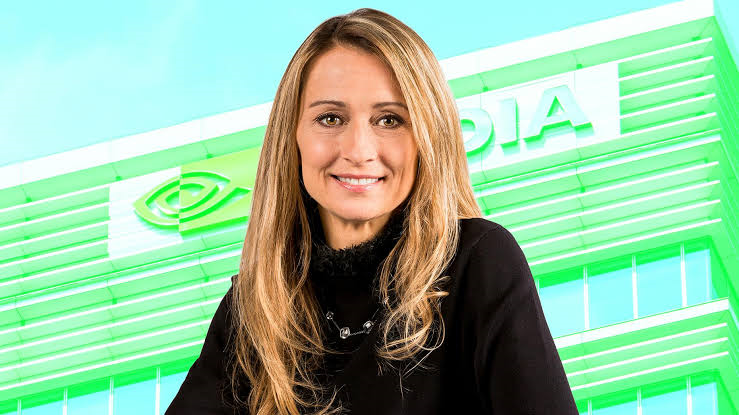
NVIDIA has confirmed the immediate resignation of Huang as President, Chief Executive Officer and member of its board, ending his 33-year leadership of the company he co-founded in 1993. In his place, the board has appointed Executive Vice President and Chief Financial Officer Colette Kress as interim Chief Executive Officer while it begins the search for a permanent successor.
The announcement represents a significant leadership transition for a company whose public identity and strategic direction have been closely associated with its co-founder.
Kress is not an outsider arriving to take charge of an unfamiliar business. She joined NVIDIA in September 2013 and has led its finance organisation through a period of extraordinary expansion. Before joining the chipmaker, she spent nearly 25 years in finance roles at technology companies, including Cisco and Microsoft.
Her appointment also means she will temporarily hold two major responsibilities, continuing as Chief Financial Officer while serving as interim Chief Executive Officer. The board has said it will consider both internal and external candidates for the permanent position.
The leadership change comes after an unusually turbulent period for NVIDIA. Reports concerning Huang’s personal relationships, including allegations involving a businesswoman suspected by United States intelligence officials of having links to Chinese intelligence, brought renewed scrutiny to the company’s leadership. NVIDIA’s board had also initiated an independent investigation into whether Huang had been targeted by a foreign intelligence operation.
Reuters reported that the controversy intensified in the days before his departure. However, the allegations surrounding possible intelligence links have not been established as proven findings, and the company has not publicly identified them as the reason for his resignation.
The implications extend beyond the executive office.
READ ALSO: NVIDIA faces a $430bn confidence crisis as CEO controversy raises governance concerns
Under Huang, NVIDIA became a central supplier of the computing infrastructure powering the artificial intelligence boom. Its graphics processing units have become essential to companies developing and operating advanced artificial intelligence systems. Its influence also reached across cloud computing, data centres, technology partnerships and the global semiconductor supply chain.
That position makes leadership continuity particularly important. Investors, customers, developers and business partners will want reassurance that a change at the top will not disrupt product development, supply commitments or the company’s long-term strategy.
The market reaction reflected the uncertainty surrounding the announcement. NVIDIA shares closed 4.3 per cent lower on Thursday, 12 November, according to Reuters, although the movement should not be attributed solely to the leadership change without considering the wider market conditions.
The board has also appointed longtime director Harvey C. Jones as its first-ever chair. Jones has served on NVIDIA’s board since 1993 and brings more than three decades of experience in technology, entrepreneurship and venture investment. The appointment gives the company a new board leadership structure alongside the executive transition.
For Kress, the immediate task is to maintain operational confidence while the board considers the company’s long-term leadership. She has already indicated that the focus remains on customers, partners, developers and shareholders, while continuing the work that has established NVIDIA’s position in accelerated computing and artificial intelligence.
But the larger question is whether NVIDIA can sustain its momentum without the person who has become almost synonymous with its rise.
Huang’s departure does not erase the technology, talent, partnerships or infrastructure built over 33 years. It does, however, place the company’s institutional strength and succession planning under a different kind of scrutiny.
For one of the most influential companies in the artificial intelligence race, the next test is not simply finding another chief executive. It is demonstrating that its future does not depend on one person.
ALSO WATCH: MARKETING EDGE ONTV



Comment
No comments found.