
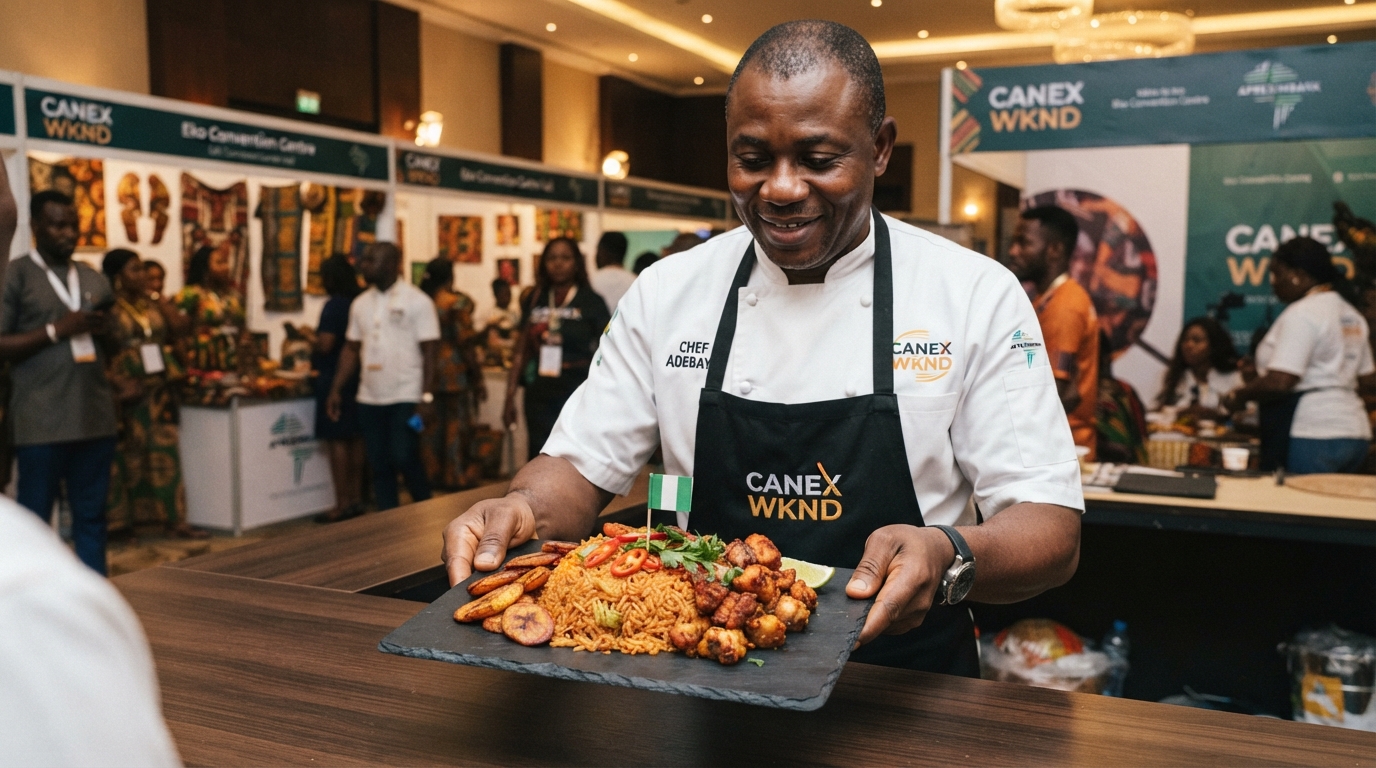


Nigeria may have won the latest battle in the West African Jollof rivalry, but the bigger prize could lie beyond the competition.
The country emerged ahead of Ghana and Senegal at the African Jollof Wars 3.0, held during the Creative Africa Nexus Weekend (CANEX WKND) 2026 in Lagos. The competition, decided through a blind tasting, brought together three countries whose interpretations of the popular rice dish have long fuelled friendly culinary rivalry across the region.
Yet, beyond the national bragging rights, the event highlighted a more commercially significant conversation: how Africa can turn its culinary heritage, indigenous ingredients and food traditions into sustainable businesses with continental and international reach.
Organised by the African Export-Import Bank (Afreximbank) through its Creative Africa Nexus (CANEX) programme, the November 5-8 gathering placed gastronomy alongside film, music, fashion, publishing, visual arts and sport as part of Africa’s wider creative and cultural industries. Its focus extended beyond cultural celebrations to financing, market access, skills development, investment and commercial partnerships.
The economic opportunity is considerable, but Africa still faces a challenge in capturing more value from what it produces.
An October report by African Business highlighted the continent’s dependence on imported food and the limited value retained when agricultural commodities leave Africa in raw form before returning as processed and branded products. The report estimated that African spent $65 billion on food imports in 2025. It also identified inadequate financing, fragmented standards, expensive imported packaging and limited access to markets as barriers facing African food businesses.
This is where the commercial potential of African gastronomy becomes particularly important.
A food product is not simply an agricultural commodity. Through processing, packaging, branding, distribution and storytelling, it can become a recognisable consumer brand with a place in supermarkets, restaurants and international retail markets.
For example, African cashew producers can capture greater value by processing and packaging their products locally rather than exporting raw nuts for processing elsewhere. The same principle applies to shea butter and other agricultural ingredients, where much of the value can be added outside the continent.
Afreximbank’s CANEX programme is attempting to address some of these gaps. Since launching its gastronomy vertical in 2023, the initiative has supported African food entrepreneurs in preparing for international exhibitions, including Germany’s ANUGA and the American Food and Beverage Show in the United States.
The bank is also working with the African Organisation for Standardisation to harmonise food standards and safety requirements, which could make it easier for African producers to sell across national borders. Other proposed interventions include bringing food entrepreneurs together to improve their ability to access financing and strengthening relationships between local producers and retailers.
The implications extend beyond food manufacturers. A stronger gastronomy industry could create opportunities for farmers, chefs, food processors, packaging companies, hospitality businesses, distributors, marketers and tourism operators.
It also presents a branding opportunity. African cuisine already attracts international attention, but turning that interest into lasting commercial value requires more than cultural popularity. Businesses must develop consistent product quality, attractive packaging, reliable supply chains, recognisable brands and distribution networks capable of serving different markets.
For Nigeria, the victory at the Jollof Wars offers a useful moment to consider how its culinary identity can translate into stronger food businesses and greater international recognition.
The competition may have crowned a jollof champion, but Africa’s larger challenge is to ensure that its food heritage earns a stronger place in the marketplace.
Ultimately, the continent’s culinary wealth should not only be celebrated at festivals and competitions. It should also be reflected in the strength of its food brands, the growth of its enterprises and the value it retains from its own agricultural and cultural resources.
ALSO WATCH: MARKETING EDGE ONTV




Comment
No comments found.