



The $355 million opening weekend that made Spider-Man: Brand New Day the second-highest domestic debut in box office history did not happen by accident. Behind the web-slinger’s triumphant return to cinemas was a promotional machine so vast, so meticulously coordinated, and so creatively ambitious that it shattered Hollywood’s own records before the film even premiered, generating a worldwide promotional media value of $309 million across 165 brand partners. That figure, confirmed by Deadline, is the largest promotional campaign in Hollywood history.
However, the story of how that campaign was built is more interesting than the number itself.
Sony and Marvel’s approach to marketing Brand New Day broke from the traditional blockbuster playbook in one fundamental way. Rather than relying on a single hero campaign pushed through paid media, the studio built an ecosystem, turning 165 brands across technology, food, automotive, gaming, and retail into active participants in the film’s cultural moment.
Four brands secured the most coveted placement of all, inside the film itself. Spider-Man eats Little Caesars pizza, uses a Samsung phone and ASUS computers, and the film’s cityscape is populated with BMWs. These were not background appearances. They were deliberate, planned integrations that audiences could clearly identify, transforming product placement from background noise into genuine storytelling.
Furthermore, BMW went beyond what any automotive brand has done before in a film partnership. The German manufacturer unveiled a one-off concept vehicle called the BMW iX3 Flow, developed in partnership with Sony Pictures and Marvel, featuring animated exterior graphics powered by E Ink Prism technology. The show car debuted at BMW Welt in Munich at the film’s premiere and will remain on display through September, turning a movie partnership into a months-long experiential brand moment.
Beyond the screen, the campaign took to the streets with guerrilla activations designed to make the film feel like a real-world event rather than a promotional exercise.
Takis executed one of the most talked-about stunts of the campaign: attaching snack bags to walls across New York City using cobwebs, with the conceit that only Spider-Man could retrieve them. The stunt generated enormous organic social media coverage and was supported by limited-edition Spider-Man packaging across 57 countries. Additionally, ASUS ROG launched its “Brand New Power” campaign across billboards, transit advertising, print, online, and retail in 20 global markets, cementing the brand’s on-screen presence with a real-world footprint that audiences could not escape.
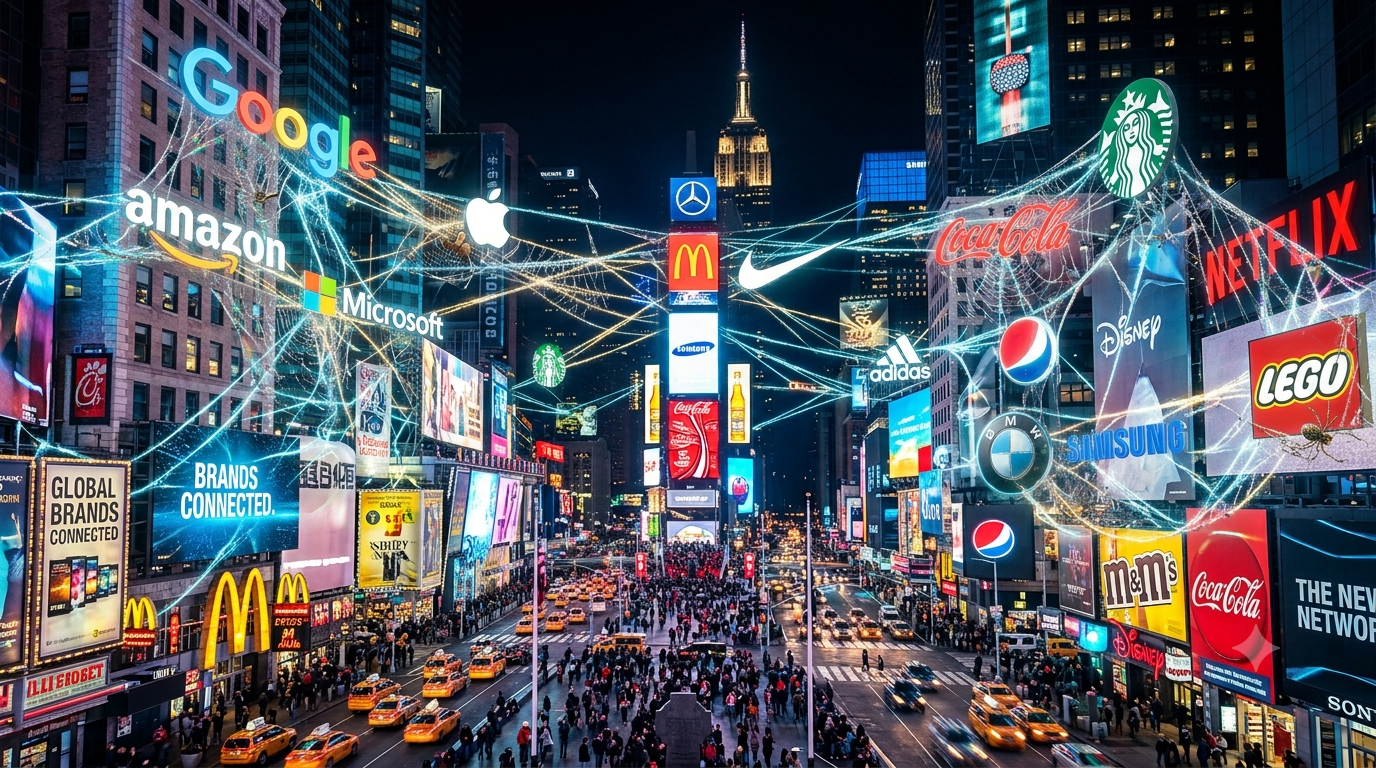
Creative studio WHY produced a viral CGI concept imagining a giant spider web stretched across Times Square, one of the most shared visual moments of the campaign, transforming the film’s iconic imagery into a piece of cultural conversation that spread across social media globally.
Meanwhile, brands across India and other markets jumped on the Spider-Man cultural moment with their own creative activations, turning the film’s release into a global creative movement where the web extended far beyond what Sony and Marvel had directly commissioned. The campaign reflected Hollywood’s growing recognition that the most powerful marketing happens not when a studio pushes a message outward, but when a cultural moment becomes so charged that brands, creators, and fans all want to be part of it.
The $309 million lesson
The 30-second commercial is losing its audience. Brands have chased that fleeing attention into influencer marketing, which grew from a $1.7 billion niche in 2015 to a projected $25.62 billion industry in 2026. But influencer marketing has a ceiling. No creator can guarantee millions of viewers, sitting in the dark with no skip button. A theatrical blockbuster can.
That is the argument the Spider-Man: Brand New Day campaign makes with $309 million in proof. Consequently, for Nigerian and African brands and agencies watching this campaign unfold, the lesson is direct. The most powerful brand moments are not bought through a single channel. They are built through cultural participation; showing up where attention already exists, in a form that is genuinely worth noticing.
Sony did not just market a movie. It engineered a cultural event. Moreover, every brand that understood that distinction early enough got to be part of the web.
The ones that arrived late were just watching from the ground.
ALSO WATCH: MARKETING EDGE ONTV



Comment
No comments found.