
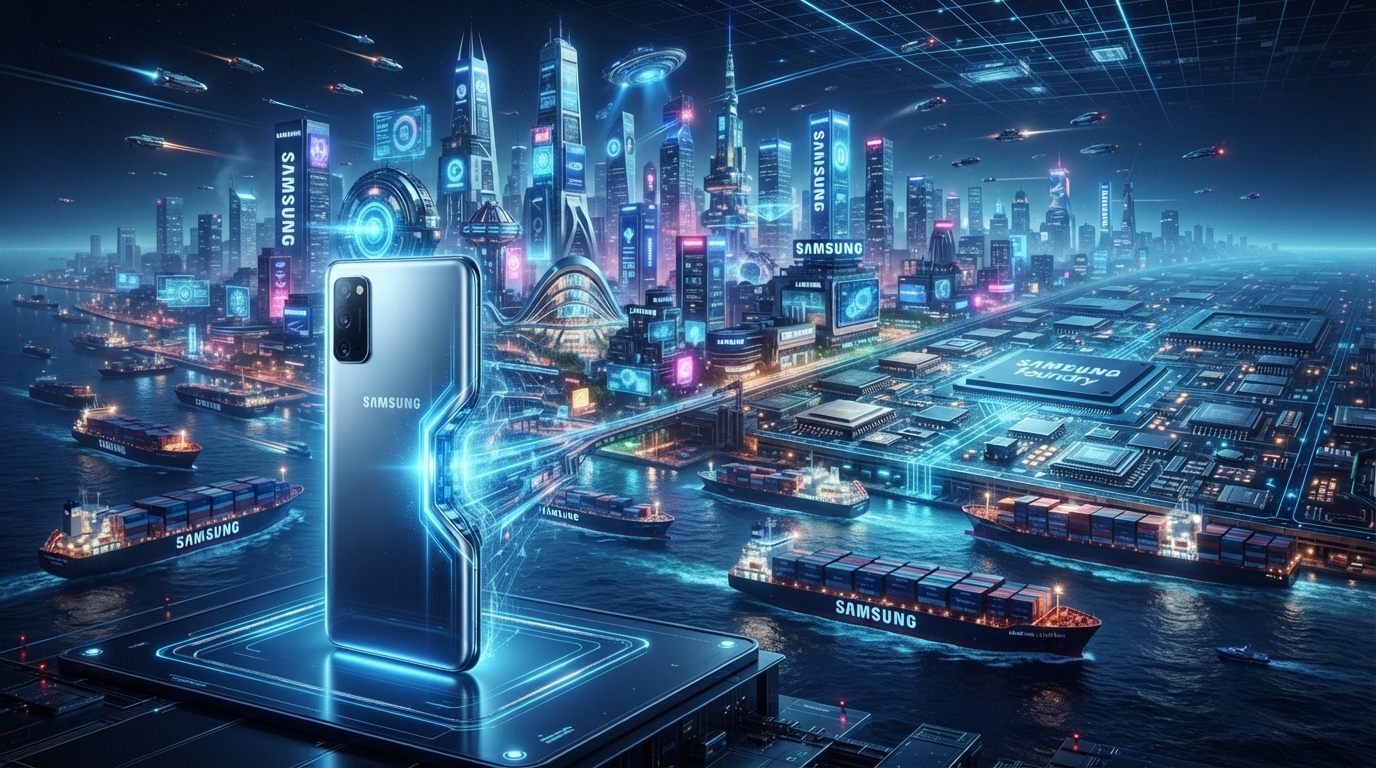




You are probably reading this on a device that probably has a Samsung component inside it. Even if it is an iPhone.
That is not an accident. That is the point.
Most people know Samsung as the company that makes the phone in their pocket, the television on their wall, and the refrigerator in their kitchen. However, that version of Samsung; the consumer electronics giant with the sleek advertisements and the galaxy-themed product launches, is merely the visible tip of one of the most extraordinary corporate empires ever assembled.
Samsung Group is a South Korean conglomerate founded in 1938, not as a technology company, but as a trading business selling dried fish, noodles, and groceries. Moreover, what it became in the eight decades that followed is so vast, so diverse, and so structurally embedded in global civilisation that understanding it fully changes how you think about what a company can be.
They built the world’s tallest building
When the Burj Khalifa opened in Dubai in 2010, it stood 828 metres tall; the highest structure ever built by human hands. Samsung C&T Corporation was the main contractor. Furthermore, Samsung’s construction arm also built the Petronas Towers in Malaysia and Taipei 101 in Taiwan. The company that makes your television has shaped three of the most iconic skylines in the world.
Additionally, Samsung Heavy Industries is one of the largest shipbuilders on earth; constructing supertankers, container ships, liquefied natural gas carriers, and offshore drilling platforms that move the world’s energy and trade across oceans.
They make the screens your rivals use
Here is the detail that stops most people cold. Samsung manufactures the OLED displays used in Apple iPhones. Consequently, every time Apple sells an iPhone, Samsung earns revenue from the screen inside it. The world’s two most competitive technology companies are simultaneously rivals and deeply interdependent partners, because nobody makes OLED screens at the scale and quality that Samsung does.
Similarly, Samsung SDI manufactures battery cells that power electric vehicles for BMW, Volkswagen, Stellantis, and Ford. Meanwhile, Samsung Electro-Mechanics produces the camera modules and circuit boards that sit inside devices made by dozens of competing brands. Samsung is not just a consumer brand. It is the infrastructure of the global technology industry.
They make the chips inside the AI revolution
Samsung Electronics is the world’s largest manufacturer of memory chips; the DRAM and NAND flash storage that every AI data centre, every smartphone, and every laptop on earth depends on. Furthermore, through Samsung Foundry, the company manufactures advanced semiconductors for external clients, competing directly with TSMC for the contracts that will determine who powers the next generation of artificial intelligence.
Therefore, the AI revolution currently reshaping marketing, advertising, and business globally is running, in significant part, on Samsung silicon.
They run an advertising agency
Cheil Worldwide, Samsung’s in-house advertising agency, has grown into one of the largest marketing communications groups in Asia; serving not just Samsung but external clients across multiple markets. Additionally, it operates across digital, experiential, retail, and brand strategy disciplines. The company that makes your phone also makes the campaigns that sell it, and hundreds of other brands besides.
They manufacture vaccines and run luxury hotels
Samsung Biologics, based in Incheon, South Korea, is one of the world’s largest contract biopharmaceutical manufacturers; producing vaccines and biologics for global pharmaceutical companies. Meanwhile, Hotel Shilla, Samsung’s luxury hospitality brand, operates premium hotels and duty-free retail across South Korea and beyond.
They feed people, insure them, and manage their money
Samsung Welstory operates one of South Korea’s largest food service businesses; providing meals to millions of people daily across corporate campuses, schools, and public institutions. Samsung Life Insurance and Samsung Fire and Marine Insurance together form one of South Korea’s most significant financial services operations. Moreover, Samsung Securities and Samsung Asset Management handle investment and wealth management for institutional and individual clients.
The brand hiding behind the brand
Here is the marketing argument buried inside all of this.
Samsung Electronics became so dominant so globally recognisable, so commercially overwhelming, that it functionally erased everything else the Samsung Group does from the world’s consciousness. Consequently, a company that builds skyscrapers, makes ships, manufactures vaccines, runs hotels, feeds millions of people, insures families, manages wealth, makes the screens inside its competitor’s phones, and powers the AI revolution is known primarily for making good televisions.
That is simultaneously Samsung’s greatest marketing achievement and its most interesting brand paradox. The consumer electronics division became so strong that it consumed the identity of everything around it, making the rest of the empire invisible to the very consumers it serves every day.
For Nigerian brand strategists, marketing professionals, and business leaders, the Samsung story raises a question worth sitting with. When you build something so dominant in one area that it defines your entire identity, what happens to everything else you are building? Is invisibility a problem; or is it, in Samsung’s case, simply proof that one strong brand can carry an empire?
The most powerful companies in the world are not always the ones that do one thing well. Sometimes they are the ones that do everything well, and let one thing take all the credit.
ALSO WATCH: MARKETING EDGE ONTV



Comment
No comments found.