
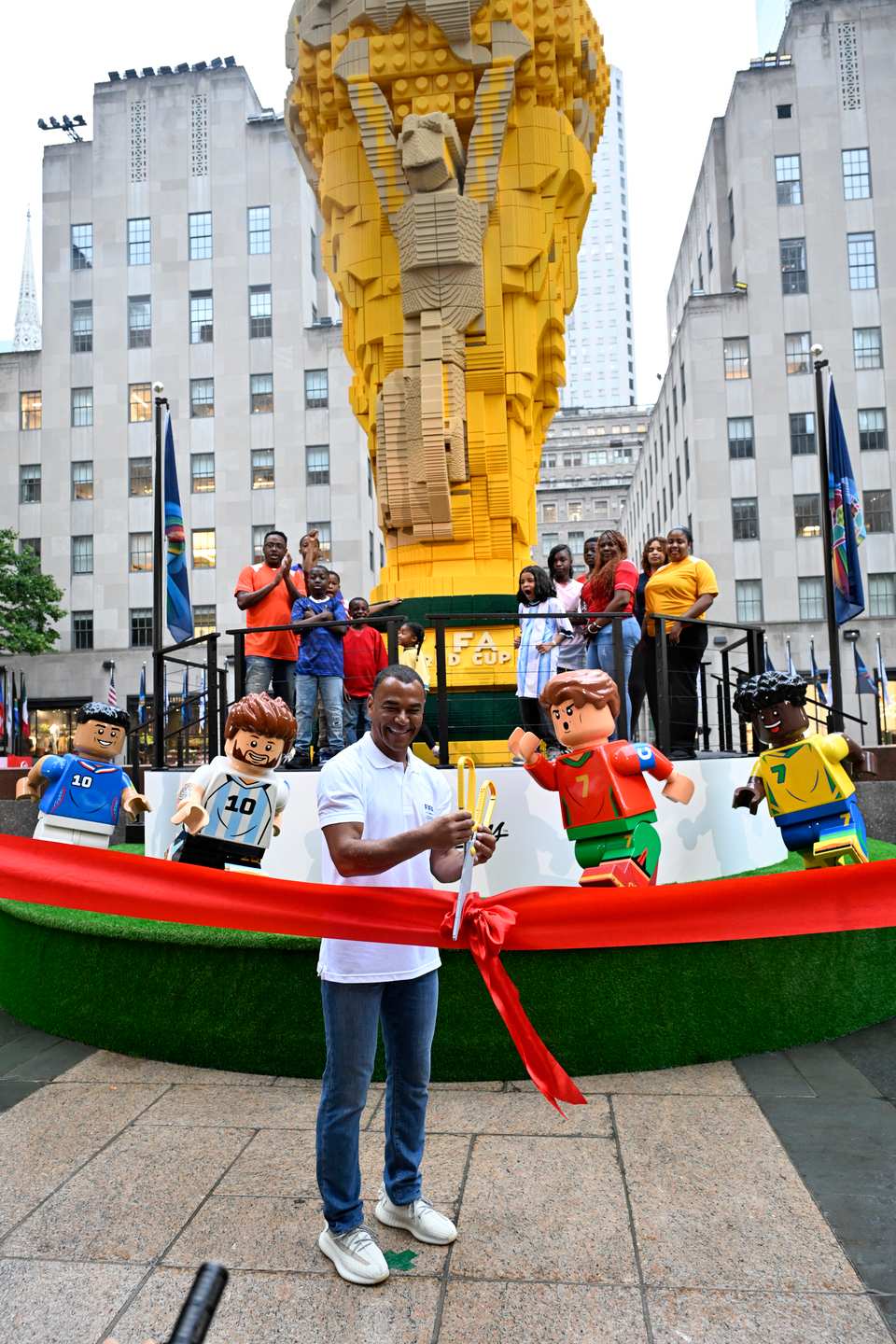





The LEGO Group has unveiled the world’s largest LEGO FIFA World Cup Trophy replica at Rockefeller Plaza in New York City as part of its official FIFA World Cup 2026 campaign.
Standing 8.47 metres tall, the replica was constructed using 1,363,402 LEGO bricks and weighs approximately 4,200 kilograms. According to the company, the installation is both the largest mobile LEGO build ever created and the largest FIFA World Cup Trophy replica made from LEGO bricks.
The project was developed over eight months at LEGO’s Model Production facility in Kladno, Czech Republic. A team of 59 designers, engineers, model builders and assembly technicians spent more than 7,040 hours constructing the installation.
To enable transportation and assembly, the structure was built in 16 sections and reinforced with an internal steel frame weighing approximately 3.5 tonnes. The heaviest pallet used during transportation weighed around 2,000 kilograms.
The unveiling was led by Brazilian football legend and FIFA World Cup winner Cafu, alongside fans representing nations still competing in the tournament. Together, they placed the final LEGO bricks on the structure during the launch ceremony.
Speaking at the event, Cafu said football remains a powerful force for bringing people together.
“Football has always been about bringing people together. Whether you’re playing in the street, cheering from the stands or watching with family and friends, it is one of the greatest tools for social inclusion in the world,” he said.
The installation forms the centrepiece of the LEGO Group’s official FIFA World Cup Fan Village at Rockefeller Centre. The fan zone features interactive building stations, personalised LEGO minifigure creation, a collaborative FIFA-inspired brick mural, photo opportunities, giveaways and other fan experiences.
The Fan Village is open to the public free of charge from July 6 to July 19, coinciding with the closing stages of the FIFA World Cup 2026 tournament.
The New York activation is part of a wider global campaign spanning North America, Europe and the Asia-Pacific region. The campaign includes fan villages, football-themed challenges, interactive building experiences and community events designed to engage football fans throughout the tournament.
Federico Begher, Senior Vice President of Product, Marketing and Development at the LEGO Group, said the campaign reflects the shared values of football and play.
“Football and play have a unique ability to bring people together. The FIFA World Cup Trophy is one of the most recognisable symbols in sport, and it has been incredible to see it brought to life in LEGO form at every scale, from the LEGO FIFA World Cup Trophy set to this giant 8-metre-tall replica in New York City,” he said.
The activation forms part of LEGO’s ongoing partnership with FIFA as the company continues to expand its presence around one of the world’s biggest sporting events.



Comment
No comments found.