


As Nigeria joined the rest of the world to mark World Whisky Day 2026, the country’s growing appetite for premium spirits once again came into focus, reflecting not only changing consumer preferences, but also the rising influence of nightlife culture, luxury experiences, and aspirational social living among urban consumers.
From upscale lounges in Lagos to private home bars, weddings, concerts, and exclusive nightlife gatherings, whisky continues to command strong visibility across Nigeria’s social scene. Increasingly, consumers are moving beyond casual drinking and now embracing whisky as a lifestyle statement tied to sophistication, status, taste, and experience.
Consequently, World Whisky Day has evolved into more than just a celebration of alcohol. Instead, it now represents a global appreciation of craftsmanship, heritage, storytelling, flavour, and cultural connection built around one of the world’s most iconic spirits.
Observed every third Saturday in May, the celebration began in 2012 after Scottish whisky enthusiast Blair Bowman introduced the initiative while studying at the University of Aberdeen. What started as a simple idea has since transformed into an internationally recognised event bringing together whisky enthusiasts, collectors, distillers, bars, and consumers across continents.
Today, whisky tastings, cocktail festivals, food pairing events, distillery tours, and social gatherings now define the celebration in several countries, including Nigeria, where premium spirits consumption continues to gain momentum despite economic pressures.
Not surprisingly, Lagos remains at the heart of this evolving culture.
Known widely as Nigeria’s entertainment capital, the city rarely pauses when the weekend arrives. After navigating demanding work schedules and enduring heavy traffic congestion throughout the week, many Lagos residents increasingly turn to nightlife destinations and social events to unwind.
Within these spaces, whisky has steadily become one of the most preferred premium drinks.
Whether consumed neat, served on the rocks, or blended into cocktails, whisky now occupies a central position across bars, clubs, restaurants, concerts, and private gatherings. Furthermore, consumers are becoming more adventurous, exploring different whisky origins, flavour profiles, and production methods.
Globally, whisky exists in several major categories, each carrying its own unique identity and production process.
Among the most recognised remains Scotch whisky, produced exclusively in Scotland and widely respected for its depth, aging tradition, and complex flavour character. By international standards, Scotch must mature in oak barrels for at least three years before release.
Meanwhile, Irish whiskey continues attracting consumers through its smoother and fruitier taste profile, largely achieved through triple distillation methods that create a lighter drinking experience.
American whiskey also maintains strong popularity globally through categories such as bourbon, rye, Tennessee whiskey, and corn whiskey, all of which deliver distinctive flavour notes ranging from caramel and vanilla to spice and oak.
Single malt whisky, particularly within the Scotch category, equally continues to appeal to enthusiasts seeking premium and more refined drinking experiences. Produced from malted barley at a single distillery, single malts often command strong prestige among collectors and connoisseurs.
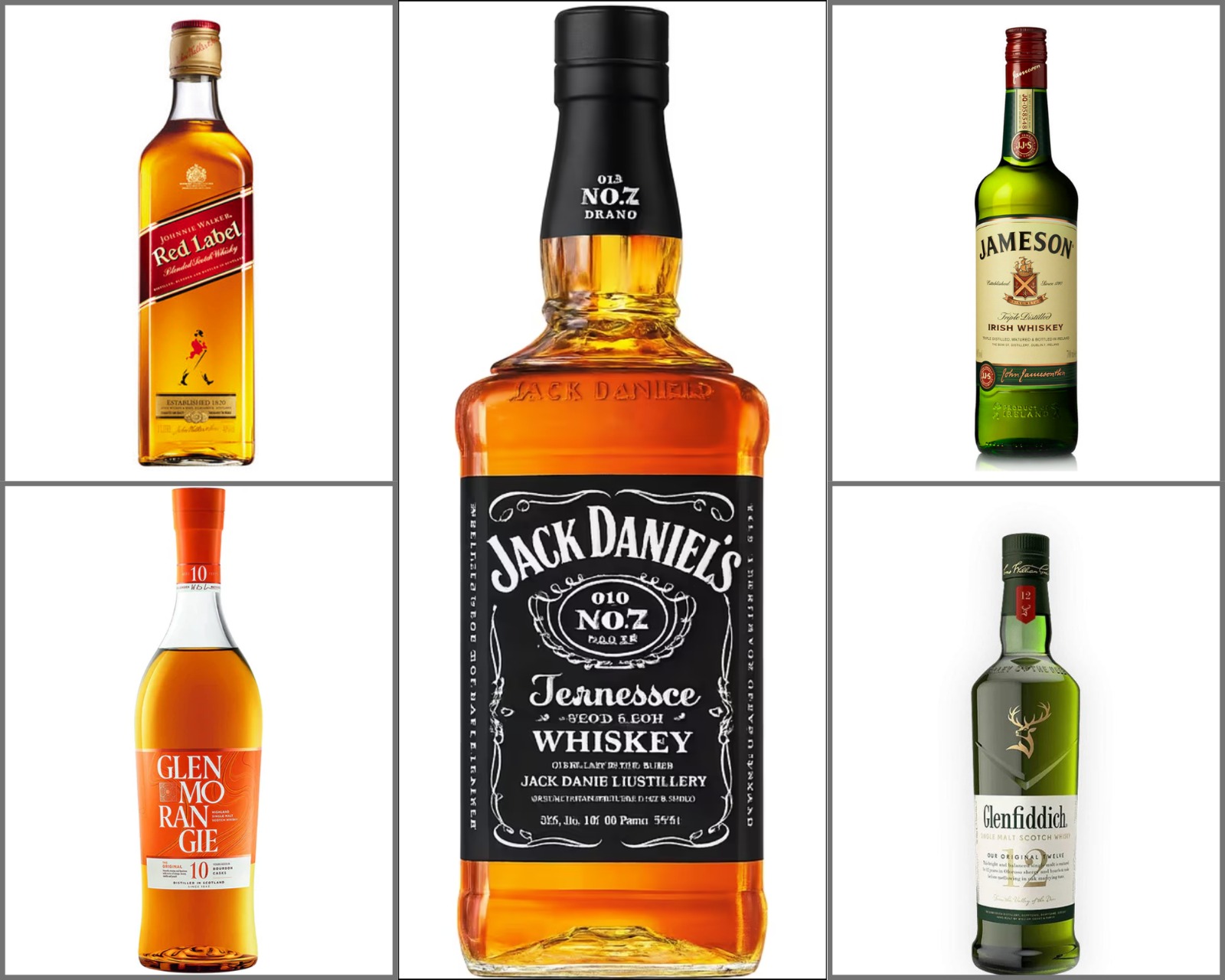
As appreciation for whisky culture expands across Nigeria, several international brands continue dominating visibility and consumer preference within the local market.
Leading the list is Johnnie Walker, one of the world’s most recognised Scotch whisky brands. Known for its extensive range, from Red Label to Blue Label, the brand continues to maintain a powerful presence across Nigerian nightlife, corporate entertainment, and luxury celebrations.
Its premium positioning, global reputation, and broad accessibility have further strengthened its dominance among whisky consumers.
Another major player remains Jameson, widely celebrated for its smooth taste and easy drinkability. The Irish whiskey brand has gained increasing popularity among younger consumers, cocktail lovers, and social drinkers looking for a softer whisky experience.
Its versatility has also helped it thrive across bars, lounges, and lifestyle events.
Within the premium single malt category, Glenmorangie continues attracting consumers seeking elegance, refinement, and layered flavour complexity. Founded in the Scottish Highlands, the brand remains highly respected for its craftsmanship and mature whisky expressions.
Similarly, Jack Daniel’s has sustained strong cultural relevance across Nigeria through its bold identity, rich heritage, and distinctive flavour profile. Produced using corn, rye, and barley before maturing in handcrafted oak barrels, the brand continues to enjoy massive popularity across clubs, concerts, and youth driven social spaces.
Completing the top five is Glenfiddich, one of the most admired single malt Scotch whisky brands globally. Its 12 Year Old and 18 Year Old variants have become familiar fixtures at Nigerian weddings, executive celebrations, luxury gifting occasions, and premium hospitality events.
The brand particularly appeals to experienced whisky enthusiasts and consumers seeking more sophisticated drinking experiences.
Beyond consumption itself, World Whisky Day also encourages education and deeper appreciation for whisky making traditions.
Across several countries, enthusiasts marked the occasion through guided tasting sessions, cocktail experiences, and conversations around distillation methods, cask aging, aroma profiles, and flavour balance.
Classic whisky cocktails such as the Old Fashioned, Manhattan, Whisky Sour, Mint Julep, and Japanese Highball also remained central to celebrations, especially among younger consumers exploring contemporary whisky culture.
Food pairing equally continues to shape whisky appreciation globally, as consumers increasingly combine whisky with grilled meats, seafood, cheeses, chocolates, and desserts to create richer sensory experiences.
Ultimately, the continued rise of whisky culture in Nigeria reflects broader shifts within the country’s hospitality, entertainment, and luxury lifestyle sectors.
Even amid economic uncertainty, consumers continue prioritising premium experiences, social connection, and aspirational living. Consequently, whisky brands are no longer selling drinks alone. Increasingly, they are selling identity, prestige, experience, and cultural relevance.
As World Whisky Day 2026 celebrations unfold globally, one thing remains increasingly clear: whisky has evolved beyond being just a spirit. It has become a symbol of lifestyle, celebration, and modern consumer expression across Nigeria and beyond.


Comment
No comments found.