
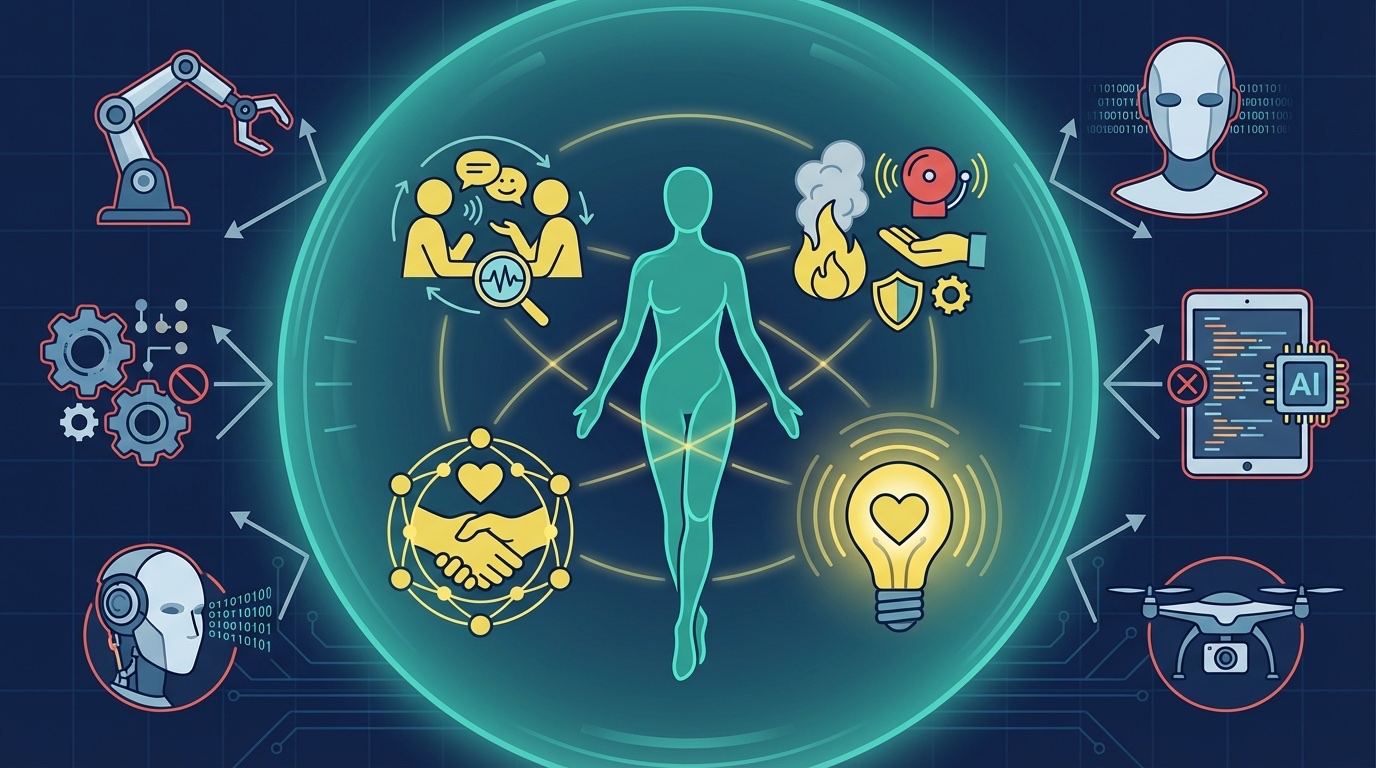



The rapid rise of artificial intelligence is challenging the traditional advertising agency model, democratising creative production and changing how brands develop and execute campaigns. As businesses gain access to tools that once required specialised agency expertise, creative firms must rethink their value, embrace new capabilities and move beyond content production to remain relevant and competitive.
For decades, brands relied on agencies for the ideas, people, production facilities and professional expertise required to develop campaigns, shape public perception and connect with consumers. From research and brand positioning to copywriting, art direction, media planning and execution, agencies controlled much of the process through which brands communicated with their audiences.
That arrangement is changing. Today, generative artificial intelligence allows businesses to develop advertising concepts, produce images, write scripts, create videos and generate campaign variations within minutes. Marketing departments can handle assignments that previously required external creative teams, while independent creators can produce materials that once demanded the resources of established agencies.
Consequently, the question confronting the industry is whether agencies can redefine their value quickly enough to remain relevant as creative production becomes increasingly accessible. The disruption challenges not only their traditional business model but also their relationship with clients and the basis on which they justify their fees.
Dr. Seyi Akindeinde, Founder of Hyperspace Technologies, believes the scale of this disruption could be comparable to the changes brought about by the internet. Recalling its arrival in Nigeria in 1995, he drew a parallel with an earlier debate about whether online communication would make the post office irrelevant.
As internet adoption expanded, traditional correspondence gradually lost its central place in everyday communication. The emergence of blogging further dismantled established barriers, allowing individuals without conventional media training to publish information and build audiences.
For Akindeinde, the lesson is that when technology democratises access to resources and knowledge, it weakens the institutional structures that previously controlled them. Applying this to advertising, he argued that agencies should not assume their current structures will survive unchanged. He believes that within the next decade, agencies may no longer operate in the form the industry knows today, as individuals and organisations acquire tools to perform functions once reserved for specialised firms.
His concern is not simply about job displacement but the possibility that traditional agencies could lose their position as the principal gateway between brands and creative execution.
The production advantage is disappearing
George Isitua-Onukwu, Managing Director and Chief Executive Officer of TBWA\Concept Unit, identifies three principal reasons clients engage agencies: capacity, accountability and perspective, or professional judgement.
Traditionally, agencies provided the people, infrastructure and specialist capabilities required to execute campaigns. They also assumed responsibility for delivering agreed work and brought the experience needed to make decisions about brand communication.
However, artificial intelligence is rapidly eroding the production advantage. With the ability to generate large volumes of creative assets at relatively low cost, production capacity is no longer exclusive to established agencies.
According to him, agencies must increasingly distinguish themselves through insight, judgement, strategic thinking and the ability to guide the creative process. Producing content is no longer enough; they must understand what a brand represents, the meaning it wants to communicate and how that meaning should translate into relevant experiences for consumers.
This distinction matters because AI does not create in a vacuum. Its outputs draw on existing information, images, language, brand identities and other materials developed by people over time. As Isitua-Onukwu observed, much of what AI produces is shaped by brand foundations and guidelines created by human professionals.
Agencies that understand brand history, consumer behaviour, positioning and communication principles therefore have an advantage over users who simply generate content and accept the first result.
He also referenced an internal Omnicom network survey on AI usage and competencies, which, according to him, found that experienced professionals were often more effective in applying the tools than younger colleagues. Their advantage came from their ability to question outputs, identify inaccuracies and refine results using accumulated marketing and creative knowledge.
The implication is that proficiency in prompting cannot replace professional competence. Without the knowledge to assess AI outputs, speed and accessibility may produce more content, but not necessarily better communication.
Global networks are already rebuilding the agency model
The shift is already reflected in the decisions of some of the world’s biggest advertising groups, which are committing substantial resources to technology, data integration and new operating structures to reposition themselves for the AI era.
Publicis Groupe has been developing an AI-powered operating model built around its CoreAI capabilities and Marcel platform. Its strategy connects proprietary consumer data, campaign intelligence, technology and creative expertise to support insight generation, media planning, personalised content production and business transformation.
On May 17, 2026, Publicis announced an agreement to acquire global data collaboration platform LiveRamp for an enterprise value of approximately $2.2 billion. The proposed acquisition is intended to strengthen data collaboration and support the development of more intelligent AI agents for clients.
The group also announced new leadership appointments for Marcel on October 22, 2026, to accelerate the platform’s development and expand its agentic solutions across areas such as influencer marketing, content intelligence, sports, culture and AI-powered discovery.
WPP is pursuing a similarly significant transformation. On February 26, 2026, it unveiled its Elevate28 strategy, which seeks to move the group from a holding-company structure towards a more integrated organisation with four operating units: WPP Media, WPP Creative, WPP Production and WPP Enterprise Solutions.
The strategy places WPP Open, its AI-powered marketing platform, at the centre of the proposed structure. It also targets £500 million in annualised cost savings by 2028 while seeking to simplify operations, strengthen integration and develop new AI-enabled services.
Earlier, on January 5, 2026, WPP launched Agent Hub within WPP Open, making specialised AI agents available to its workforce and clients. The tools draw on the group’s accumulated brand, behavioural science and creative expertise, with human specialists validating their outputs for accuracy, relevance and responsible use.
These moves show that Publicis and WPP are doing more than introducing AI tools to accelerate existing production processes. They are reorganising capabilities, investing in proprietary data, building technology platforms and repositioning their businesses around integrated solutions. Their direction suggests that future agencies will compete less on the number of people they deploy to execute a brief and more on the intelligence, technology, insight and measurable business value they bring to clients.
The danger of losing the local voice
For Nigerian agencies, the challenge extends beyond adopting technology developed by global networks. It also involves preserving cultural relevance and local creative identity.
Akindeinde raised concerns about the dominance of Western brands and cultural references in much of the information used to train AI systems. He questioned how Nigerian professionals could maintain their own voices when working with tools that may not adequately reflect local experiences.
Indeed, technology can generate polished copy, attractive visuals and convincing campaign concepts while still misunderstanding local humour, social relationships, cultural references and consumer motivations. For Nigerian brands, campaigns that look sophisticated but fail to connect with their audiences have limited value.
Understanding local languages, social behaviour, purchasing decisions and cultural sensitivities therefore remains essential to effective communication. Agencies must build stronger local knowledge bases, document consumer experiences, understand regional differences and develop creative approaches that reflect the markets they serve, rather than rely entirely on generic AI outputs.
Yinka Adebayo, Group Executive Director of Omnicom Media Group and Patron, has similarly urged industry professionals to understand and master AI, using it to improve the speed and effectiveness of their work rather than resisting its adoption.
He also draws attention to an important distinction in the debate about AI-generated advertising: whether consumers can identify how an advertisement was produced may matter less than whether the communication is relevant, meaningful and relatable.
For agencies, protecting the creative process cannot become an excuse for rejecting technological progress. Their responsibility is to ensure that technology serves the brand and its audience without compromising the quality or direction of the work.
The agency must become a strategic growth partner
As production becomes easier and cheaper, clients will increasingly question traditional agency fees for services they can partly perform themselves. Agencies that continue to sell mainly hours, manpower and production deliverables will find it more difficult to defend their commercial value.
Isitua-Onukwu’s argument that agencies must retain accountability and professional perspective points towards a more sustainable business model. Rather than concentrating primarily on production, agencies must demonstrate how their work contributes to brand growth, consumer engagement, market relevance and business performance.
This requires them to understand clients’ commercial objectives, interpret consumer data and provide advice beyond the development of advertising materials. It also demands stronger collaboration with in-house marketing teams, whose capabilities should complement rather than compete with external agency expertise.
The relationship must therefore evolve from a supplier-client arrangement into a partnership in which both parties contribute to strategy, execution, measurement and growth.
Talent must evolve alongside technology
The reinvention of agencies will also depend on the quality and adaptability of their people.
Dr. Oludare Ogunyemi, Senior Lecturer in the Department of Mass Communication at Caleb University, Imota, Lagos State, has emphasised the need for young professionals to build practical capabilities and establish visible portfolios that demonstrate their abilities.
He noted that employers increasingly assess candidates through evidence of their work, including digital profiles and projects published on professional and social platforms. Students, he argued, should use available technology to demonstrate their creativity and industry readiness rather than depend solely on academic qualifications.
He also highlighted the importance of collaboration between universities and industry organisations through internships, practical assignments and exposure to experienced practitioners.
For agencies, recruitment and training must look beyond familiarity with software or the ability to write prompts. Professionals who combine technological competence with strategic thinking, storytelling, cultural intelligence and sound judgement will remain valuable.
AI may help generate ideas, but people must determine which ideas deserve development, which messages suit particular audiences and which creative executions can strengthen a brand.
Reinvention is no longer optional
The advertising agency is not necessarily disappearing, but its traditional identity is under pressure. Firms that survive and grow must recognise that their value can no longer rest primarily on access to creative manpower or the ability to produce advertising materials.
The industry must move from selling production capacity to providing intelligence, from delivering isolated campaigns to solving business problems, and from treating technology as an optional addition to making it part of the agency’s operating foundation.
The experiences of Publicis and WPP demonstrate that this transformation requires more than encouraging employees to experiment with AI. It involves investment, structural change, data ownership, specialist expertise and a clear understanding of where future client value will come from.
For Nigerian agencies, the opportunity lies in adapting without surrendering cultural identity, building technology capabilities suited to local markets and demonstrating the commercial relevance of their expertise.
Akindeinde’s warning is instructive: institutions that fail to recognise the disruptive potential of democratising technology may discover that the market has moved beyond them. Isitua-Onukwu’s argument offers a way forward: agencies must make their value visible through accountability, insight and judgement.
The agency of the future will not be defined by how many advertisements it can produce or how quickly it can generate creative assets. It will be judged by how well it understands people, builds brands, solves business challenges and uses technology to deliver results that clients cannot easily achieve on their own.



Comment
No comments found.