


The days when an advertising agency could secure a client simply by producing a good campaign may be fading fast.
Across the marketing industry, brands are becoming more demanding, more informed and increasingly capable of handling parts of their marketing functions in house.
The question they are asking agencies is no longer just whether they can deliver a campaign, but whether they understand the business well enough to help move it forward.
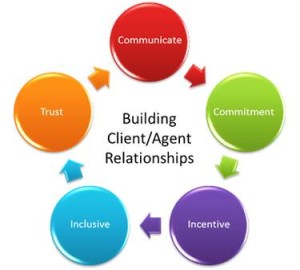
Increasingly, that changing expectation is redefining the relationship between agencies and clients, with industry voices calling for deeper partnerships built around trust, strategic thinking, constructive challenge, creativity and measurable value.
For George Isitua Onukwu, Managing Director and Chief Executive Officer of TBWA\Concept Unit, the starting point is a fundamental change in how agencies think about client retention.
According to him, rather than making the length of an account the ultimate measure of success, he believes agencies should focus on creating enough value for clients to want the relationship to continue.
Furthermore, industry data shows that agency client relationships have become longer, with the average relationship reportedly reaching about seven years, compared with 3.2 years in 2016.
Yet relationships without mandatory competitive reviews reportedly last an average of 8.1 years, compared with 3.8 years for those subjected to periodic reviews.
For Onukwu, however, longevity alone is not the real story, as he insisted that what matters is what the agency contributes throughout the relationship.
He argued that agencies must understand the business problem before attempting to solve the communication problem.
“That means asking better questions, understanding the client’s commercial challenge, studying the consumer and developing ideas that address the real issue rather than simply responding to the brief.”
Again, he maintained that, that approach shifts the agency from being a supplier waiting for instructions to becoming a partner involved in the client’s growth journey.
He affirmed that, today, brands now have greater access to data, technology, digital platforms and creative capabilities, allowing them to perform functions that once depended heavily on agencies.
Therefore , he averred that, consequently, agencies must demonstrate value that goes beyond execution.
For Onukwu, this is where an agency’s external perspective becomes important.
” An agency should be able to challenge assumptions, bring fresh thinking and identify opportunities that an internal team, because of its closeness to the business, may not always see.
“The relationship, therefore, should not be built around constant agreement.
It should be built around the confidence to challenge one another in pursuit of a better outcome.”
Once more, that view is reinforced by Lisa Snow, Brand Media Lead at Marks and Spencer, who identifies trust, transparency, openness and constructive challenge as critical ingredients of a productive agency client relationship.
For Snow, agencies and clients must be willing to share information, communicate openly and challenge each other respectfully.
Her position suggests that the strongest relationships are not necessarily the most comfortable ones.
“They are the ones where both sides can have difficult conversations without damaging the partnership.
She noted that an agency should be able to question a client’s assumptions, while a client should be open to ideas that may challenge its original thinking.
According to her, this becomes particularly important when the agency is expected to contribute to business growth rather than simply execute a predetermined brief.
Ganapathy
Viswanathan, a brand communication consultant, brings another important perspective to the debate, pointing to the growing sophistication of clients and the democratisation of marketing technology.
In insights shared through LinkedIn just like Snow, Viswanathan noted the changing capabilities available to brands and the implications for traditional agency relationships.
“As clients become more knowledgeable and capable of managing some marketing functions internally, project based engagements can become more attractive, particularly where the agency is seen primarily as an execution partner.
For agencies, that presents a clear challenge.
If clients can increasingly access basic creative, digital and marketing services themselves, agencies must demonstrate why their involvement deserves continued investment.,”
The communication expert said the answer lies in what they can bring beyond execution: strategic insight, specialist expertise, creative distinction, independent thinking and measurable results.
He agreed that agency and client should agree from the beginning on the objective, the relevant indicators and how success will be assessed.
Such an approach, he maintained , makes accountability a shared responsibility rather than something handed entirely to the agency.
For him, the changing relationship is also forcing agencies to reconsider the value of the campaign itself.
Also, he added that clients increasingly need to see whether an agency understands their business, can diagnose the problem behind the brief and has the strategic and creative capability to build a solution around it.
The proposition is changing from “give us the brief and we will execute it” to “let us understand the problem and work with you to solve it.”
Finally, they unanimously agreed that, trust must exist between both sides.
At the same time, Clients must be willing to share information while agencies must be prepared to challenge conventional thinking.
This way, both parties must agree on what success means, measure it properly and remain open to changing course when circumstances demand it.
Most importantly, they stated, that,agencies must demonstrate that their contribution goes beyond producing advertising.
The agency of the future will still create campaigns, but its role may extend much further into strategy, innovation, technology, experiences, platforms and intellectual property.
For agencies, it means earning a place at the client’s table through relevance, creativity, insight and business value.
So, the question facing the industry, therefore, is no longer simply how long has the agency kept the account?
It is a more demanding question:
How much value has the agency created while it was there?
That may be the real measure of the agency client relationship in the next era of marketing.




Comment
No comments found.