


There is a version of brand ambassadorship that Nigeria knows too well. A famous face. A product placed in hand. A caption written by someone who has never met the person. A cheque exchanged. A campaign that feels like exactly what it is, a transaction dressed as a relationship.
And then there is Farooq Oreagba. The man the brands found at the festival.
Farooq Oreagba did not arrive at Ojude Oba as a brand ambassador. He arrived as himself, a finance professional, a cancer survivor/warrior, a man who discovered that the way he dressed for one festival could move an entire generation to reclaim their cultural identity with pride and intention.
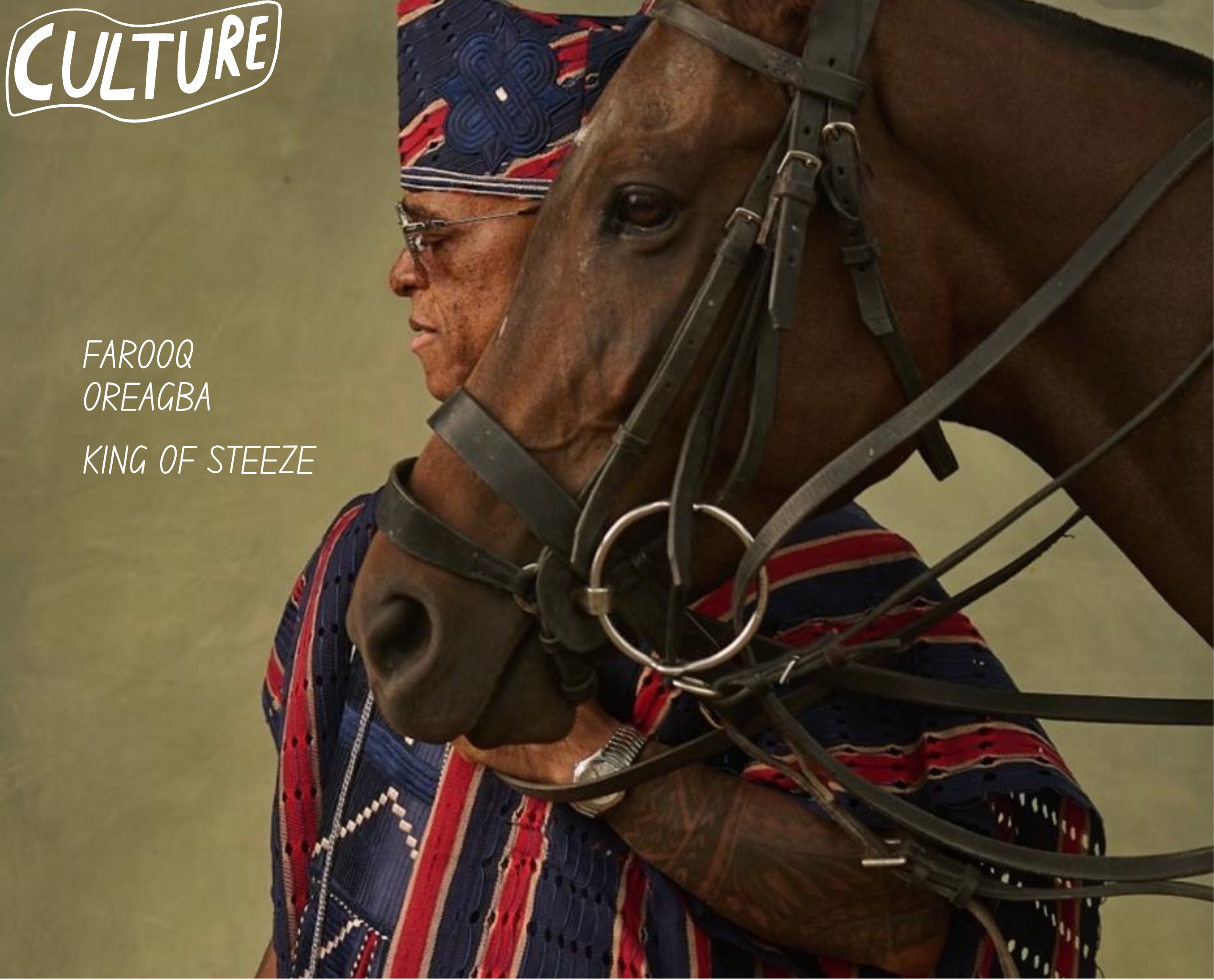
Ahead of the 2026 festival, Farooq shared photos in a structured aso-oke agbada in navy blue, crimson red and cream. Accessorised with a Fìlà Gbobà, silver chain necklaces, a gold-handled walking cane, and aviator glasses, posed alongside a horse. The internet did not just respond. It stopped.
He did not go viral because he was hired to. He went viral because he was real. Because the image of a man draped in heritage, seated on a horse with composure of someone who has faced death and decided to dress well anyway, said something that no copywriter could have written on brief.
The brands noticed. And the smart ones moved.
Airtel: The King of Steeze, Captured in His Element
Airtel’s approach to Farooq at Ojude Oba 2026 is a creative study in restraint and revelation. Three images. Each one building on the last.
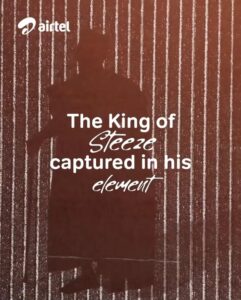
The first is a silhouette, Farooq’s unmistakable outline in full agbada against a rich textured background. No face. No product. Just presence. “The King of Steeze, captured in his element.” It is a teaser that understands its subject. Farooq does not need to be explained. He needs to be felt first.
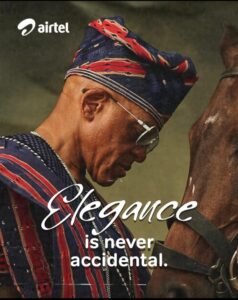
The second image opens the frame. A close-up profile. Farooq in deep navy and red aso-oke, aviator glasses, coral beads, horse alongside him, head slightly bowed in a moment of quiet composure. “Elegance is never accidental.” The copy is not describing Farooq. It is quoting him, the philosophy his entire presence embodies, every year, without being asked.
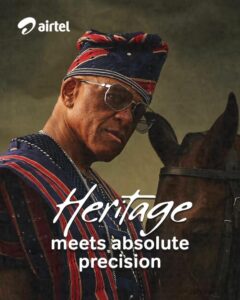
The third completes the triptych. Farooq facing the lens directly, unhurried, precise, certain. “Heritage meets absolute precision.” By this point, Airtel has not sold a single product. It has told a story. And the story has made the brand more interesting than any product placement could.
This creative direction builds on Airtel’s existing relationship with Farooq, a brand ambassador who said at the campaign launch: “Ten years ago I was diagnosed with cancer, and if someone had told me I would be standing here today as an ambassador for Airtel, I wouldn’t have believed it. But with resilience, I was determined to stop at nothing.”
Live Limitless is not just an Airtel tagline. At Ojude Oba 2026, on the back of a horse, in three carefully crafted frames, it became a biography.
FCMB: Together, for Culture
Where Airtel built a portrait, FCMB built a community.
FCMB deepened its cultural engagement at Ojude Oba 2026 by collaborating with Farooq Oreagba, whose appearances have helped propel the centuries-old celebration into global social-media and fashion conversations. But what makes FCMB’s creative execution remarkable is that it did not stop at Farooq.
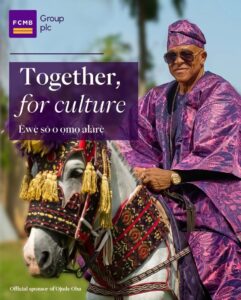
The first image is Farooq at full joy, mounted on a white horse adorned with gold tassels, dressed in deep purple brocade from cap to hem, gold chain catching the light, throwing a peace sign with the ease of a man who knows exactly where he belongs. “Together, for culture. Èwè só o ọmọ álàrè.” The Yoruba proverb chosen as the campaign’s subtitle carries its own weight, the leaf protects the performer, the community sustains its cultural guardians. FCMB is saying: we are the leaf. Farooq is the performer. Culture is what we are both here to protect.
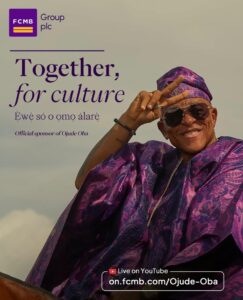
The second image widens the frame further, Farooq on horseback, full body, the horse and rider together as a single image of heritage in motion. Powerful, unhurried, entirely in his element.
But the third image is the most significant creative decision of the entire campaign. A different man. Younger. Burgundy aso-oke, coral beads stacked generously, round glasses, tattoos visible on his wrists, an enormous smile, a horse standing behind him. “Together, for culture.”
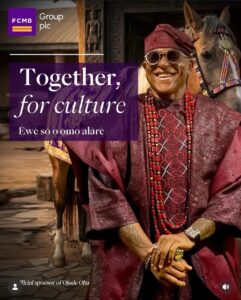
By including a second cultural figure, FCMB made a statement that goes beyond any single ambassador. It said: Ojude Oba does not belong to one man. It belongs to every man who shows up to honour his heritage with the full force of who he is. The festival is the story. The people living inside it are the characters. And FCMB, a brand whose presence reflects alignment with heritage, enterprise, family legacy and prosperity built across generations is simply here to walk alongside them.
What These Two Brands Got Right
The distance between Airtel and FCMB’s approach is instructive. Airtel went deep into one person and built a visual essay around his singular identity. FCMB went wide, using Farooq as the cultural anchor but opening the canvas to the broader community the festival represents. Both decisions were correct. Both served the brand. Both served the culture.
What neither brand did was treat Farooq as a prop. They treated him as a story worth telling, one that happened to align with what their brands believe in. Airtel believes in limitless living. Farooq survived cancer and rode a horse at Ojude Oba. FCMB believes in continuity and enterprise across generations. Farooq has been coming to this festival, in this fashion, building this cultural moment, for years without being paid to.
That authenticity, the fact that the man existed before the campaign did, is what makes every image land. The brands did not create Farooq Oreagba. They simply had the wisdom to recognise him.
The Lesson for Nigerian Marketing
The most powerful brand ambassadors are not always the most famous. They are the most authentic. They are the people who have already earned cultural trust, not through popularity but through consistency, through sacrifice, through the kind of personal story that makes a stranger stop scrolling and feel something real.
Farooq Oreagba survived cancer. He came back to the festival. He dressed like a king. Nigeria watched. And the brands that were paying attention earned something that no media budget can manufacture, the right to stand beside a story that already mattered.
That is what cultural intelligence looks like in practice. That is what it means to choose culture over celebrity.
ALSO WATCH:MARKETING EDGE ONTV


Comment
No comments found.