
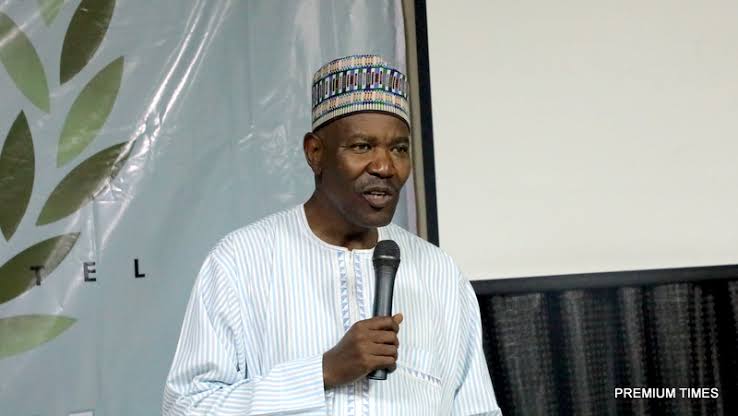


The Wole Soyinka Centre for Investigative Journalism marked the 92nd birthday of Nobel laureate Professor Wole Soyinka with its 18th Annual Media Lecture Series in Ikeja GRA, Lagos, where the focus was squarely on democracy, accountability and public trust.
The event, themed “Beyond the Ballot: Measuring Democracy Through Security, Welfare, Accountability and Public Trust,” brought urgency to the question of how democracy should be judged in real life.
Prof. Umaru Pate, professor of communication, the keynote speaker, said the lecture series has remained the centre’s flagship annual public engagement since 2008 and has consistently served as a platform for critical reflection on governance and democratic development.
“We are delighted to have you with us in this important national conversation,” he said, adding that the series has convened journalists, policymakers, academics, civil society actors and citizens over the years.
Pate said this year’s edition is especially significant because the centre is marking 20 years of promoting investigative journalism, transparency and accountability. He also paid tribute to Professor Soyinka, describing the anniversary as a moment to celebrate “truth, freedom of expression and democratic values.”
On the substance of the lecture, Pate argued that democracy must be measured beyond elections and formal rules. “Citizens evaluate democracy not through constitutional provisions, but through lived experiences,” he said In his view, the real tests are whether people can feed their families, access healthcare, educate their children and live in dignity.
He stressed that security remains the highest expectation of Nigerians from government. “Without security, a democracy that stands on solid ground is impossible,” he said, linking insecurity to hunger, poverty, unemployment and the erosion of public confidence. He added that the collapse of local government structures in many areas has made it harder for communities to resolve basic problems.
Pate also warned that misinformation and divisive narratives are worsening Nigeria’s democratic challenges. “Trust is the invisible foundation of democracy,” he said, noting that accountability, transparency and leadership integrity are essential if public confidence is to be restored.
He concluded that nation-building is an ongoing project and that Nigeria’s democratic future depends on credible institutions, quality leadership and investigative journalism. “We need journalism that can help clean the system,” he said, while urging the country to strengthen its security architecture and governance structures.



Comment
No comments found.