
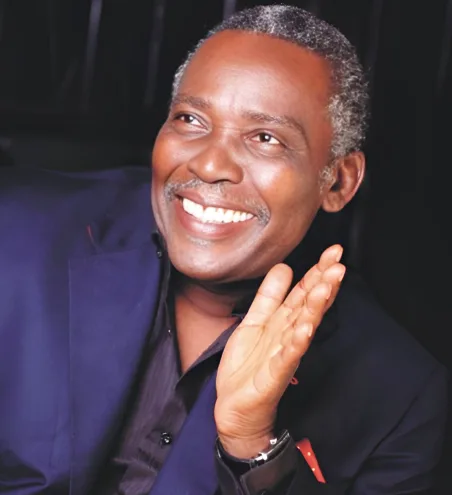


How one man turned talent, consistency, character and craft into a human brand built to outlive its owner. Of course, there are names people remember, names people respect, and then there are names that become institutions. Olu Jacobs belongs to the last category.
On September 16, 2026, Nigeria lost Oludotun Baiyewu Jacobs at the age of 84. The announcement closed the life of a remarkable actor, but it did not close the story of the brand he spent more than five decades building.
His family called him “The Lion of Lufodo”, while filmmaker Tunde Kelani described him as a “founding patriarch of modern Nigerian screen performance”. President Bola Tinubu and other Nigerians also paid tribute to a career that stretched across theatre, television and film in Britain and Nigeria.
That distinction matters. Olu Jacobs was not merely famous. He was memorable, trusted and recognisable without needing to introduce himself. Over time, his name accumulated meaning.
That is the difference between a personality and a brand. A personality can command attention; a brand commands memory. Olu Jacobs built the latter.
The making of a human brand
Every enduring brand begins with something it can consistently promise. For Olu Jacobs, that promise was craft.
From his early involvement in drama in Kano to his professional training at the Royal Academy of Dramatic Art in London, his journey was marked by a serious engagement with acting.
He worked across British theatre and television before returning to Nigeria and becoming one of the defining figures in Nigerian theatre, television and film.
His career crossed borders, formats and generations, yet the central proposition remained remarkably consistent. When Olu Jacobs appeared, audiences expected substance, authority, diction and presence.
Whether he played a traditional ruler, father, elder, statesman or another complex character, his name carried an expectation of quality. The role could change, the production could change and the medium could change, but the standard associated with him remained recognisable.
That is how brands are built: not by repeatedly saying what they are, but by repeatedly demonstrating it. For companies, brand promise is often written in boardrooms and presentations.
For Olu Jacobs, it was demonstrated in performance. Every appearance became another piece of evidence; every role reinforced the expectation; every decade strengthened the association.
The result was something no advertising budget can manufacture on its own: trust accumulated through consistency. His awards became markers of that reputation.
He won the Africa Movie Academy Award for Best Actor in a Leading Role in 2007, received the Industry Merit Award at the Africa Magic Viewers’ Choice Awards in 2013, received an AMAA Lifetime Achievement Award in 2016 and was conferred with the national honour of Member of the Order of the Federal Republic in 2011.
But the awards did not create the brand. They validated a reputation already built through years of work. Recognition can amplify a brand, but it cannot substitute for substance.
When the brand became bigger than the product
Olu Jacobs also understood that an enduring brand must grow beyond its original product. He did not allow his value to remain trapped inside the job description of “actor”. Together with his wife, Joke Silva, he co-founded the Lufodo Group, extending their work into film production, distribution and professional training through the Lufodo Academy of Performing Arts.
This was where the Olu Jacobs brand moved from performance to legacy. He was no longer simply delivering performances; he was helping build an ecosystem.
The distinction is important for companies. A business that only sells products may be remembered for those products. A business that builds people, institutions, systems and opportunities can become part of the history of an industry.
Olu Jacobs moved into that territory. His name became connected not only to films and television appearances, but also to training, professional standards, theatre, production and the development of younger talent. The brand began creating value beyond itself.
That value was reinforced by character. The strongest brands are not sustained by logos alone; they are sustained by associations. With Olu Jacobs, those associations went beyond acting ability. His public identity became closely linked with professionalism, discipline, dignity, craft and longevity.
His name suggested a standard, his presence suggested experience, his body of work suggested credibility, his longevity suggested endurance and the institutions he helped build suggested continuity. That is brand equity, and that is what remains in people’s minds when the product is no longer in front of them.
Reinvention without losing identity
Another instructive element of the Olu Jacobs story is the range of environments through which he travelled: Britain, Nigeria, theatre, television, film, traditional stagecraft and the emerging Nollywood industry. He did not remain frozen in the era that first established him.
Tunde Kelani recalled that Jacobs had already built an established career abroad when he chose to return to Nigeria. Kelani said Jacobs embraced the emerging Nollywood movement even at a time when analogue video production was regarded sceptically by some conventional filmmakers.
The technology changed. The industry changed. The audience changed. The medium changed. The standard remained. Today, no doubt, that is the balance many companies struggle to achieve.
Brands can become irrelevant when they refuse to change, but they can also lose their identity when they change so completely that consumers no longer recognise what they originally stood for. Olu Jacobs demonstrated another route, which is, change the platform, keep the promise.
From recognition to belonging
A powerful brand is not simply known. It is felt. For generations of Nigerians, Olu Jacobs was not an abstract celebrity. He occupied familiar cultural roles. He was the father, chief, elder, king, authority figure or family patriarch appearing in stories that became part of popular memory.
Indeed, that emotional familiarity gave the brand another layer, which is nothing but brand love. People did not simply recognise the name; they attached memories to it. That is why his passing has generated reactions across the creative industry and beyond, with actors, filmmakers, political figures and audiences reflecting on his contribution to Nigerian entertainment.
The emotion surrounding the loss reveals something brands spend enormous resources trying to create: connection. When a product disappears, consumers may miss it. When a person has become woven into cultural memory, people mourn the absence.
Legacy begins where ownership ends
Perhaps the most powerful lesson from Olu Jacobs is that a true legacy is not what remains attached to your name. It is what continues because of your name. No doubt, his performances remain.
Moreover, the institutions he helped build remain. The people he influenced remain. The standards associated with his craft remain. The memories remain. His story will also continue to introduce him to people who never saw him perform at the height of his career.
Perhaps,that is the ultimate test of an enduring brand: can people who never experienced the original product still understand its value? Can the story survive the storyteller? Can the reputation survive the person? Notably, in Olu Jacobs’ case, the answer is already unfolding.
Imagine, for a moment, that Olu Jacobs were a company. Its brand promise might read: Excellence, delivered consistently. Its core values would include Craft, Discipline, Dignity, Professionalism, Respect, Learning and Service.
Its product portfolio would span theatre, television, film, production and professional training. Its brand architecture would include performance, mentorship and institution building.
Also,its strongest asset would not be physical infrastructure but trust. Its greatest competitive advantage would be reputation accumulated over decades. Its strongest form of marketing would be experience, and its most valuable ambassadors would be the people influenced by its work.
However, its succession strategy would not depend entirely on keeping one person visible. It would depend on transferring knowledge, standards and values to the next generation. Definitely, that is precisely where companies can learn from the Olu Jacobs brand.
They must build a promise and keep it, giving customers repeated reasons to believe it. They must allow consistency to become a signature, because a memorable brand does not always have to surprise people; sometimes its greatest strength is knowing what standard to expect.
They must also build beyond the product. Olu Jacobs did not stop at acting. Through Lufodo, he and Joke Silva extended their contribution into production and professional training. Companies should therefore ask what they are building beyond sales.
They must invest in people, because a business becomes more valuable when its knowledge, culture and expertise live in people who can carry them forward.
They must adapt without losing their identity, protect reputation through character and create emotional connections strong enough to give their brands meaning beyond function.
Above all, they must think beyond the founder. The greatest personal brand is not one that collapses when its creator steps away. It is one that leaves behind institutions, people and principles capable of continuing the work.
From a man to a memory
Olu Jacobs’ greatest achievement may therefore not be the number of films he appeared in or the awards attached to his name. It may be the meaning his name acquired.
He began as a young boy in Kano drawn to drama. He crossed continents, trained at one of Britain’s most respected drama institutions, worked across theatre and television, returned home and became one of the defining figures of Nigerian screen performance. Then he built beyond himself.
He helped create institutions. He helped shape professionals. He helped define standards. He became part of the cultural vocabulary of a country.
And now, even in death, his name continues to communicate something, In essence, that is the extraordinary power of a human brand.
A logo can disappear. A campaign can end. A product can leave the shelf. An organisation can change ownership. But when a brand has been built into people’s memories, its meaning becomes remarkably difficult to erase.
Olu Jacobs is gone. The man has taken his final bow. But the character he built, the standards he represented, the people he influenced and the memories he created have no closing curtain.
Promise made us trust him. Values made us respect him. Craft made us remember him. Love made his absence felt. Legacy ensures that his name continues.
That is why Olu Jacobs is no longer merely a name from Nigerian entertainment history.
He is a brand. A human brand. A cultural brand. An enduring brand.
And perhaps the most fitting measure of that brand is this:
Olu Jacobs is gone, but his brand will never die.


Comment
No comments found.