
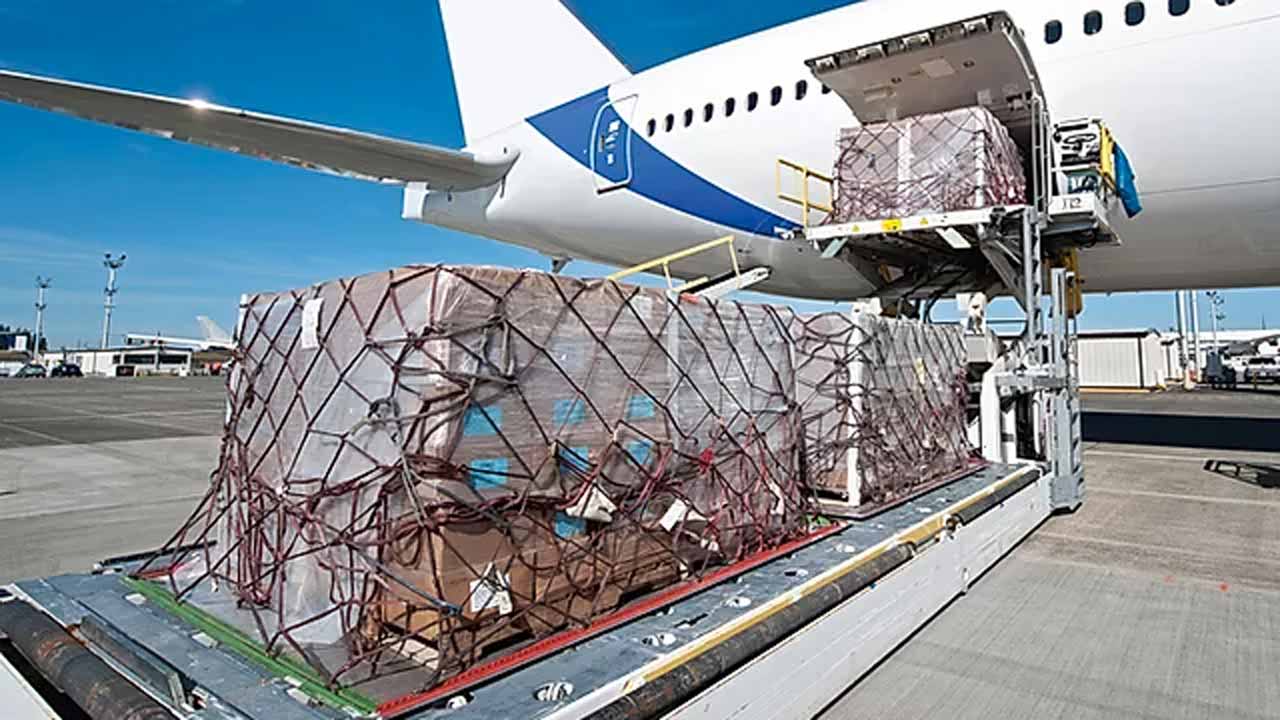


Nigeria’s air freight export sector is on a strong upward trajectory, with projections showing it will expand from about $3 billion in 2024 to approximately $5.6 billion by 2029.
This growth represents a compound annual rate of 13.54 percent, fueled largely by the rapid rise of social commerce, expanding MSME participation in global trade, and increasing diaspora-driven demand.
A new industry outlook released by Topship, a Nigerian digital shipping platform, positions the country as one of the fastest-growing air freight markets globally.
The report points to a significant transformation in Africa’s trade landscape, where small and medium enterprises are now directly serving international customers through improved logistics and digital commerce channels.
Drawing on data from global institutions such as the International Air Transport Association and the United Nations Development Programme, the report highlights that Africa’s air cargo demand surged by 15.6 percent year-on-year as of November 2025, making it the fastest-growing region in the global air freight space.
It further reveals that social commerce across Africa expanded by about 51 percent annually between 2021 and 2024. Fashion, beauty, and food products continue to dominate this export-driven surge, as digital platforms enable small businesses to reach buyers across borders with greater ease.
On Nigeria specifically, the report shows that exports to other African markets reached ₦4.82 trillion in the first half of 2025, reflecting a 14 percent increase compared to the previous year. This reinforces the country’s growing role as a regional trade hub powered by SME activity.
Investor interest is also strengthening across the continent. The report cites a major commitment of over €300 million from DHL Group in October 2025, describing Sub-Saharan Africa as one of the world’s most dynamic trade growth regions in recent periods.
ALSO WATCH:MARKETING EDGE ONTV
Beyond macro figures, the analysis highlights a structural shift in how African businesses operate. Small enterprises ranging from fashion designers in Lagos to food processors in Accra and beauty entrepreneurs in Nairobi are now exporting directly to customers in cities such as London, New York, and Houston. According to the report, this level of direct international trade would have been nearly impossible five years ago.
Sector breakdowns show that Africa’s fashion and apparel industry is expected to grow from $3.5 billion in 2024 to about $9.4 billion by 2028. At the same time, Nigeria’s diaspora-focused food and grocery segment is currently valued between $300 million and $500 million, with annual growth estimated at 10 to 12 percent.
In the beauty sector, African exports of products and raw ingredients are already estimated between $800 million and $1.2 billion, with forecasts suggesting the market could reach $2 billion by 2030.
Meanwhile, the continent’s consumer electronics space continues to benefit from a mobile-first economy, supported by more than 650 million smartphones actively in use, further driving cross-border digital commerce.
The report also emphasizes the critical role of MSMEs in this transformation. It references businesses such as Lagos-based fashion label Beevee Emporium, which is leveraging digital platforms and efficient logistics networks to scale beyond domestic markets and build global customer bases.
ALSO WATCH:MARKETING EDGE ONTV
At the center of this shift is a new generation of African entrepreneurs who are using social media, e-commerce platforms, and tech-enabled logistics systems to bypass traditional trade barriers and access international demand directly.
Commenting on the findings, Topship co-founder and chief executive officer Moses Enenwali said the data confirms a clear and accelerating trend in African trade.
According to him, the growth reflects a new reality where digitally enabled entrepreneurs are now driving export expansion at scale, turning local businesses into global competitors.
He added that the outlook underscores a simple but powerful message: African businesses are not just participating in global trade, they are increasingly shaping it through innovation, agility, and technology-driven logistics solutions.




Comment
No comments found.