
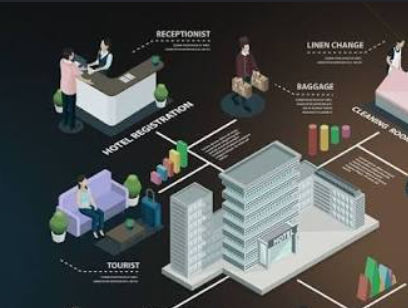


The global hotel and hospitality management software market is entering a major digital growth phase, with technology increasingly becoming central to how hotels manage operations and engage guests.
Grand View Research estimates that the market, valued at US$4.2 billion in 2025, will rise from US$4.4 billion in 2026 to US$8.4 billion by 2033, representing a 9.8 percent compound annual growth rate.
The shift is being driven largely by hotels seeking faster operations, personalised guest experiences and better control of increasingly complex businesses. Cloud based systems currently lead adoption, accounting for 44.8 percent of the market in 2025, as hotel operators favour flexible platforms that reduce infrastructure costs and allow staff to access information remotely.
Similarly, hotels represented the largest end use segment with 44.5 percent, while property management software captured 18.3 percent, reflecting continued demand for systems that coordinate reservations, check in, housekeeping, billing and other core functions.
ALSO WATCH:MARKETING EDGE ONTV HOSTS ANTHONY ONYEMAUWA
Meanwhile, artificial intelligence is rapidly reshaping the sector. Hotels are deploying AI powered analytics, digital concierge services, automated pricing tools and mobile check in systems to improve decision making and respond more quickly to guests.
Industry collaborations are also accelerating the transition. Recent technology partnerships and product upgrades have expanded capabilities in revenue management, guest feedback, business intelligence and conversational AI.
Regionally, North America remained the market leader with 35.1 percent of global revenue in 2025, supported by strong technology adoption and investment in automation. However, Asia Pacific is expected to record the fastest growth through 2033, driven by expanding tourism, urbanisation and rising demand for mobile first hotel services.
ALSO WATCH:MARKETING EDGE ONTV HOSTS GEORGE ISITUA-ONUKWU
Against this backdrop, hospitality operators are increasingly replacing traditional standalone systems with integrated cloud and AI platforms capable of connecting property management, customer relationship management, payments, reservations and revenue optimisation.
However, high implementation costs and the difficulty of integrating new platforms with legacy hotel systems remain major obstacles. Even so, the market’s direction is becoming increasingly clear: as hotels compete not only on accommodation but also on speed, convenience and personalised service, technology is moving from a back office tool to a core part of the guest experience.
ALSO WATCH:MARKETING EDGE ONTV HOSTS NKECHI ALI-BALOGUN


Comment
No comments found.