
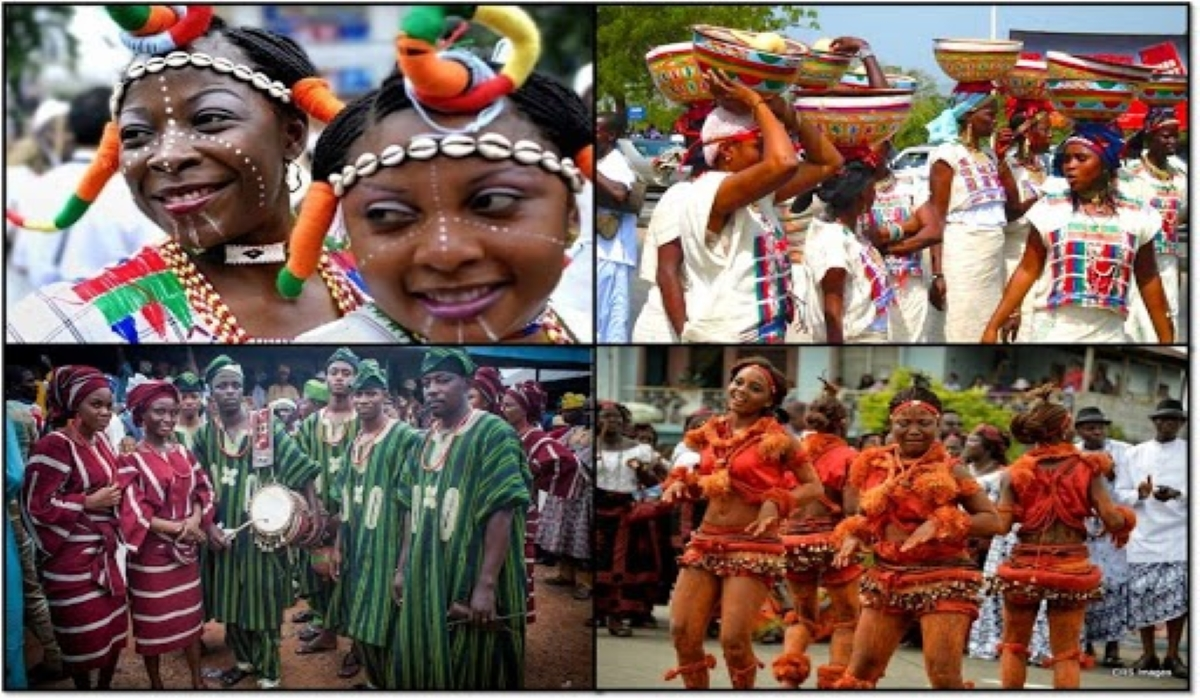


In April 2024, Farooq Ore-Ogba rode into the Ojude Oba festival in Ijebu-Ode dressed the way generations of Ijebu horsemen had dressed before him, and by the following morning the internet had crowned him the “King of Steeze.”
Brands that had never spent a naira on the century-old Ijebu homecoming suddenly wanted in. Nothing about the festival itself had changed overnight. What had changed was that the wider market finally caught up to a value the community had always known was there.
That single, viral weekend is, in miniature, the argument a group of Nigeria’s sharpest marketing minds have been making with increasing urgency: Africa is sitting on cultural wealth the rest of the world already wants, and the continent is still struggling to convert that wealth into anything it actually owns.
The numbers behind that struggle are not small. UNESCO projects Africa’s creative economy will generate roughly $20 billion annually by 2030. Nigeria’s federal government has set its own even more ambitious target, aiming to add $100 billion to GDP through the creative economy by 2030 or 2031, up from a sector that, as recently as a few years ago, contributed barely more than one percent of national output.
Nigeria’s streaming economy alone is now estimated at $1.2 billion, and the country’s musicians pulled in close to $395 million from international tours and performances in 2025. These are real, growing numbers. But growth in cultural output is not the same thing as growth in cultural ownership, and that distinction sits at the heart of a conversation several of Nigeria’s leading strategists have recently pushed to the centre of the industry’s attention.
Franklin Ozekhome, a strategist and creative industry leader, frames the gap in blunt terms: “Africa is culturally rich and commercially under-coded.”
For years, he argues, the industry has told brands to be “culturally authentic” without ever interrogating what that phrase actually means in a world where identity itself has stopped being simply local.
“A young Nigerian, can be deeply local and radically global at the same time.” Rather than asking where someone is from, Ozekhome insists the more useful question has become, “What worlds are they part of?”, a shift he describes as a “more networked recombinant culture,” where Afropop, fashion, language, film and enterprise all bleed into one another and are constantly reinterpreted.
His sharpest distinction, though, is the one separating heritage from culture from value: heritage is what a people inherit, culture is what they do with it, and value is what they ultimately build from it. “Heritage is stored cultural capital,” he says, “but does not automatically become market value.”
His challenge to Nigerian creatives and businesses is direct: stop merely representing culture, and start building products, businesses and intellectual property the world will pay to own.
Ozekhome argues Africa’s cultural industries still need if fleeting visibility is ever going to mature into owned, durable value.
That challenge, however, runs into a second, quieter problem: even when African brands succeed in getting attention, attention alone rarely earns trust.
Dr. Omotola Bamigbaiye Elatuyi, CEO Society for Corporate Governance has made this her central concern, warning that a brand can dominate every timeline in the country and still fail at “the one thing that determines whether consumers stay with it: credibility.”
In an environment saturated with influencer content, viral moments and now AI-generated material, she argues, visibility and credibility have quietly become two entirely different currencies. Consumers, she notes, stay loyal to banks because they trust their money is safe, to telecom networks because they expect the signal to work, to food and pharmaceutical brands because they trust the promise on the label will hold.
That kind of trust, she stresses, is not built through a single campaign; it is built at the intersection of communication, organisational conduct and lived consumer experience, sustained consistently over time, precisely the discipline
Femi Odugbemi, the award-winning filmmaker and creative industry leader, pushes the argument one step further, past economics and into imagination.
“Culture is not aesthetics, it is about value,” he insists, challenging brands to stop treating culture as decoration draped over a campaign and start asking what substance their storytelling actually carries.
For Odugbemi, culture is not simply a record of where a people have been; it is what he calls “an opportunity for futurism,” a resource for imagining what a people might yet become. That framing matters because it is evolving in real time, and brands that treat culture as a fixed, nostalgic asset, he warns, will find themselves increasingly out of step with audiences who experience their own identity as something alive and in motion.
Oti Ukubeyinje, consumer data lead, Diageo, offers something closer to a working playbook. His argument, distilled from watching Ojude Oba’s transformation up close, is that the brands that win cultural partnerships are rarely the ones writing the biggest cheques. They are the ones with the best timing. He lays out four principles: enter a cultural moment early, fit into it authentically rather than bolting a logo onto it, integrate beyond mere sponsorship, and commit to playing the long game.
“A logo on a backdrop,” he writes, “is easily forgotten. Shared experiences aren’t.” Ukubeyinje points brands toward where that opportunity currently sits unclaimed: the Itsekiri Global Homecoming, a week-long cultural and development programme tied to the fifth coronation anniversary of the Olu of Warri, running in August 2026.
It is, in his telling, respected within its community but not yet on every brand manager’s radar, precisely where Ojude Oba stood before 2024. Brands that show up now, he argues, won’t just be remembered as sponsors later; they’ll be remembered as the ones who helped build the institution itself.
Nigeria’s marketing industry has spent years being reactive, arriving at cultural moments only once they have already gone viral, the way the market arrived at Ojude Oba a beat too late in 2024. The real test now is whether it can learn to arrive early instead, at the next homecoming, the next festival, the next unclaimed moment of cultural pride, and stay long enough, with enough consistency and enough honesty, to help build something the continent can finally call its own.


Comment
No comments found.