
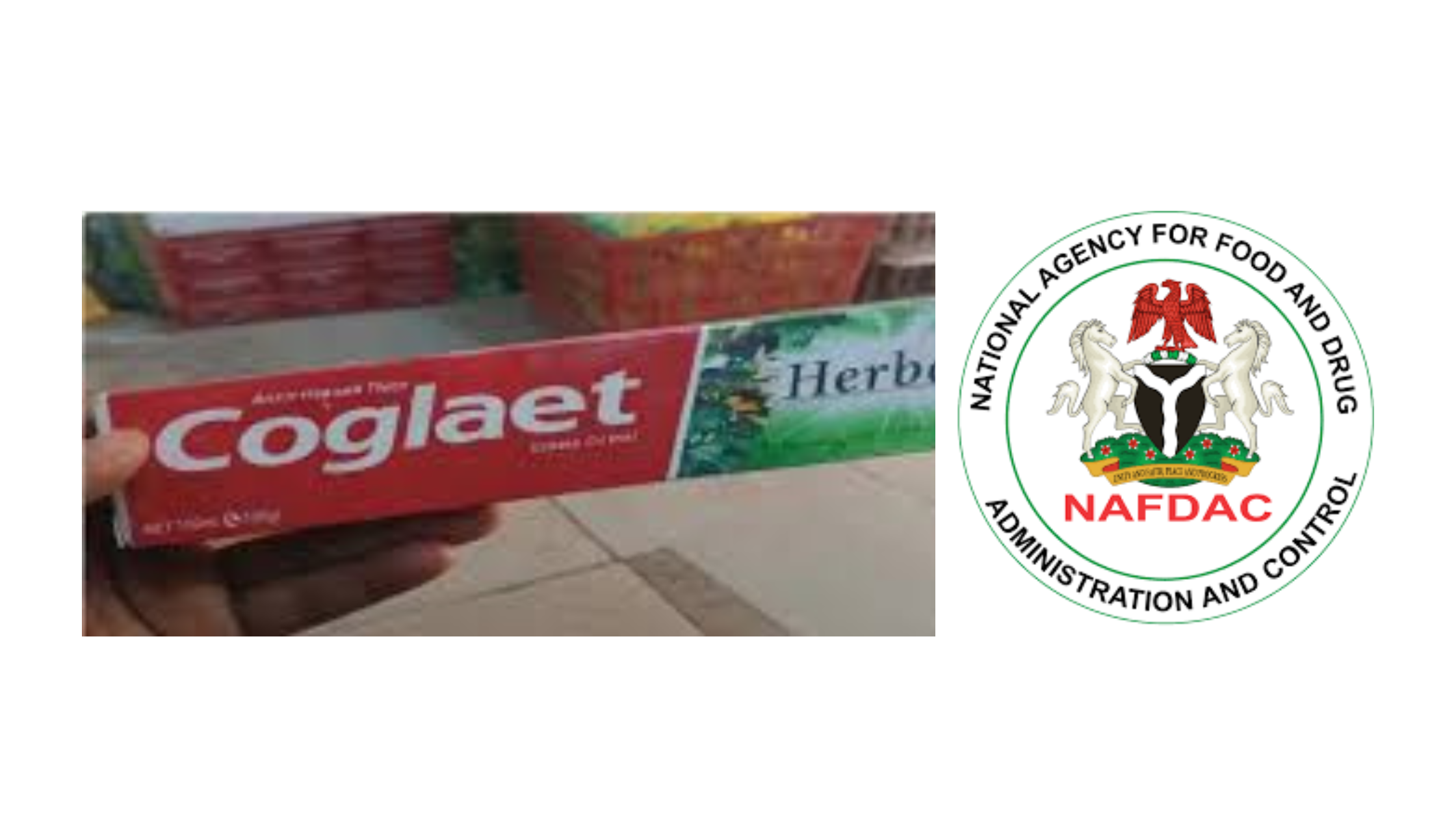


Counterfeit Colgate toothpaste is circulating in Nigerian retail markets, highlighting a growing counterfeit crisis in Nigeria. The same informal distribution networks that built the brand’s mass-market reach are now being used against it.
The National Agency for Food and Drug Administration and Control (NAFDAC)’s recent alert, triggered by a complaint to its post-marketing surveillance directorate, uncovered two suspected counterfeit products in Kaduna State. The products, branded Coglaet ActivGel and Coglaet Herbal, were traced to a retail outlet supplied by a door-to-door sales representative. These products had no batch numbers and no NAFDAC registration. Just a product on a shelf, moving through a channel that operates largely on word-of-mouth.
The distribution paradox
Colgate, like most major FMCG brands operating across Nigeria, relies heavily on informal distribution to achieve last-mile penetration. Open markets, roadside stalls, mobile traders, and door-to-door vendors. These channels move volume at scale and reach consumers that formal retail simply cannot.
But the same informality creates vulnerability. Why? There are no purchase records. There is no chain of custody. A sales vendor can appear, drop product, collect cash and disappear, and no one in the chain can verify what was actually sold, or to whom.
Counterfeiters understand this architecture intimately. They do not attack formal retail. They insert themselves into the informal one, where oversight is weakest, and volume is highest.
Brand mimicry is getting smarter
What makes the Coglaet case particularly instructive is the sophistication of the imitation. The counterfeiters did not attempt an exact visual copy of Colgate. Instead, they engineered a near homophone, a name designed to especially survive in low literacy environments.
Consumers reaching for a familiar-sounding toothpaste in a busy market stall are not conducting due diligence. They are buying on instinct, the very instinct that years of Colgate brand-building created.
Every unit of Coglaet sold therefore does two things simultaneously. It profits from Colgate’s equity. And it quietly erodes it: through product experiences that consumers may, consciously or not, associate with the brand they thought they were buying.
The brand equity toll
This is where the story moves beyond regulatory compliance into brand strategy. A counterfeit incident of this nature is not merely a NAFDAC problem. It is a brand equity problem with a very specific Nigerian texture.
In markets where formal consumer feedback mechanisms are thin, and word-of-mouth carries enormous weight, a bad product experience travels fast regardless of whether the product was genuine. A consumer in Kaduna who buys Coglaet thinking it is Colgate and suffers an adverse reaction does not necessarily make the distinction. Their experience becomes their review. And that review circulates.
What the brand must do
The question this incident poses to Colgate Nigeria and to every FMCG brand with significant informal channel exposure is pointed. Can you be serious about distribution depth and supply chain integrity at the same time?
Some brands in the pharmaceutical space have already answered that question with technology. QR-code authentication, USSD verification tools and tamper-evident packaging now allow end consumers to verify product authenticity at the point of purchase. These are not expensive innovations – but very deliberate ones.
The cost-benefit calculation changes significantly when the alternative is brand trust depreciation in a market of over 200 million people, most of whom shop informally.
The bigger picture
This is also not the first NAFDAC alert tied to Kaduna. Earlier this year, the agency flagged a revalidated infant formula with altered expiry dates in the same state. It will appear to a keen observer that Kaduna appears to be a recurring entry point for substandard and counterfeit goods, which points to either a distribution infrastructure gap, a regulatory enforcement gap, or both.
For brand managers and marketing directors operating across Nigeria’s north, that pattern deserves attention well beyond a single product alert.
Ultimately, the informal market is not going away. Neither is the counterfeiting that exploits it. The brands that will weather this threat are those that treat distribution integrity as a brand investment, not an afterthought.


Comment
No comments found.