


The numbers were already uncomfortable before Cannes Lions 2026. Now YouTube has made them impossible to ignore.
Brands are no longer the primary authors of culture. Creators are. And the brands that have not yet reckoned with that reality, that have not restructured their media strategies, their creative briefs, and their measurement frameworks around the creator economy, are, in the words of PepsiCo’s Chief Creative Officer, already losing the war.
That is not hyperbole. It is the blunt assessment of one of the most senior brand marketing executives in the world, delivered at the most important creative festival on the global advertising calendar.
At the Cannes Lions Festival of Creativity 2026, YouTube announced a suite of new AI-powered insights tools built with Gemini, designed to help brands and agencies navigate what the platform is calling a new era of creator marketing. The announcement comes at a moment when the question of how brands earn attention, rather than simply buy it, has moved from a strategic aspiration to an operational urgency.
What YouTube announced
The tools unveiled at Cannes Lions address four distinct gaps in how brands currently understand and activate on YouTube.
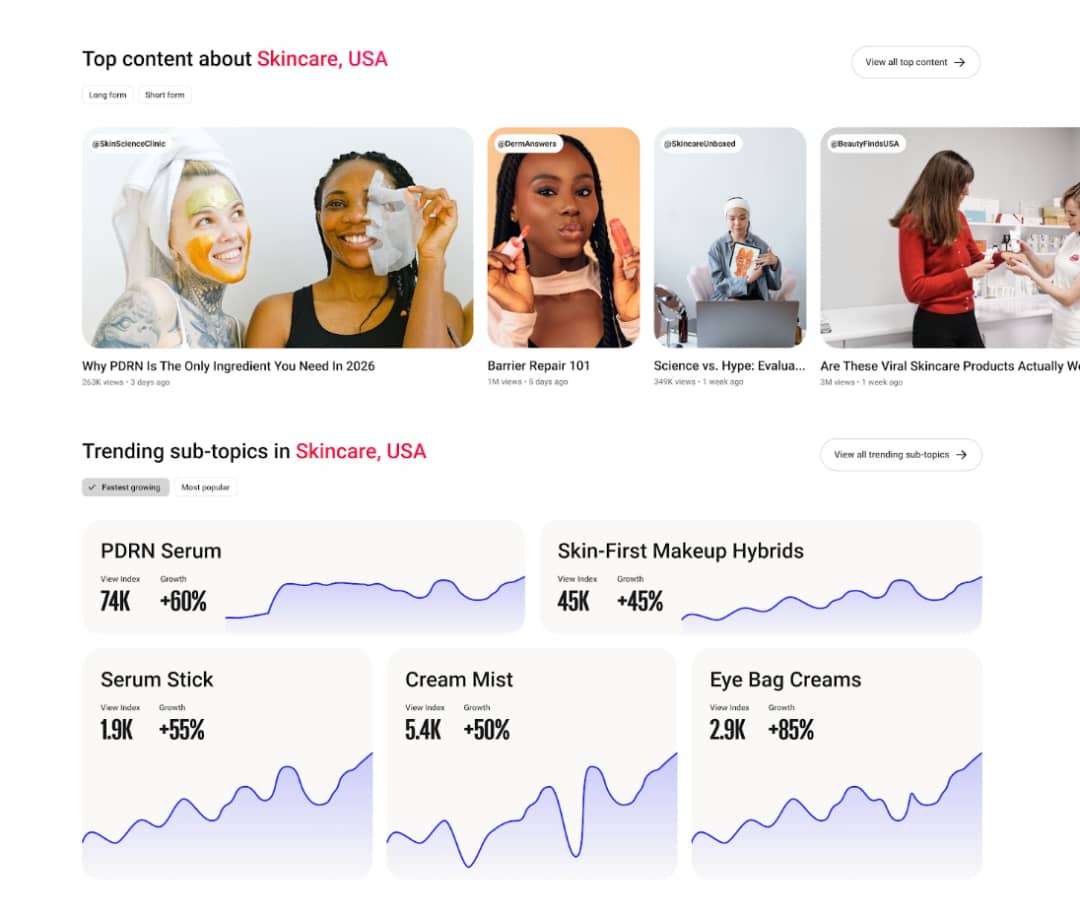
The first is trend intelligence. New trending insights within Google Ads Insights Finder now offer deeper, more granular data on what is actually popular on YouTube in real time, moving brands beyond lagging indicators and into the live cultural conversation.
The second is brand presence visibility. Select brand pulse report metrics now appear directly in Insights Finder, giving brands a consolidated view of both their paid and organic footprint on YouTube, a distinction that matters enormously in an ecosystem where organic creator content frequently outperforms paid placements.
The third is creator intelligence for agencies. A new Content and Creator Insights API provides richer data about YouTube creators and their audiences, enabling more precise and effective media planning at the point where creative strategy and media buying converge.
The fourth is AI-driven creative optimisation. Gemini will soon generate creative insights directly within Demand Gen campaigns on YouTube, including specific recommendations on which visuals to deploy for stronger performance, bringing data-driven creative guidance into the campaign workflow rather than leaving it to post-campaign analysis.
Sean Downey, President of Americas and Global Partners at Google, framed the announcement in terms of the cultural authority that YouTube creators now hold: “YouTube creators are the undisputed voices shaping global culture and driving viewer trust. Now, we’re introducing new insights tools to fuel more creative and effective ad campaigns across YouTube. We are making it easier than ever for brands to match with the perfect talent at scale, tap into real-time cultural trends, and use data-driven creative optimizations to turn creator fandom into business results.”

Sean Downey, President, Americas & Global Partners, Google
The agency perspective: AI in service of the story
For agencies navigating the intersection of generative AI and creator marketing, the Cannes Lions announcement arrives at a moment of genuine creative tension. The question is not whether AI belongs in the creative workflow, that debate is largely settled. The question is how to use it without letting it subsume the human intelligence that makes creative work worth watching.
Fabiana Baraldi, Managing Director of Jellyfish Brazil, articulated that balance precisely: “The vision shared by GWM and Jellyfish Brazil was never to use artificial intelligence as a gimmick or to draw attention to the technology itself; our goal has always been to tell a deeply human story. The film’s nuance, coherence, and emotional resonance were only made possible through the creative leadership of our team. By leveraging Google’s AI tools, which streamlined our workflow and unlocked new creative possibilities, we successfully guided the technology to serve the narrative and amplify that emotion.”

Fabiana Baraldi, Managing Director, Jellyfish Brazil
That framing, technology in service of narrative, not narrative in service of technology, is the creative standard that the most sophisticated agencies operating in the YouTube ecosystem are now working to establish. It is also, not coincidentally, the standard that creators themselves have always applied intuitively.
The creator’s view: building agents for the parts nobody wants to do
Independent creators who have built significant audiences on YouTube bring a different but equally instructive perspective to the AI tools conversation. For them, the value of tools like Google’s Antigravity is not about generating content. It is about reclaiming time.
Brandon B, Creator and Partner at Studio B, described the practical reality: “We’re using tools like Google’s Antigravity to essentially build agents across the board in all the places that us creatives don’t want to work. So we can save our precious creative time for the parts that really matter, which is storytelling and the art form.”

Brandon B, Creator and Partner, Studio B
That is the creator economy’s version of the same argument Jellyfish Brazil made, AI handles the infrastructure so that human creativity can concentrate on the irreplaceable parts. The difference is that creators have been living this reality for longer than most brand marketing teams have been willing to acknowledge it.
The brand reckoning
The sharpest perspective at Cannes Lions on what the creator economy actually means for brands came not from a platform executive or an agency lead but from a brand marketer sitting inside one of the world’s most recognisable consumer goods companies.
Chris Bellinger, Chief Creative Officer at PepsiCo US, did not mince words: “Culture and sales are no longer defined by what you do on big stages or in advertising. It’s who is talking about you and where they are engaging, and right now the creator economy on platforms like YouTube are fundamentally redefining how we need to engage with consumers. Brands are being born and killed on these channels, and if you aren’t ahead of the curve then you’ve already lost the war. Awareness isn’t the metric, it’s attention. It’s a creator and attention economy now, we have to adapt to their world, not the other way around.”

Chris Bellinger, Chief Creative Officer at PepsiCo US
That last line is the one that should sit uncomfortably with every brand manager and agency strategist who has not yet restructured their YouTube strategy around creators. The platform does not adapt to brands. Brands adapt to the platform, or they become irrelevant on it.
For Nigerian marketing and advertising professionals, the Cannes Lions announcement carries a specific implication. Nigeria’s creator economy is one of the most vibrant and culturally generative on the continent. Nigerian creators on YouTube, across music, comedy, fashion, food, and lifestyle, command audiences and cultural influence that most brand campaigns cannot replicate through paid media alone. The tools YouTube unveiled at Cannes Lions are designed precisely for brands that want to move from buying around creators to working intelligently with them.
The war for attention is already being fought on YouTube. The brands showing up with better intelligence, sharper creator partnerships, and AI-assisted creative optimisation will be the ones who win it.
The tools are now available. The question is whether Nigerian brands will use them before their competitors do.



Comment
No comments found.