
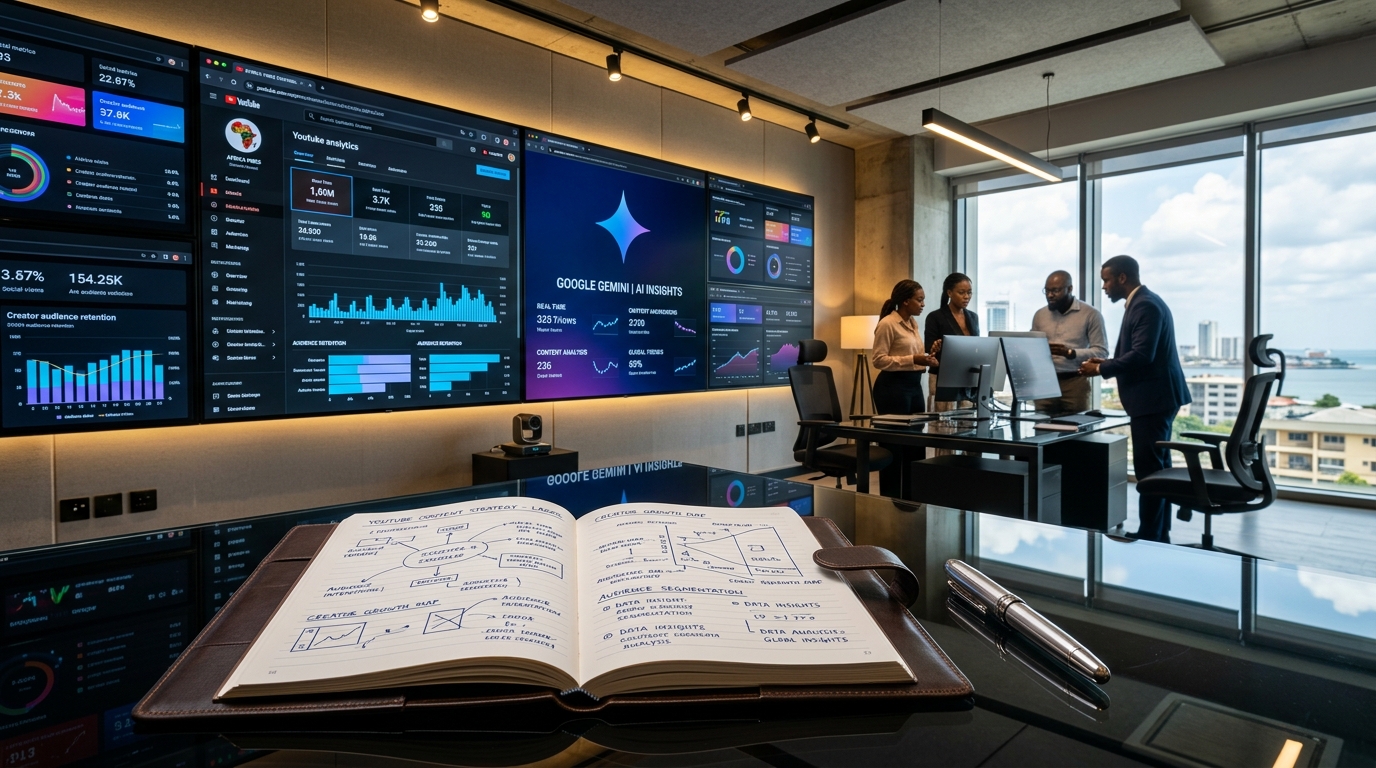



One of the biggest conversations at Cannes Lions 2026 was not just about creativity. It was about how Artificial Intelligence is rapidly changing the way brands understand audiences, create content and measure impact.
Google used the global festival to unveil a new suite of Gemini-powered tools for YouTube advertisers. While the announcement was targeted at marketers globally, the implications for Nigeria’s advertising, media and creative industries could be significant.
For Nigerian agencies constantly searching for the next cultural moment, the next viral trend or the next creator capable of moving audiences, these tools offer a glimpse into what the future of advertising may look like.
One of the biggest challenges facing agencies today is understanding what consumers are paying attention to before everyone else does.
Traditionally, creatives relied on trend reports, social listening, intuition and experience to identify emerging conversations. While those methods remain valuable, Google’s enhanced Insights Finder tool promises something more powerful: real-time visibility into what audiences are actually watching, discussing and engaging with on YouTube.
For Nigerian agencies, this could become a game-changer.
Imagine being able to identify a growing interest in Afrobeats dance trends, local fashion movements, comedy formats, food culture or emerging youth conversations before they become mainstream.
Instead of reacting to trends after they have peaked, brands can position themselves at the centre of the conversation while it is still developing.
In a market where relevance often determines success, that kind of intelligence could provide a major competitive advantage.
Creator marketing has become one of the most important components of modern advertising.
In Nigeria, creators now influence everything from fashion and beauty purchases to fintech adoption, entertainment consumption and even political discourse.
Yet many brands still choose influencers based largely on follower counts and surface-level engagement metrics.
Google’s new Content and Creator Insights API seeks to change that by providing deeper intelligence into creator audiences, content performance and audience interests.
For agencies, this means influencer selection could become far more strategic.
Rather than simply focusing on who has the largest audience, agencies will now be able to identify which creators have audiences that closely align with specific target markets, which creators consistently drive consumer action rather than passive engagement, and which creators perform best among particular audience segments.
For Nigerian agencies managing campaigns across sectors such as telecommunications, banking, FMCG, entertainment and technology, this level of intelligence could significantly improve campaign outcomes and return on investment.
Perhaps the most exciting opportunity lies beyond advertising.
The same AI-powered insights can help creative industries understand audience preferences at scale.
For Nollywood producers, music marketers and content creators, the ability to identify emerging audience interests could influence everything from content development to distribution strategies.
AI-powered trend intelligence could reveal what storytelling themes resonate most strongly with younger audiences, which music genres are gaining traction across different regions, what types of comedy content are generating the highest engagement, and how audiences are increasingly consuming both short-form and long-form video content.
These insights could help Nigerian creatives produce more culturally relevant content while reducing some of the uncertainty that often accompanies major creative investments.
One of the most notable announcements from Google was the introduction of Gemini-powered creative recommendations within Demand Gen campaigns.
The technology analyses campaign assets and predicts which visuals are likely to perform better before significant media spend is committed.
For Nigerian agencies, where clients increasingly demand measurable returns on marketing investments, this could significantly shorten the traditional trial-and-error process.
Instead of producing multiple versions of a campaign and waiting weeks for performance results, creative teams can receive early feedback on which concepts are likely to resonate most strongly with audiences.
Importantly, this does not replace creativity.
Rather, it provides creative teams with additional intelligence that can help strengthen ideas before they are launched.
The agencies that thrive in the coming years may not necessarily be those with the most advanced AI tools, but those that know how to effectively combine human creativity with AI-powered insights.
Another challenge many brands face is understanding how paid advertising and organic conversations influence one another.
A consumer may first discover a product through a creator’s content before eventually encountering a paid advertisement and making a purchase.
Historically, these touchpoints have been measured separately.
Google’s Brand Pulse integration seeks to bridge that gap by helping brands understand how creator conversations and paid advertising work together to influence consumer decisions.
For Nigerian brands that are increasingly investing in both influencer marketing and performance advertising, this provides a more complete picture of consumer behaviour.
It also reinforces a growing reality in modern marketing: people are often more likely to trust recommendations from individuals they follow than messages delivered through traditional advertising.
The biggest takeaway from Cannes Lions is that AI is no longer a future trend. It is becoming an essential part of the modern marketing toolkit.
For Nigerian agencies, the opportunity extends beyond simply adopting AI tools. The real opportunity lies in using AI to become better storytellers, stronger strategists and more effective interpreters of culture.
As competition intensifies across industries, agencies that invest in audience intelligence, creator analytics, trend forecasting and data-driven creative development are likely to enjoy a stronger competitive advantage.
The future belongs to agencies that can successfully blend technology with deep cultural understanding.
The announcements from Google at Cannes Lions 2026 signal a broader shift taking place across the global advertising industry.
The era of relying solely on instinct is gradually giving way to one where creativity is supported by real-time intelligence, audience data and predictive insights.
For Nigerian creatives, this should not be viewed as a threat. Rather, it presents an opportunity to elevate the quality, relevance and effectiveness of their work.
After all, technology can identify patterns, trends and behaviours, but it still takes human creativity to craft stories that inspire, entertain and move people.
And if there is one thing Nigerian creatives have consistently demonstrated on the global stage, from the rise of Afrobeats and Nollywood to award-winning advertising campaigns, it is an exceptional ability to tell stories that connect deeply with culture.
AI may help agencies understand audiences better, but the true magic will continue to come from the creative minds that transform those insights into unforgettable ideas.


Comment
No comments found.