
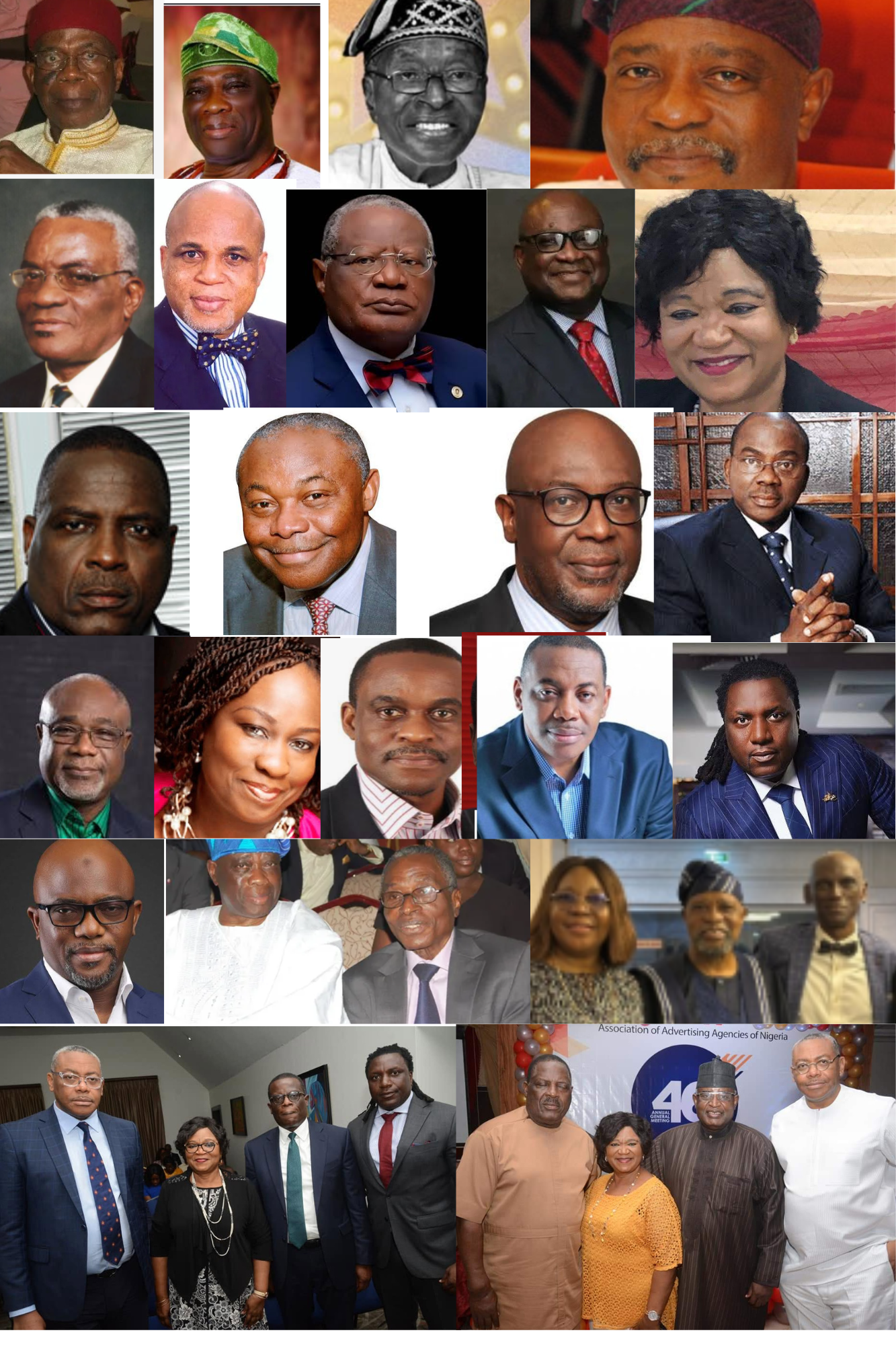


For more than five decades, the Association of Advertising Agencies of Nigeria, AAAN, has moved with the changing rhythm of Nigeria’s advertising industry, evolving from a small gathering of practitioners into a major professional institution shaping the country’s marketing communications landscape.
Its 53 year journey is, therefore, much bigger than a succession of elections and office holders. It is the story of practitioners who entered a young industry, confronted professional and regulatory uncertainties, established indigenous agencies, built institutions, championed standards and, generation after generation, responded to the changing realities of business, media, technology and consumer behaviour.
The story actually began before the association formally came into existence. Although the idea to establish the AAAN started in 1970, after consultations with fellows of like minds, the maiden formal meeting took place in June 1971 under the Chairmanship of the late Mr. Dotun Okubanjo.
As Sir Steve Omojafor, a former president of the association, recalled, “It took some of those practitioners, which include: Biodun Sanwo, Sam Iyamu, Olu Adekoya, and others, two years to come together and form what was then called the Association of Advertising Practitioners of Nigeria (AAPN), in 1973.”
That formative movement brought together practitioners determined to give Nigerian advertising a professional identity and a stronger collective voice.
The body was formally established as AAPN in 1973, with pioneers including Dotun Okubanjo, Olu Adekoya, Leye Adedoyin, I.S. Moemeke, Olu Falomo, Prince Kehinde Adeosun, Banjo Solaru and Biodun Sanwo.
From that foundation, 22 presidents have since carried the association through different eras, each inheriting a different industry landscape and leaving a distinct imprint on its development.
Oloye Dotun Okubanjo: The Founding President
(1973–1975)
Dotun Okubanjo occupied the first presidency after AAPN’s formal establishment, giving institutional expression to the 1971 gathering that set organised Nigerian advertising on its professional course.
Sylvester I. Moemeke: The Indigenous Pioneer
(1975–1982)
Sylvester Ifeanyichukwu Moemeke became the first Nigerian to head Lintas as Managing Director and later Chairman, breaking an expatriate barrier while mentoring a generation of Nigerian practitioners.
Chief Olu Falomo: The Professional Builder
(1982–1985)
Olu Falomo combined agency leadership with professional governance, moving from Lintas and Ogilvy Benson & Mather to founding Forum Advertising and later playing influential roles in APCON and other professional bodies.
Prince Kehinde Adeosun: The Bridge Builder
(1985–1986)
Kehinde Adeosun provided continuity during a transitional period as AAPN moved from its pioneering generation towards a broader era of indigenous agency expansion.
Ayo Owoborode: The Industry Statesman
(1986–1989)
Ayo Owoborode brought extensive agency experience to the presidency and helped consolidate professional advertising practice as regulation and industry institutions gained importance.
Chief Akin Odunsi: The Agency Entrepreneur
(1989–1992)
Akin Odunsi combined international experience with indigenous entrepreneurship, becoming the first Nigerian CEO of Admark and later co-founding Rosabel.
Dr May Nzeribe: The Regulatory Reformer
(1992–1995)
May Nzeribe, founder of Sunrise D’Arcy, strengthened the association’s focus on professional organisation, ethics and regulation through his involvement with APCON and the International Advertising Association.
Dr Biodun Shobanjo: The Industry Entrepreneur
(1995–1997)
Biodun Shobanjo expanded advertising into a wider communications business through Insight Communications and the eventual Troyka Group, while also introducing the idea of an advertising academy into the association’s long term agenda.
Sir Steve Omojafor: The Agency Advocate
(1997–1999)
Steve Omojafor combined agency entrepreneurship with industry advocacy, building experience across Lintas, Rosabel and STB McCann while championing the value of independent agencies and healthier client agency relationships.
Udeme Ufot: The Creative Businessman
(1999–2001)
Udeme Ufot fused creativity with commercial enterprise as co-founder of SO&U and later APCON chairman, reinforcing advertising’s position as both a creative profession and serious business.
Bola Thomas: The Leadership Barrier Breaker
(2001–2003)
Bola Thomas became AAAN’s first female president and, as a co-founder of Lawson Thomas and Colleagues, established an important precedent for women’s leadership in the association.
Kolawole Ayanwale: The Institutional Architect
(2003–2005)
Kolawole Ayanwale strengthened AAAN’s organisational foundation, completing its Secretariat project at Plot 8 Otunba Jobi Fele Way within 12 months and playing a key role in the transition from AAPN to AAAN.
The formal adoption of the name Association of Advertising Agencies of Nigeria came at the association’s 31st AGM and Congress in 2004, an institutional milestone that reflected the changing composition and professional identity of the body.
Enyi Odigbo: The Knowledge and Creativity Champion
(2005–2007)
Enyi Odigbo, founder of Casers Group, introduced International Business Seminars, strengthened professional development, inaugurated the Board of Trustees and helped give LAIF a stronger platform for recognising creative excellence.
Lolu Akinwunmi: The Integrated Communications Strategist
(2007–2009)
Lolu Akinwunmi, Group CEO of Prima Garnet, represented a generation that expanded advertising into brand strategy, integrated communications and broader business thinking.
Funmi Onabolu: The Industry Reform Catalyst
(2009–2011)
Funmi Onabolu, founder of Cosse, helped revive the Heads of Advertising Sectoral Groups and Agencies Funfair while opening conversations around wider industry reforms.
Rufai Ladipo: The Tenacious Practitioner
(2011–2012)
Rufai Ladipo brought experience from STB McCann, Scanad Nigeria and Agile Communications, navigating the competing interests of agencies, clients and regulators during his tenure.
Bunmi Oke: The Second Female President
(2012–2014)
Bunmi Oke became the second woman to lead AAAN, extending women’s representation at the association’s highest level and strengthening the diversity of its leadership.
Kelechi Nwosu: The Regulatory Crisis Navigator
(2014–2016)
Kelechi Nwosu led AAAN’s engagement with government during the APCON leadership crisis, while pursuing public advocacy, promoting licensed agencies and supporting improvements to the association’s Secretariat.
Kayode Oluwasona: The Stakeholder Connector
(2016–2018)
Kayode Oluwasona focused on stakeholder engagement, member business growth and Secretariat efficiency, while bringing past presidents and senior practitioners closer to association activities.
Ikechi Odigbo: The Capacity Builder
(2018–2020)
Ikechi Odigbo focused on organisational capacity and professional development as agencies confronted accelerating technological change ahead of the COVID-19 disruption.
Steve Babaeko: The Digital Transition President
(2020–2024)
Steve Babaeko assumed office during the COVID-19 disruption, subsequently strengthening partnerships, inclusion and professional development, launching AdCademy in 2021, overseeing AAAN’s 50th anniversary in 2023 and handing over after two terms in July 2024.
Lanre Adisa: The AdVolution President
(2024–Present)
Lanre Adisa inherited AAAN at an inflection point shaped by artificial intelligence, digital platforms, creator culture and changing consumer behaviour, responding with the “AdVolution” agenda focused on helping agencies adapt without surrendering human creativity.
At the 53rd AGM and Congress held on July 23 and 24, 2026, Adisa argued that traditional advertising is not disappearing but evolving, challenging agencies to embrace technology while protecting the human connection behind effective communication.
The 53rd AGM, held at the Providence Hotel in Ikeja GRA, Lagos, consequently became more than another annual gathering. It became a statement about where the association believes the profession must go next, with discussions spanning artificial intelligence, technology driven agency models, creator economy growth, participation led engagement and measurable business outcomes.
Members subsequently renewed the mandate of Adisa and his Executive Committee for another term. The leadership retained Adekoyejo Abiola as Vice President, Shola Adegborioye as Honorary Treasurer, Funmibi Fayo-Adeleye as Publicity Secretary and Bayo Owosina as Assistant Publicity Secretary, alongside returning and newly elected ex officio members. That renewed mandate places the 22nd president at the centre of AAAN’s most technology driven chapter yet.
From AAPN to AAAN: 53 Years of Reinvention
The significance of AAAN’s history becomes clearer when viewed against the transformation of Nigerian advertising itself.
When the pioneers gathered in 1971, advertising operated in a very different environment. Traditional media dominated audience attention, agencies were fewer, the industry was still building indigenous professional capacity and formal regulation had yet to mature.
Over the following decades, however, television, radio, outdoor, integrated marketing communications, experiential marketing, digital media, social platforms, data and creator led communication successively altered how brands reached Nigerians.AAAN changed with them.
The association moved from AAPN to AAAN. Its agencies grew from relatively modest operations into sophisticated communications businesses. Its practitioners moved from agency craft into wider leadership roles. Its professional conversations expanded from advertising production and placement to regulation, talent, technology, business transformation and national development.
Meanwhile, the institutional ecosystem around advertising also became more complex. APCON, established in 1988 and operational from 1989, provided a formal regulatory framework for the profession, while sectoral bodies representing advertisers, broadcasters, outdoor practitioners and other parts of the communications value chain expanded the industry’s institutional architecture.
Consequently, AAAN’s presidents were never operating against the same backdrop. Each administration responded to a different pressure point, from indigenisation and professionalisation to regulation, agency economics, leadership, technology and now artificial intelligence.
That is what makes the association’s leadership history significant. The 22 presidents are not merely names in an institutional register; together, they trace the changing priorities of Nigerian advertising.
LAIF: Where the Industry Keeps Its Creative Memory
AAAN’s legacy also lives in the Lagos Advertising and Ideas Festival, LAIF, which has become one of the association’s most visible platforms for celebrating creativity. Now entering its 21st edition, LAIF is taking another ambitious step under the theme “From Glitch to Great.”
AAAN unveiled a new LAIF Management Board in 2026, headed by Funke Adekola as President and Jumoke Akinyele as Vice President. The wider board brings together practitioners from across the industry as the festival seeks to move from a respected regional awards platform towards a globally recognised benchmark for creative excellence.
The 2026 LAIF Festival is scheduled for November 23 to 28, with the programme expected to include C-suite fireside conversations, masterclasses covering technology, AI, brand strategy and commercial growth, youth hackathons, Young LAIFers, UniLAIFers, the Nominees Party and the LAIF Awards Gala. The ambition is unmistakable.
AAAN wants LAIF to stand alongside established international creative platforms such as the Loeries, African Cristal and Pitchers. That means the festival must do more than reward outstanding campaigns; it must demonstrate that Nigerian creativity can compete for attention, influence and recognition on a global stage.
Adisa captured that ambition in his message to the industry: “That journey from glitch to great, from local acclaim to global relevance, will demand more from all of us: more originality, more craft, more innovation, and more courage to create ideas that can stand shoulder to shoulder with the very best in the world.”
The Road Ahead
At 53, AAAN is no longer fighting simply to establish advertising as a profession. It is now fighting to ensure that the profession remains indispensable in a market where technology can automate processes, platforms can bypass traditional gatekeepers and clients can access an expanding universe of creative tools. The challenge has therefore changed.
Agencies must now demonstrate why human creativity still matters in an AI enabled environment. They must combine ideas with technology, creativity with data, strategy with commercial accountability and local insight with global ambition. Yet AAAN’s history offers a compelling reason for confidence.
The association has reinvented itself before. It moved from a 1971 idea to a formal professional body in 1973. It nurtured indigenous leadership. It helped build the structures around professional advertising. It changed its identity from AAPN to AAAN. It created platforms for knowledge and creative recognition.
It navigated regulatory crises. It embraced digital transformation. And now, under Lanre Adisa, it is confronting the implications of artificial intelligence and the wider creative economy.
From Dotun Okubanjo to Lanre Adisa, the story spans 22 presidencies, several generations of practitioners and more than half a century of change.
The technologies may have changed. The media have multiplied. Consumer behaviour has shifted. Agency business models have been repeatedly tested.
Still, one thread connects the entire journey: the determination of Nigerian advertising practitioners to build, defend and reinvent an industry of their own.
That is the real AAAN legacy at 53. So, as the association moves from “AdVolution” at its 53rd AGM to “From Glitch to Great” at the 21st LAIF, the next chapter will demand not merely adaptation, but imagination equal to the scale of the change ahead.


Comment
No comments found.