


For a company that has become one of the biggest symbols of the artificial intelligence boom, NVIDIA is facing an uncomfortable question: how much confidence can investors place in a business whose global success remains closely tied to one individual?
The technology giant lost approximately $430 billion in market value over two trading sessions following reports about its co-founder and Chief Executive Officer, Jensen Huang, and allegations of a foreign intelligence operation involving a Chinese businesswoman with whom he reportedly had a relationship.
The controversy has renewed scrutiny of NVIDIA’s leadership, corporate governance and exposure to geopolitical risks. It also presents another challenge for a business already facing questions about the sustainability of global artificial intelligence investment.
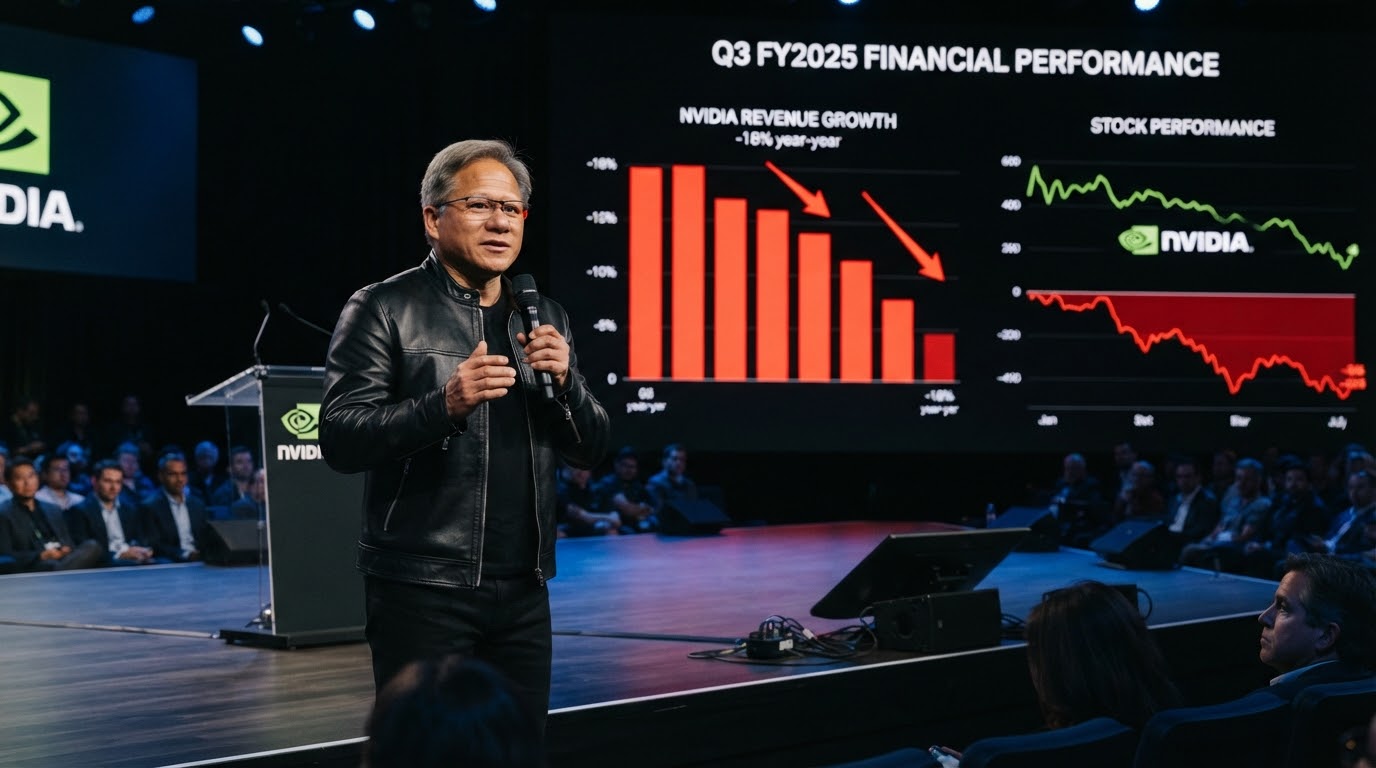
NVIDIA shares fell more than four per cent on Monday, November 9, closing at $178.67. The decline continued on Tuesday, November 10, when the stock dropped another 5.47 per cent to close at $168.89. Reuters reported that the company lost approximately $430 billion in market value across the two sessions.
At the centre of the controversy is Huang’s reported relationship with Alice Huang, a former executive associated with Singapore-based technology company Megaspeed International. US authorities reportedly suspect that she had links to Chinese intelligence activities, although public evidence has not independently established the allegations.
On November 8, NVIDIA’s board announced an independent investigation into reports that a foreign intelligence operation had targeted its chief executive. The company said it had no reason to believe that the alleged operation had compromised US national security or NVIDIA’s confidential information. It also confirmed that Huang would cooperate with the investigation.
The controversy deepened on November 10 when The Information reported that Alice Huang’s network had helped facilitate at least $7.5 billion in NVIDIA chip shipments to Chinese companies, including products subject to US export restrictions.
According to the report, the network moved approximately 240,000 advanced chips. Reuters, however, said it could not independently verify the allegations. NVIDIA, the companies named in the reports and the relevant US authorities had not confirmed the claims at the time of reporting.
In a further development, NVIDIA’s independent directors appointed Joon H. Kim, a former acting US Attorney for the Southern District of New York, and law firm Wachtell, Lipton, Rosen & Katz to lead the investigation. The appointments indicate that the board wants an independent legal review rather than relying solely on internal management assessments.
For investors, however, the concerns extend beyond the allegations themselves. Huang has led NVIDIA for more than three decades and remains central to its strategy, product direction and public identity. His influence has made him one of the technology industry’s most recognisable figures, but it has also raised questions about how the company would manage a prolonged leadership crisis.
The controversy comes at a time when investors are already questioning whether the enormous sums companies are committing to artificial intelligence infrastructure will generate returns that justify current valuations. Reuters reported that NVIDIA shares had come under pressure over these concerns even before the latest allegations emerged.
This distinction matters because the investigation does not explain the entire decline in NVIDIA’s share price. Instead, it has added company-specific governance and geopolitical risks to existing concerns about the artificial intelligence market.
The developments also carry wider implications for the semiconductor industry. NVIDIA operates at the intersection of technology, international trade and national security. Restrictions on advanced chip exports to China have made the company’s commercial relationships and distribution channels matters of strategic importance, rather than routine business decisions.
Ultimately, the investigation presents NVIDIA with a test that goes beyond its next earnings report. The company must demonstrate that its governance structures, leadership succession arrangements and compliance systems can withstand scrutiny, regardless of the outcome of the allegations.
For a business that has helped power the artificial intelligence revolution, the challenge is now to reassure investors that its future extends beyond the reputation of the man who built it.
ALSO WATCH: MARKETING EDGE ONTV



Comment
No comments found.