




For almost a decade, performance marketing has served as the safety net of contemporary advertising. It assured reliability in an unpredictable sector: quantifiable outcomes, immediate optimisation, and explicit accountability.
We can monitor clicks, assign conversions, and validate expenditures. For numerous brands, it appeared that marketing had established regulations.
However, that certainty is gradually diminishing.
Concern has been rising in the advertising sector worldwide. It is particularly noticeable among marketers who placed a great deal of faith in Meta’s platforms. Although the dashboards and tools are functional, the terminology used to describe them is out of touch with reality.
In a world where opaque decision-making, automation, and artificial intelligence rule, the term “performance marketing” seems more and more like a misnomer. It was once a hallmark of rigour.
Meta has not officially confirmed the “retirement” of the phrase. According to its product direction, leadership comments, and platform evolution, performance marketing is being absorbed into a broader, less controllable system. Marketers formerly understood it differently. This subtle, but fundamental change is taking place.
Many practitioners find that shift subtly discouraging.
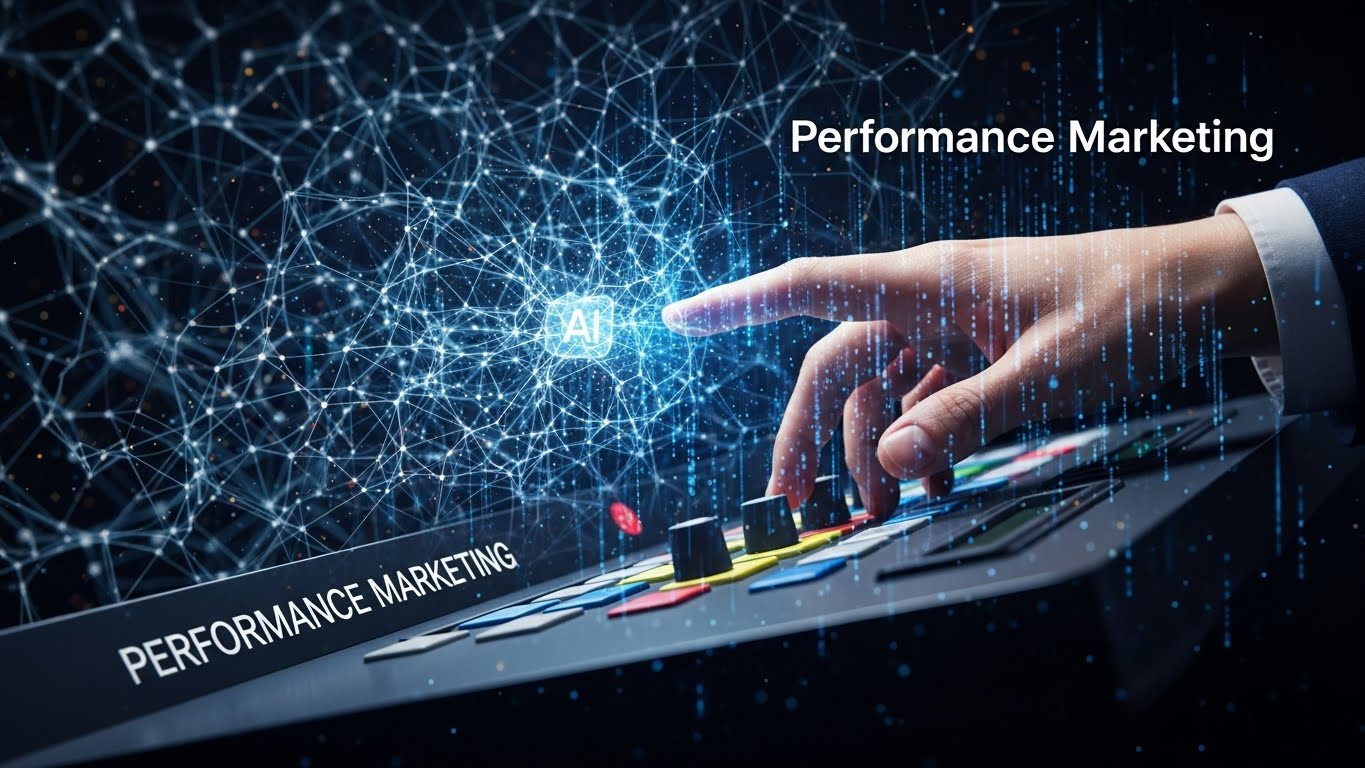
The rapid transition toward AI-led advertising by Meta drives this shift. Advantage and similar products have gradually done away with the need for human intervention in performance-related tasks. These tasks include audience targeting, placement selection, and bid control. All that’s left is a system where algorithms determine success. The algorithms not only determine who sees advertisements but also the very definition of success.
Meta’s leadership has always presented this as a step forward. Advertisers “tell us what outcome they want,” Mark Zuckerberg described the company’s vision. The platform takes care of the rest. This process streamlines processes and increases income for Meta. But it shifts marketers’ focus. They move from optimisation specialists to strategic and creative data inputs for an algorithm.
The loss of transparency is what makes people uneasy, not automation per se. (Marketers have always been big fans of tech.) Historically, performance marketing has depended on transparency. It required knowing what worked, what didn’t, and how to change variables or learn from mistakes. The increasing autonomy of Meta’s systems makes internal relationships more difficult to see and explain. It also makes it harder to defend against results that fluctuate.
This tension is becoming more apparent as the sector faces larger structural changes. Privacy restrictions, the reduction of third-party cookies, and Apple’s App Tracking Transparency framework have already undermined deterministic attribution models. According to Meta’s own disclosures, signal loss caused by these changes has fundamentally changed how its platforms monitor performance. Meta has responded by reiterating its commitment to AI inference and probabilistic modelling. These are effective at scale but may appear abstract to individual marketers.
The outcome is paradoxical. Campaigns may still “perform,” but marketers are becoming increasingly disenchanted with the details that determine how they will do. Optimisation, according to several reports, has moved its focus. The new focus is on algorithm faith and creative volume, not data-led decision-making. Practitioners are increasingly describing their job as managing uncertainty in industry forums and trade journals. This is instead of engineering results.
The conversation’s emotional undercurrent becomes apparent at this point. Performance marketing originally presented a sense of mastery. The notion was that one’s expertise and insight could consistently enhance outcomes. When platforms take away that control, the task can feel less substantial. The system’s failure to adequately compensate for in-depth tactical knowledge implies that marketers aren’t competent.
Experts in the field have pointed out that Meta is not alone in this. Google, Amazon, and TikTok are all heading in the same direction. They are doing this by streamlining advertiser interfaces and automating media procurement. However, Meta is a bellwether due to its size and impact. When the biggest social advertising platform in the world changes the way results are obtained, the consequences will be far-reaching.
Rest assured, this does not herald the end of marketing accountability. Instead, it forces businesses to reconsider their definition of performance. If attribution is probabilistic, optimisation is automated, and long-term, brand effects impact results, success cannot be measured by last-click metrics or short-term returns alone.
Here is where a lot of marketing heavy hitters say the terminology needs to change. The complexity of contemporary advertising may have outgrown the historical meaning of performance. The best companies nowadays know that algorithms value signals developed over time, not simply quick purchases. Therefore, they combine creative consistency with data-informed innovation to create a winning formula.
With this in mind, Meta’s automation drive prompts an awkward but essential reckoning. The debate has shifted. It moves from whether performance marketing is effective to whether it has become a crutch. This crutch helps the industry avoid tough talks about investing in the brand, the quality of creative work, and the development of long-term value.
Marketers who are open to change have a great opportunity. Artificial intelligence may have supplanted mechanics, but it has not done away with judgment. Strategic clarity, artistic excellence, and ethical data use all become even more important. Moving the levers about becomes less of a focus and more of a chore.
There will be performance marketing in the future. Nevertheless, its time as a distinct field—one that is tidy, manageable, and comforting—is coming to an end. The alternative will be less reassuring, more strategic, and messier. Maybe the idea is to feel that unease.
Marketers who can still define growth and explain it, rather than merely optimise it, may have the performance advantage in this age of platforms that offer outcomes without explanation.
ALSO WATCH MARKETING EDGE ONTV




Comment
No comments found.