
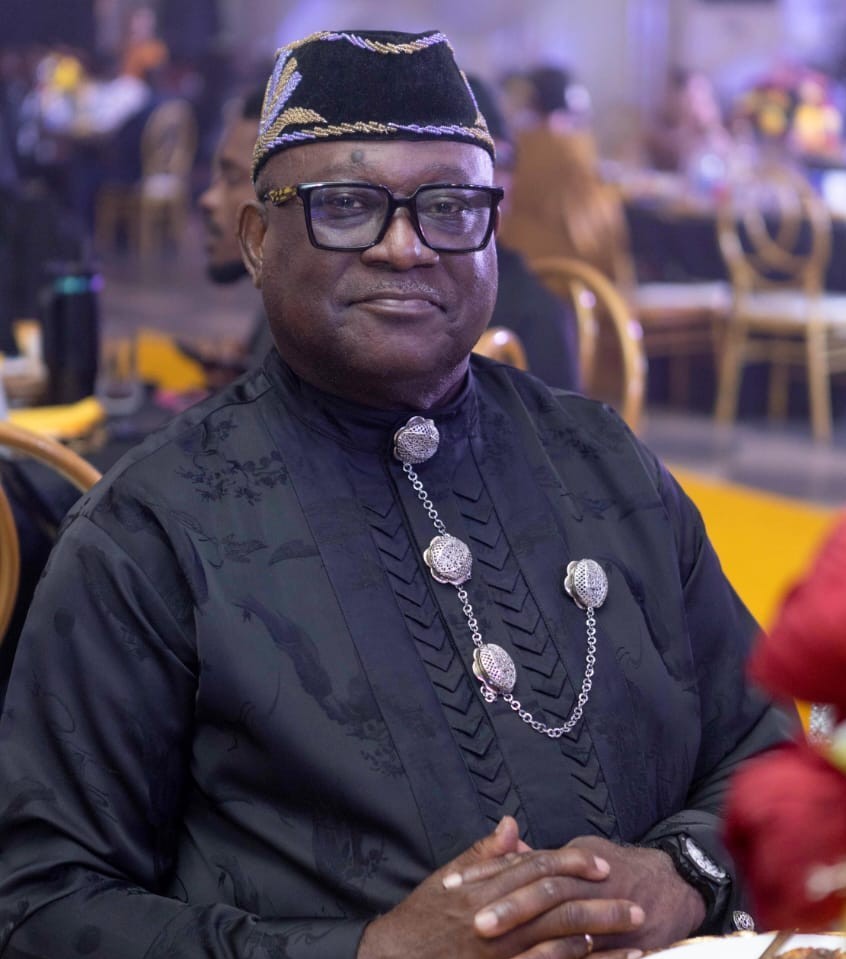


Udeme Ufot, MFR, Group Managing Director of SO&U,has urged professionals in Nigeria’s marketing and communications industry to embrace technological advancement without losing sight of the human understanding, ethical responsibility and creativity required to build meaningful brands.

Ufot made the call while speaking as Chairman of the 2026 MARKETING EDGE EDGE Awards at the ceremony held on Friday, September 25, at Ten Degrees Event Hall, Billingsway Road, Oregun, Lagos.
Meanwhile, held under the guiding philosophy, “Celebrating Excellence Beyond Borders,” the awards brought together professionals, brands, agencies and organisations to recognise achievements across the marketing and communications ecosystem.
However, in his welcome remarks, Ufot observed that the marketing and communications environment had changed considerably, driven largely by the increasing sophistication of consumers and the rapid development of technology.
Also, he noted that consumers were now more informed, connected and demanding, forcing brands and marketing professionals to rethink how they communicate, create value and maintain meaningful relationships with their audiences.

According to him, technology has significantly transformed the way brands engage consumers, while data and artificial intelligence are increasingly influencing how professionals think, create and execute marketing strategies.
Ufot particularly pointed to the growing access to information through AI, which he said was helping marketers develop more data driven and intelligence based communication strategies.
He also drew attention to the effect of these technologies on the quality and pace of professional delivery, highlighting the expanding capacity available to practitioners as digital tools become more sophisticated.
However, despite the rapid changes taking place around technology and marketing practice, Ufot identified one enduring principle that he said should remain at the heart of brand building, and that is simply nothing but ” Great brands, are built by people who understand people”.
Truly, that observation formed a central point of his remarks as he connected technological progress with the human element behind successful marketing.
For Ufot, the significance of the work being recognised at the EDGE Awards goes beyond the campaigns, executions and brand experiences that audiences eventually see.
Again, he noted that, behind those achievements, are teams that have taken the initiative to think differently, identify problems, develop solutions and create work capable of connecting with people.
He therefore positioned the awards as a platform not merely for celebrating winners, but also for recognising the ideas, creativity, courage and commitment that drive meaningful work across the industry.
The Chairman congratulated the nominees and winners for their contributions, while also recognising professionals whose work might not receive an award during the ceremony.
He stressed that professional contribution should not be measured solely by the number of awards received, noting that the industry remains stronger because of the work practitioners undertake every day.
Beyond celebrating individual and organisational achievements, Ufot used the occasion to draw attention to the broader responsibility of the marketing and communications industry in Nigeria.
He said the country needs an industry capable of combining creativity with responsibility, innovation and relevance to the realities of Nigerians and the national economy.
According to him, marketing and communications possess the capacity to do more than promote products and services, as the industry can also help build stronger brands, support businesses and contribute meaningfully to society.
Therefire, he consequently placed ethical marketing and strong self regulation among the important considerations for the future of the profession.
In addition, the Chairman of the Policy Innovation Centre argued that responsible industry practice is critical to maintaining a sustainable society, particularly where the welfare of citizens remains an important consideration.
Consequently, his remarks therefore placed the celebration of excellence within a wider professional context, linking recognition with the responsibility to continue improving the quality and relevance of marketing practice.
Notably, the 2026 EDGE Awards came a day after the MARKETING EDGE National Marketing Stakeholders’ Summit 2026, which examined important questions confronting the industry through two major themes: “Cultural Authenticity as Currency: Turning Heritage into Modern Branding & Marketing” and “The Credibility Mandate: Navigating Trust, Truth and Transience in Marketing Communications.”
The timing of the two industry gatherings provided a broader setting for discussions around the changing demands of marketing, even as the EDGE Awards focused on celebrating professional excellence.
For Ufot, however, the evolution of the industry must not become an excuse to lose sight of the fundamentals of effective brand building.
For this reason, as technology, data and artificial intelligence continue to expand the tools available to marketers, his message was that the people behind those tools remain critical to the quality and meaning of the work produced.
Hence, the 2026 EDGE Awards consequently brought together two sides of the industry’s continuing conversation: the need to recognise excellence already achieved and the responsibility to keep raising the standards of professional practice.
To this end, Ufot commended MARKETING EDGE for sustaining the awards platform and providing an avenue for recognising excellence within the sector.
He also expressed appreciation to the sponsors, partners, guests and others who contributed to the success of the ceremony, while encouraging members of the marketing and communications community to celebrate their collective achievements and continue believing in the power of ideas.
With the 2026 edition, the EDGE Awards once again placed professional achievement at the centre of the industry gathering, while Ufot’s remarks reinforced a message that remained closely tied to the realities of contemporary marketing.
Specifically, that technology may be changing how brands work, but understanding people, creating meaningful ideas and practising responsibly remain essential to the business of building brands.



Comment
No comments found.