
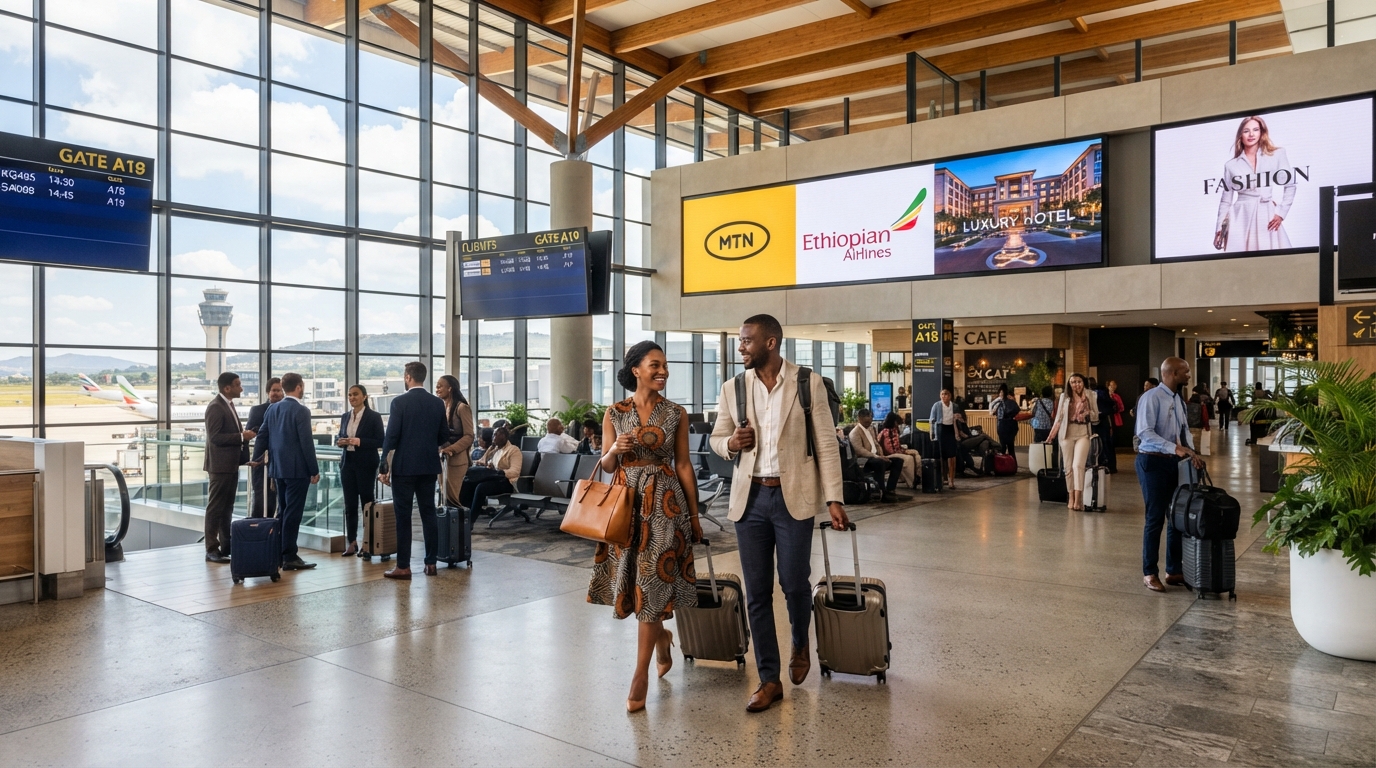





Africa is becoming a more mobile consumer market, and brands may need to rethink how they reach people who are increasingly moving across cities, countries and continents.
Recent data from the International Air Transport Association (IATA) shows that passenger demand among African airlines rose 6.4 per cent year-on-year in July 2026, outpacing the global market. The increase points to a broader shift in mobility and presents opportunities for brands operating across travel, retail, financial services, hospitality, technology and consumer goods.
For marketers, the significance goes beyond fuller aircraft. Rising air travel means more consumers are physically crossing borders, creating new opportunities for brands to build awareness, drive trial and strengthen loyalty.
Traditionally, many African brands have defined their audiences largely by geography. However, increased mobility is complicating that picture.
A Nigerian consumer may live in Lagos, work periodically in London, shop in Accra and spend holidays in Nairobi. The consumer remains Nigerian, but their brand experiences are increasingly regional and global.
This creates an opportunity for brands to think beyond where consumers live and consider where they move, why they travel and what they need along the journey.
For financial brands, this could mean developing products around international payments, travel spending and cross-border transactions. For telecoms companies, it could mean providing seamless connectivity across destinations. Hospitality brands can build around the growing movement of Africans within the continent, while retailers and consumer brands can use airports and travel corridors as new points of visibility and product trial.
Airports also represent an underused brand environment.
Unlike conventional advertising spaces, airports place brands in front of consumers during moments of anticipation, transition and heightened attention. Travellers have time to interact with content, explore products and make purchase decisions.
This gives brands opportunities to move beyond billboards and create experiences that are useful to travellers, from digital services and entertainment to sampling, retail activations and location-based offers.
Increasing international movement also strengthens the importance of the African diaspora market. Brands should not view Africans abroad simply as former domestic consumers. They are potential consumers of African products, culture, entertainment, financial services and experiences in their new markets.
This creates room for brands to build campaigns that travel with consumers rather than stopping at national borders.
The bigger lesson from the latest passenger-demand figures is mobility.
As African consumers become increasingly mobile, brands that understand the journeys between markets may find opportunities that traditional geographic segmentation misses.
For marketers, the question is no longer simply where the consumer is. It is where the consumer is going, and whether the brand is ready to go with them.
ALSO WATCH: MARKETING EDGE ONTV



Comment
No comments found.