
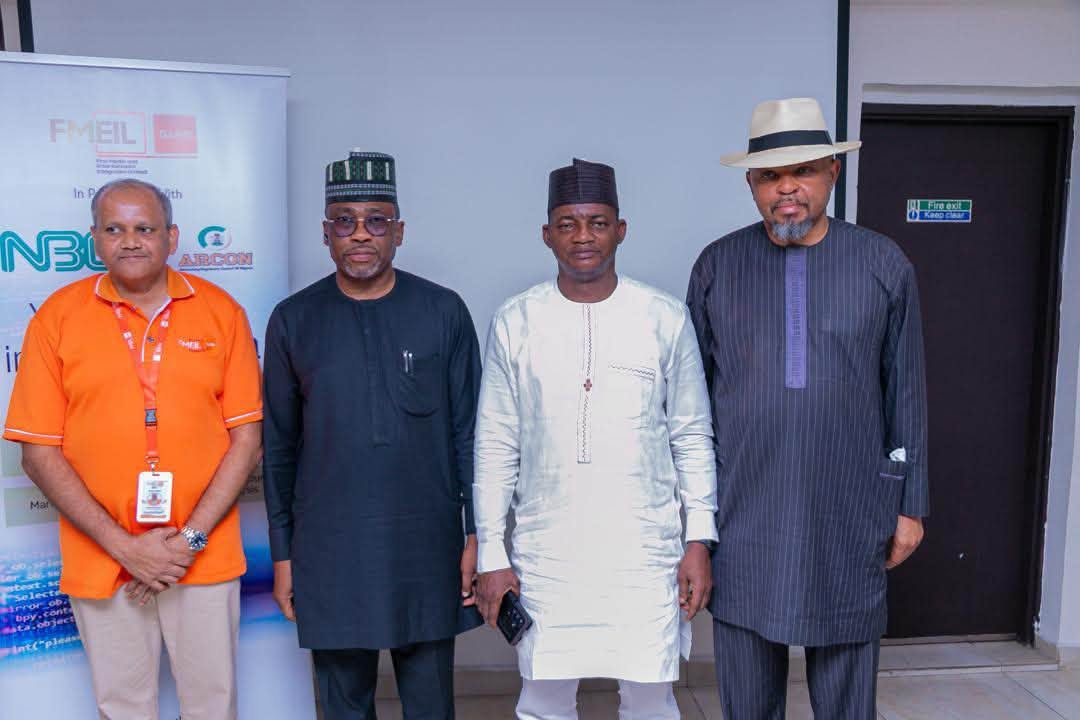




Nigeria’s television industry is entering a new phase of audience measurement as the Federal Government begins deploying an electronic system designed to capture viewing behaviour more continuously and provide the data needed to make smarter decisions across the broadcast and advertising markets.
The National Broadcasting Commission, NBC, also announced the development on its Facebook platform, describing the Lagos launch as the beginning of a nationwide system designed to provide more accurate and transparent information on television audiences.
The new Audience Measurement System, AMS, formally entered its first stage in Lagos on September 1, 2026, with selected households beginning the installation of peoplemeter devices that will automatically record television viewing patterns.
The nationwide project is ultimately expected to cover 60,000 households across Nigeria’s 36 states and the Federal Capital Territory, Abuja, creating a broad measurement network intended to give the industry a clearer picture of the country’s television audience.
The rollout is being handled by First Media and Entertainment Integrated Limited, FMEIL, in technical collaboration with Bulgaria based GARB. The two companies were appointed by the National Broadcasting Commission, NBC, and the Advertising Regulatory Council of Nigeria, ARCON, to develop and deliver the system, beginning with Television Audience Measurement, TAM.
The shift represents a departure from the conventional diary based model, under which television viewers manually document their viewing habits. With the new arrangement, peoplemeters installed in selected homes will collect the information automatically and transmit the data to a central data centre every day.
Lagos is serving as the entry point for the exercise, with approximately 7,000 surveyed households expected to be covered during the first phase.
From Lagos, the deployment will move into Abuja, Port Harcourt and Kano under the second phase. The final phase will then extend the system into other major media markets spread across the country’s six geopolitical zones, paving the way for a pan Nigerian measurement structure.
Minister of Information and National Orientation, Mohammed Idris, who was represented at the Lagos press conference by ARCON Director General, Dr. Olalekan Fadolapo, said the initiative would give Nigeria a stronger foundation for evidence based broadcasting.
According to Idris, the value of the system extends beyond television ratings because better audience intelligence can influence programming, investment, advertising decisions and the broader development of the creative economy.
He also situated the project within the Federal Government’s Renewed Hope Agenda, particularly its priorities around digital transformation, innovation, investment, employment and economic diversification.
Idris noted that Nigeria’s broadcasting transition cannot stop at moving from analogue to digital transmission. In his view, the country must equally modernise the tools it uses to determine how audiences interact with the content being delivered to them.
That objective, he said, makes the AMS an important companion to the Digital Switch Over, DSO, programme.
The DSO initiative, driven by the NBC through the FreeTV platform and relaunched in June, is designed to accelerate Nigeria’s movement from analogue broadcasting to digital television.
With more than 100 free to air channels targeted as part of the programme, the government expects the new measurement system to provide the audience intelligence required to understand consumption across the expanding digital broadcasting environment.
For ARCON, the project arrives at a time when advertisers are spreading their investments across an increasingly fragmented media landscape.
Fadolapo said the ability to establish who is watching, what they are consuming and when they are tuning in would give advertisers greater confidence when making media investment decisions.
He added that broadcasters could use the information to sharpen programming choices, while content producers would gain a clearer understanding of audience demand.
Also Watch: MARKETING EDGE ONTV HOSTS George Isitua-Onukwu
Beyond those immediate benefits, Fadolapo said credible audience measurement could help attract investment, encourage the development of quality Nigerian content and create fresh opportunities within the country’s media and creative sectors.
The NBC Director General, Charles Ebuebu, described the development as a significant turning point for the broadcasting ecosystem.
He said the peoplemeter system would introduce passive audience tracking and provide a more dependable picture of consumption patterns, helping to tackle longstanding concerns about transparency in television and advertising media measurement.
Ebuebu also reaffirmed the NBC’s role in bringing broadcasters, advertisers and measurement providers together, saying feedback from industry stakeholders would remain important as the system develops.
While the regulatory bodies have focused on the wider industry implications, FMEIL GARB Chief Operating Officer, Patrick Gomes, provided insight into how the system will work inside participating homes.
Gomes said the technology had already gone through rigorous technical testing before the Lagos deployment, including a proof of concept involving selected homes in the state.
Under the new model, peoplemeters and data routers will be installed in homes chosen for the national panel. The equipment will monitor television viewing passively and securely, eliminating the need for viewers to manually document what they watch.
The resulting information will be transferred to the central data centre on a daily basis, allowing the system to generate a more immediate picture of audience behaviour for broadcasters, advertisers and regulators.
However, participation in the panel will involve more than simply having a device installed.
Gomes explained that selected households will contribute to the establishment of Nigeria’s official television measurement standard and will therefore receive a monthly data incentive for their participation. The equipment itself will be provided and installed at no cost to the households.
ALSO WATCH:MARKETING EDGE ONTV HOSTS ANTHONY ONYEMAUWA
FMEIL GARB has also put a structured recruitment and verification process in place.
According to Gomes, trained recruiters are engaging households that have already participated in the survey, using approved scripts and detailed responses to anticipated questions. Once a household is selected, it receives a confirmation text containing the installation date, scheduled time and technician’s name.
The verification message is intended to give residents a means of confirming the identity and appointment of the person arriving at their home.
Following that confirmation, trained technicians install the peoplemeter and data router, after which the viewing information is securely transmitted to the central data centre.
Still, technology alone may not determine whether the project succeeds.
At the Lagos launch, Idris acknowledged that the exercise had encountered concerns from some prospective panel households, particularly around recruitment, unfamiliar telephone calls and the installation of equipment inside private homes.
Some residents, he noted, may also be unable to recall their participation in the Establishment Survey that was used to construct the measurement panel.
ALSO WATCH:MARKETING EDGE ONTV HOSTS NKECHI ALI-BALOGUN
The minister therefore called for greater transparency and professionalism throughout the recruitment and installation process, while stressing the need to respect household privacy and address public concerns.
That trust factor could prove just as important as the technology itself because the quality of the country’s new television data will depend heavily on the willingness of selected households to participate consistently.
For Nigeria’s broadcasters, the new system could provide a clearer basis for determining what programmes resonate with viewers. Advertisers could gain more reliable evidence for deciding where to deploy their budgets, while content producers could use audience trends to guide development and distribution.
Regulators, meanwhile, would have access to stronger market intelligence to support policy and oversight. The government also expects a credible measurement framework to improve transparency, strengthen investor confidence and make Nigeria’s broadcasting industry more competitive and commercially sustainable.
The Lagos rollout, therefore, represents more than the installation of new equipment in selected homes. It marks the opening phase of an attempt to replace fragmented and largely manual television measurement with a nationwide electronic system capable of producing consistent audience intelligence.
As the programme moves from Lagos to Abuja, Port Harcourt and Kano and subsequently into other major media markets, its broader test will be whether Nigeria can combine technological capability with public confidence to build an audience measurement system that the broadcasting, advertising and creative industries can genuinely rely on.



Comment
No comments found.