


Nigeria’s advertising industry is entering a new phase as artificial intelligence, digital platforms and data driven consumer behaviour reshape how brands connect with audiences.
But as technology changes the business, a bigger question is emerging: can Nigeria’s regulatory and educational systems keep pace with the transformation taking place across the advertising ecosystem?
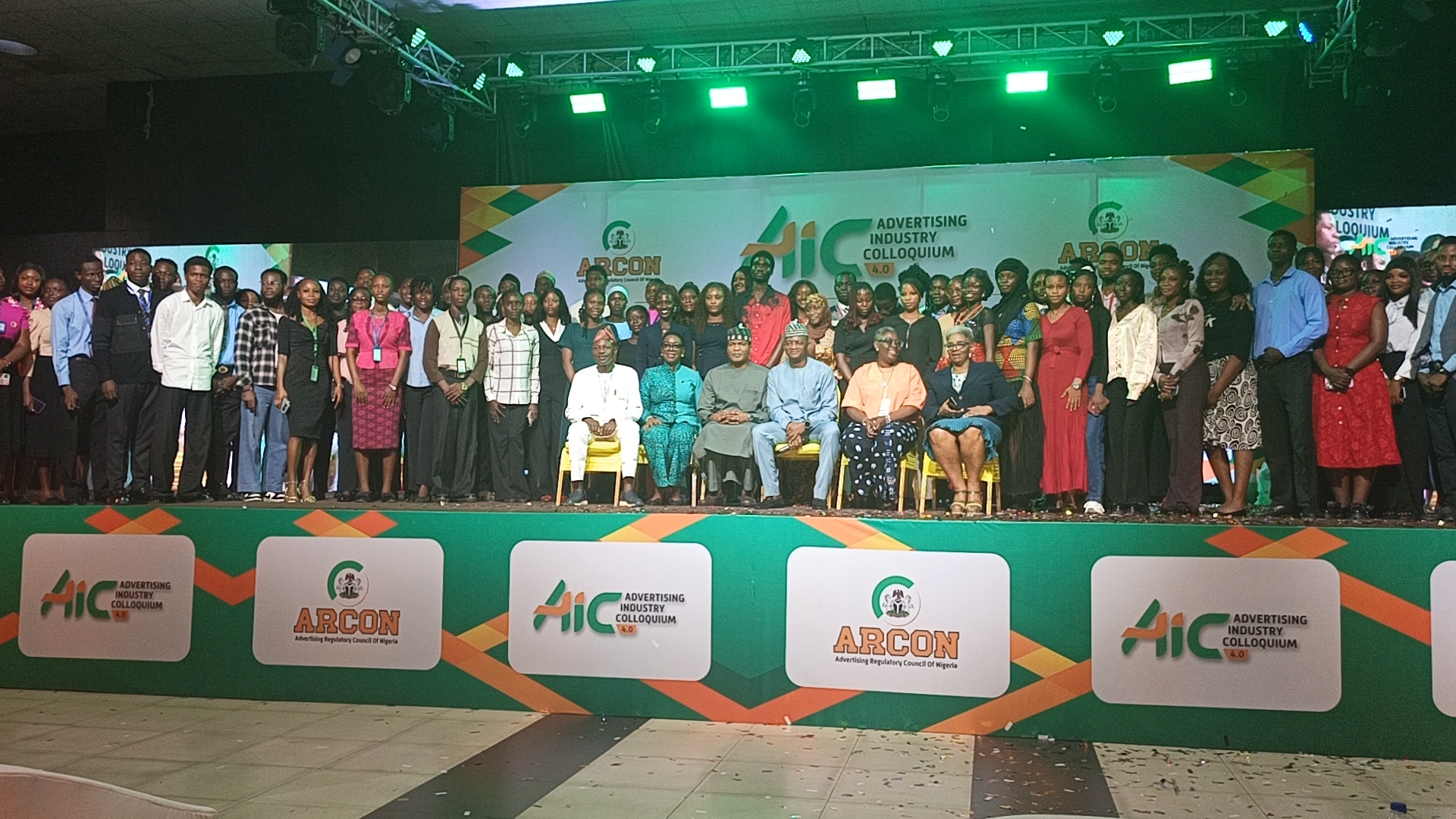
That question took centre stage at the fourth Advertising Industry Colloquium, AIC 4.0, organised by the Advertising Regulatory Council of Nigeria, ARCON, in Ikeja, Lagos.
Held under the theme, “The Future of Advertising: The Role of Platforms, People and Regulation,” the colloquium brought together government representatives, regulators, academics, advertising practitioners, brand managers, media executives, technology players and students to examine the forces shaping the future of the industry.
- Dr. Emmanuel Efe Emefienim, EDGE Outstanding CEO Legacy Banker of the Year: A Paragon of Financial Excellence
- Nigerian Box Office sees a whopping N121M surge in August
- A confluence of conflicting judgments: A review of the decision of Justice Akintayo Aluko of Federal High Court Lagos on Arcon’s regulatory powers through the lens of the decision of Justice Isah Dashen of the Federal High Court Lokoja Division
A major issue running through the discussions was the need to close the gap between what is taught in universities and what the advertising industry now expects from young professionals. This is at the heart of ARCON’s “Town and Gown” initiative, which seeks to bring academia and industry closer through curriculum development, mentorship, practical training and exposure to real advertising challenges.
Delivering the address of Alhaji Mohammed Idris, Minister of Information and National Orientation, Mallam Jibrin Baba Ndace, Director General of Voice of Nigeria, highlighted the expanding role of advertising in society.
According to the Minister, advertising has moved beyond its traditional commercial purpose to become an important force in shaping culture, public perception and economic activity.
“Advertising has evolved far beyond selling products. It now shapes culture, influences public perception, drives economic activity, promotes national identity, and supports democratic participation.”
Idris also highlighted the Federal Government’s efforts to expand Nigeria’s digital economy through investments in fibre optic infrastructure, improved broadband access and initiatives aimed at lowering internet costs.
While acknowledging the growing role of artificial intelligence in content production, the Minister cautioned against losing the human element of communication.
“Artificial Intelligence can process data and execute visuals, but authentic storytelling, deep cultural resonance, emotional intelligence, and ethical judgment are uniquely human capabilities.”
He urged regulators to adopt forward looking approaches that encourage innovation rather than create unnecessary barriers to growth.
Dr. Olalekan Fadolapo, Director General of ARCON, also reinforced the importance of collaboration as the industry navigates the digital transition.
For Dr. Fadolapo, advertising regulation cannot operate separately from the realities of the marketplace. As digital platforms multiply and new forms of advertising emerge, regulators must remain responsive while protecting consumers, brands and the integrity of the industry.
Delivering the keynote address, Olu Akanmu, Academic Director of the Tech-Leap Initiative at Lagos Business School, offered a broader perspective on the structural changes taking place across advertising and the media.
Akanmu examined how digital platforms have altered the relationship between advertisers, media owners and consumers, describing the emerging environment as the “Platform Economy.”
According to him, technology platforms have moved beyond simply providing channels for advertising. They increasingly control the infrastructure through which brands reach consumers, process huge volumes of behavioural data and use algorithms to determine what audiences see and engage with.
This, he argued, presents a major challenge for regulators because many of the approaches used to regulate advertising were developed for a different media environment.
“We cannot use analogue practices and methods to regulate digital media,” Akanmu asserted.
He therefore called for a regulatory framework capable of evolving alongside digital technology.
“Regulation needs to be agile in tandem with the nature of digital media.”
Drawing lessons from Nigeria’s fintech experience, particularly the development of specialised regulatory structures designed to support innovation, Akanmu challenged ARCON to explore a co regulatory approach to digital advertising.
He proposed a Digital Advertising and Marketing Advisory Council, bringing together technology platforms, content creators, influencers and digital first agencies to contribute to the development of a regulatory framework that reflects the realities of the digital marketplace.
His intervention reinforced one of the central messages of AIC 4.0: regulation cannot remain disconnected from the technology and business models reshaping advertising.
The panel session further explored the implications of digital transformation for advertising practice and education.
Dozie Mbanefo, Managing Director and CEO of New Crystal Communication Limited, pointed to the rapid transformation of Out of Home advertising, particularly the emergence of programmatic Digital Out of Home, DOOH. He called for stronger collaboration between universities and industry operators to ensure graduates understand data driven media planning, audience measurement and location based analytics.
Prof. Adepoju Tejumaiye, Head of Department, Mass Communication and Advertising at the University of Lagos, similarly called for continuous curriculum reviews. He argued that areas such as artificial intelligence, programmatic advertising and social media analytics must become part of advertising education if graduates are to remain relevant.
From the brand perspective, Dotun Babatunde, Head of Digital Marketing at Olam Agri, noted that although generative AI is making content production faster, human judgement, cultural understanding and data privacy remain critical to building lasting brand trust.
Former Chairman of the Advertising Standards Panel, Omowunmi Owodunni, stressed the importance of consumer protection as digital advertising expands. She advocated clearer guidelines around influencer marketing, user generated content and advertising claims, particularly in sensitive areas such as health and financial services.
The Heads of Advertising Sectoral Groups, HASG, also backed ARCON’s efforts to strengthen the relationship between industry and academia.
Lanre Adisa, President of the Association of Advertising Agencies of Nigeria and Chairman of HASG, pledged continued support for student internships, practical training and pitch development.
Dozie Okafor, President of the Media Independent Practitioners Association of Nigeria, highlighted the importance of linking classroom theory with media strategy and credible audience measurement, while Sola Akinsiku, President of the Outdoor Advertising Agencies of Nigeria, pointed to the opportunities created by the shift towards digital outdoor advertising.
Tolulope Apeke Medebem, President of the Experiential Marketers Association of Nigeria, noted the growing integration of technology, augmented reality and digital extensions into experiential marketing.
The practical dimension of the colloquium came through the Inter Tertiary Institution Advertising Pitch Competition, where six universities representing Nigeria’s geopolitical zones presented integrated campaigns before industry judges.
Kwara State University emerged overall champion, winning N1 million, while the University of Ilorin came second with N750,000. Rivers State University placed third and received N500,000. Kaduna State University and Lagos State University completed the top five.



Comment
No comments found.