
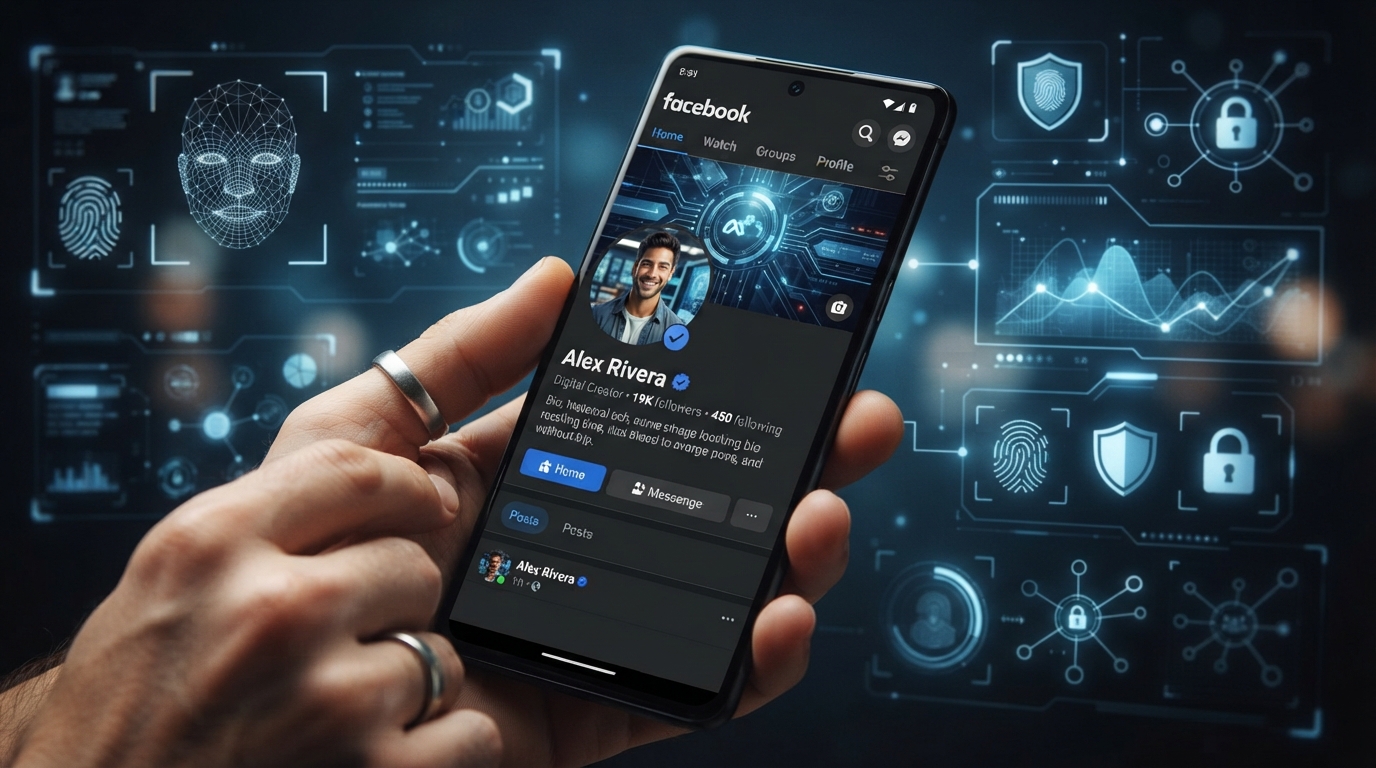




In a platform increasingly populated by AI-generated profiles, scam accounts, and synthetic identities, Facebook is now offering users a way to prove they are real. The catch is that proving your humanity requires handing your face to the same company whose facial recognition technology is at the centre of one of the most significant privacy controversies of 2026.
On July 24, 2026, Meta announced Facebook Verified; a free badge available to eligible users that confirms a profile belongs to a real person rather than an AI-generated fake. The feature uses a selfie-based verification process in which users record a short video selfie that Meta checks against their existing profile photos using facial recognition technology to confirm a match. Furthermore, the process is free, typically takes a few minutes, and only needs to be completed once before the badge appears across Facebook Marketplace, Dating, Groups, and personal profiles.
The badge is available to users aged 18 and older who are in good standing with Meta’s Community Standards around fraud, scams, and deceptive practices, and who show no evidence of inauthentic behaviour. Pages and Professional Mode accounts are not eligible, positioning the feature squarely as a personal profile tool rather than one aimed at creators or businesses.
Meta was direct about the scale of the problem driving this decision. The feature comes as a wave of scammers and bad actors are using generative AI tools to create and use fake profiles with realistic profile images, photos, and backstories, capable of sending automated messages at scale. Additionally, Meta noted that the badge confirms only that an account belongs to a real human being and should not be interpreted as an endorsement of the person’s trustworthiness; a distinction that is as important as it easy to miss.
The privacy irony Meta would rather you did not notice
However, the technology powering Facebook Verified is not new, and its deployment here is not without controversy.
The facial recognition step in the verification process arrives during the rollout of Meta’s new generation of smart glasses, which have received widespread backlash for their use of facial recognition technology and ability to discreetly film passerby. Moreover, reports emerged earlier this year that Meta was planning to roll out a feature internally called “Name Tag”, which would allow smart glasses wearers to identify people around them using Meta AI. Consequently, the same technology Meta is deploying to protect Facebook users from fake profiles is also being developed to identify strangers in public spaces without their knowledge or consent.
Furthermore, Meta’s timing adds another layer of complexity. An internal memo noted that the company was strategically attempting to launch “Name Tag” during a dynamic political environment because privacy advocates would be distracted. Therefore, the goodwill generated by a free anti-fraud tool risks being undermined by the broader narrative of how Meta is deploying facial recognition across its ecosystem.
What this means for Nigerian users and brands
For Nigerian consumers and businesses, the Facebook Verified badge addresses a real and urgent problem. Facebook Marketplace and Facebook Groups remain two of the most commercially active digital spaces in Nigeria, used by millions of traders, buyers, and sellers conducting daily transactions. Additionally, romance scams, fake vendor profiles, and AI-generated accounts have created significant trust deficits in these spaces, costing Nigerian users real money and eroding confidence in the platform as commercial environment.
A verified badge that confirms a human being is behind a profile is a meaningful step toward rebuilding that trust. Nevertheless, Nigerian users considering verification should understand precisely what they are consenting to, the submission of biometric facial data to a company simultaneously expanding its facial recognition capabilities in ways that regulators and privacy advocates around the world are actively challenging.
Meta wants to give Facebook users peace of mind. The question is what peace of mind is worth when the price is your face.
ALSO WATCH: MARKETING EDGE ONTV



Comment
No comments found.