



Here is something uncomfortable to sit with.
The brief; the document that sits at the start of almost every agency-client relationship in the world, is supposed to unlock creative thinking. In practice, it does the opposite. It defines the problem before the agency has had a chance to find a better one. It sets the boundaries before anyone has tested whether those boundaries are necessary. It manages risk on behalf of the client at the exact moment the agency needs permission to take it.
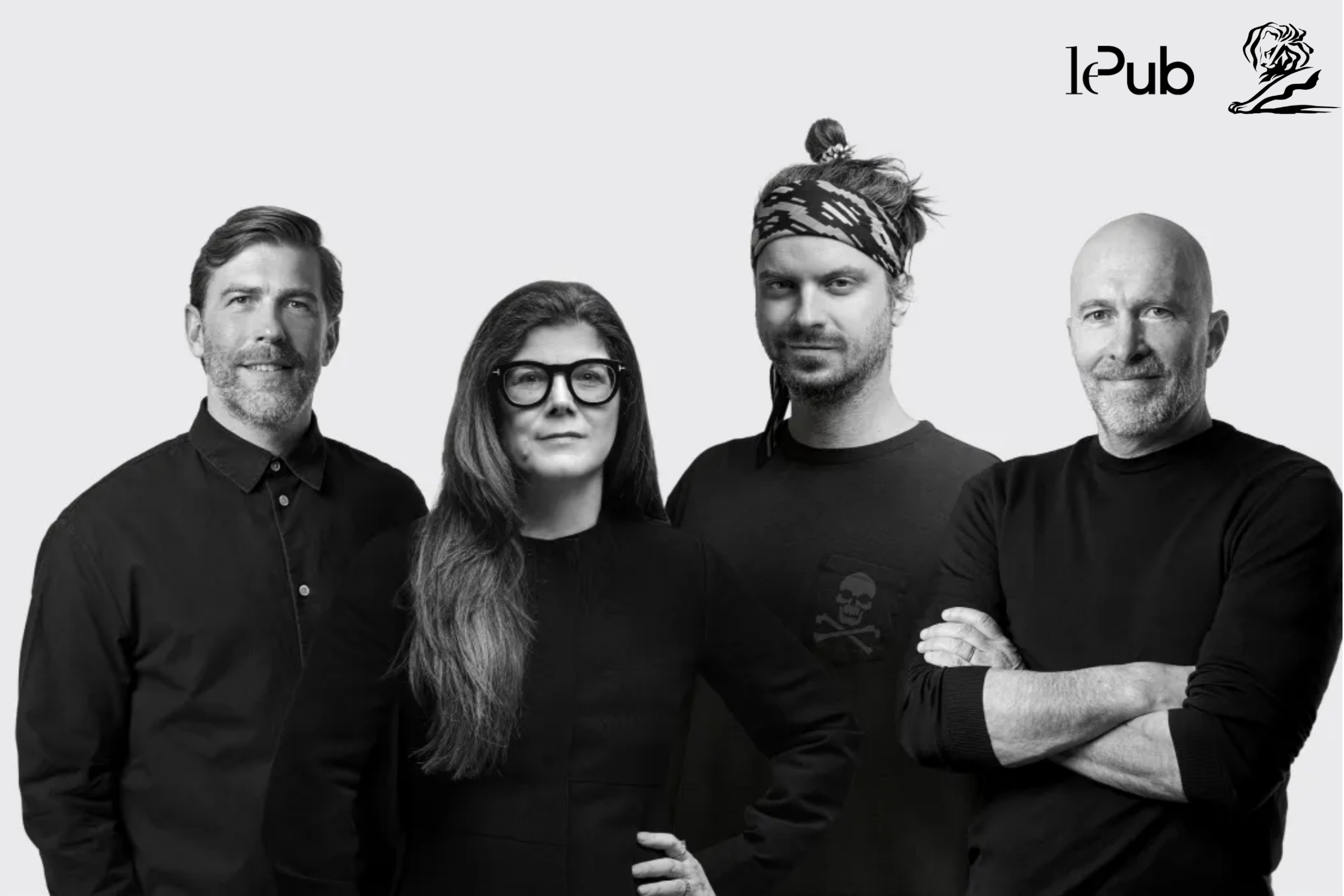
LePub Milan just won Agency of the Year at Cannes Lions Festival of Creativity Awards 2026 with 34 Lions and two historic Grand Prix. Heineken won Creative Brand of the Year for the first time in its history. And if you listened to the coverage carefully enough, the same uncomfortable truth keeps surfacing underneath the celebration: the work that won did not start with a brief. Most of it was never asked for.
Mihnea Gheorgiu, Global CCO of LePub and the sixth most awarded CCO in the world in 2026, said it at Cannes without softening it: “The world is our brief.” When you truly understand a client’s business and objectives, you do not need to wait for a formal request. You can independently identify the relevant themes the brand needs to address.”
Read that again slowly. An agency that does not wait to be told what to do. A client that does not need to ask. A creative relationship so deeply calibrated that the brief has become redundant.
That is not a workflow preference. That is a dismantling of the most foundational structure in advertising.
What the winning work actually was
Could Have Been a Heineken; the campaign that won the Grand Prix in Social and Creator, was not born from a marketing objective or a product brief. It was born from a cultural observation: that WhatsApp voice notes, the dominant social behaviour of the moment, were making people feel more connected while actually making them less present to each other. LePub took that observation, connected it to Heineken’s decade-long commitment to human sociability and real-world connection, and built a mechanic, forward a voice note to a Heineken bot, receive a free beer and directions to meet that person in real life, that turned a digital habit into a physical one.
Gheorghiu described it as work that converted a new social behaviour into the oldest social behaviour. The jury called it a social-first simplicity with iconicity. What it actually was, before the awards and the jury citations was a proactive idea. Nobody at Heineken woke up and wrote a brief asking for a campaign about voice notes. LePub saw the behaviour, understood the brand, and connected the two without being asked.
The Pub That Refused to Die; Grand Prix in Creative Strategy, followed the same logic. A historic Irish pub under threat of closure. A community that would lose something irreplaceable. A brand whose entire creative territory is built around the social and cultural role of the pub. LePub did not receive a brief about Irish pub closures. It noticed a cultural tension that was perfectly aligned with what Heineken stands for, and built a campaign around it before the client knew they needed one.
Two Grand Prix. Both proactive. Neither briefed.
The pandemic as creative turning point
One observation in your brief, that the platforms winning the most at Cannes Lions 2026 were those established around five years ago during the pandemic deserves more attention than it typically gets in the awards coverage.
Bruno Bertelli, Global CEO of LePub, located the philosophical shift precisely: “Since 2020, when the world suddenly changed, we stopped thinking in terms of briefs and started thinking in terms of possibilities. Together, we created a different way of working; one rooted in curiosity, cultural relevance, and the ambition to build ideas that move seamlessly between global vision and local truth.”
The pandemic did not create LePub’s philosophy. But it forced it into practice. When the world changed faster than any brief could capture, the agencies that were already operating from cultural observation rather than client instruction had a structural advantage. They did not need to wait for a new brief that reflected the new reality. They were already watching the reality and building from it.
That five-year head start is now showing up at Cannes Lions as a competitive gap that agencies still operating on brief-response cycles are struggling to close.
The thing LePub actually built that nobody is naming
Here is what the awards coverage is not saying directly: LePub’s creative output is a consequence, not a cause. The cause is the relationship.
Heineken has worked with LePub since 2015. Eleven years. In that time, the agency has built a level of strategic intimacy with the brand that makes proactive ideation not just possible but natural. Gheorghiu is explicit about this, LePub and Heineken do not operate as agency and client. They operate as partners. “When they tell us something is not possible, we understand and find a different solution. When we are convinced, a proposal is the best for the brand, they are willing to take the risk of following us.”
That dynamic; mutual trust, mutual risk, mutual accountability, is what makes the work possible. The 34 Lions are the output of a relationship, not a methodology.
This is where the lesson for Nigerian agencies becomes genuinely hard rather than inspirational.
What agencies must actually learn and it is not what you think
The tempting takeaway from LePub’s Cannes Lions triumph is: bring more proactive ideas. Stop waiting for the brief. Be more culturally observant. All of that is true and none of it is sufficient.
The deeper lesson is relational before it is creative. You cannot work like LePub without a client who trusts you like Heineken trusts LePub. And that trust is not granted, it is earned across years of consistent strategic counsel, delivered promises, and the accumulation of decisions where the agency was right and the client was glad, they listened.
Most Nigerian agency-client relationships are structured around the brief precisely because trust has not been built deeply enough to operate without one. The brief is not just a creative document. It is a risk management tool. It protects the client from an agency whose instincts they do not yet fully trust. It protects the agency from being blamed for work that was never aligned to a stated objective.
Eliminating the brief requires eliminating the conditions that make it necessary. That means Nigerian agencies need to invest in understanding their clients’ businesses at a depth that most currently do not. It means delivering enough consistently right proactive ideas for free, without being asked, with no guarantee they will be taken to build the credibility that earns the trust that makes the next idea possible.
It is slower work than winning a pitch. It is more durable than any single campaign. And it is the only path to the kind of creative freedom that LePub demonstrated at Cannes Lions 2026.
The brief is a ceiling. But you cannot remove the ceiling until you have earned the right to touch it.
ALSO WATCH: MARKETING EDGE ONTV

Comment
No comments found.